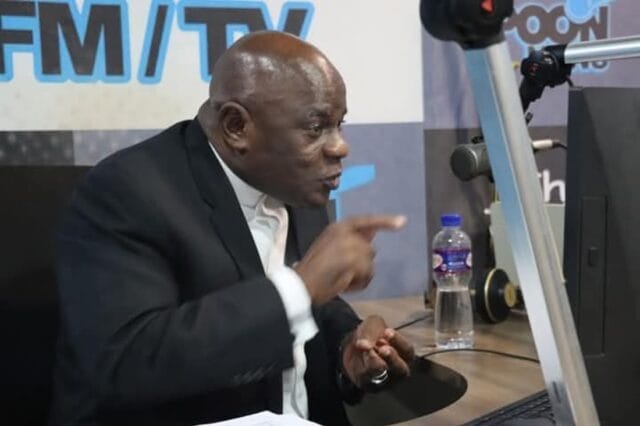
MONROVIA – In a surprising turn of events, former Supreme Court Associate Justice Kabineh M. Ja’neh has publicly regretted his affiliation with the Unity Party, expressing remorse for his support during the 2023 elections against then-President George Weah. In a candid statement, he remarked, “I regret ever supporting the Unity Party and I’m sorry to the Liberian people. I was equally lied to.”
Cllr. Ja’neh, who was once a prominent figure within the Unity Party, voiced his disillusionment with the party’s governance style, branding it as “lawless.” This scathing critique comes on the heels of a considerable public outcry regarding the Unity Party’s commitment to the rule of law and democratic principles.
Ja’neh particularly directed his criticisms at the party’s Presidential Candidate, Joseph Boakai, accusing him of failing to uphold the rule of law and showing a disregard for the decisions of the Supreme Court. “Respect for the judiciary is paramount for any democratic society,” Ja’neh stated, emphasizing the necessity for adherence to constitutional mandates and judicial rulings.
The former Justice’s frustrations extended beyond the party’s leadership; he also lamented the lack of respect for tenure positions within the governance structure. His comments reflect a growing sentiment among certain segments of the population regarding the perceived ineffectiveness of the Unity Party’s leadership.
Ja’neh’s candid remarks have sparked discussions across social media and among political analysts, many of whom point to his past as an influential figure in Liberian law and politics. As a former Supreme Court Justice, his statements carry significant weight and could potentially influence the party’s support base as it navigates the turbulent political landscape post-elections.
As Liberia continues to grapple with ongoing governance challenges and the need to reinforce democratic institutions, Ja’neh’s admission signals a critical moment for introspection within the Unity Party and the broader political landscape. The statement might catalyze further debates about accountability, transparency, and the role of leadership in fostering democratic values in the nation.