-Marking Historic Day in Liberia’s Infrastructure Drive, As Ngafuan Congratulates Pres. Boakai and Vice President Koung
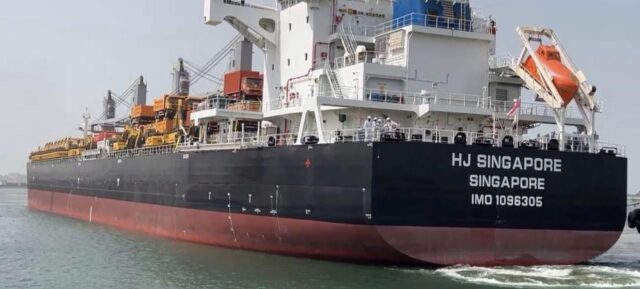
MONROVIA, Liberia — The Freeport of Monrovia transformed into a scene of national anticipation and pride on Sunday, February 22, as the HJ Singapore berthed with 137 pieces of earth-moving and support equipment—popularly known across Liberia as the “Yellow Machines”—marking the first of three consignments promised under President Joseph Nyuma Boakai’s nationwide infrastructure initiative.
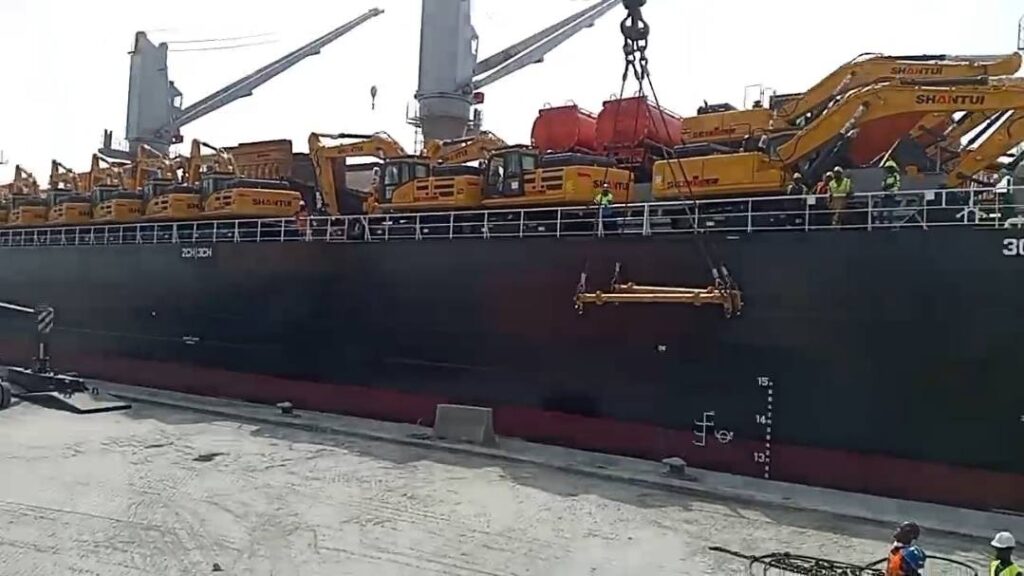
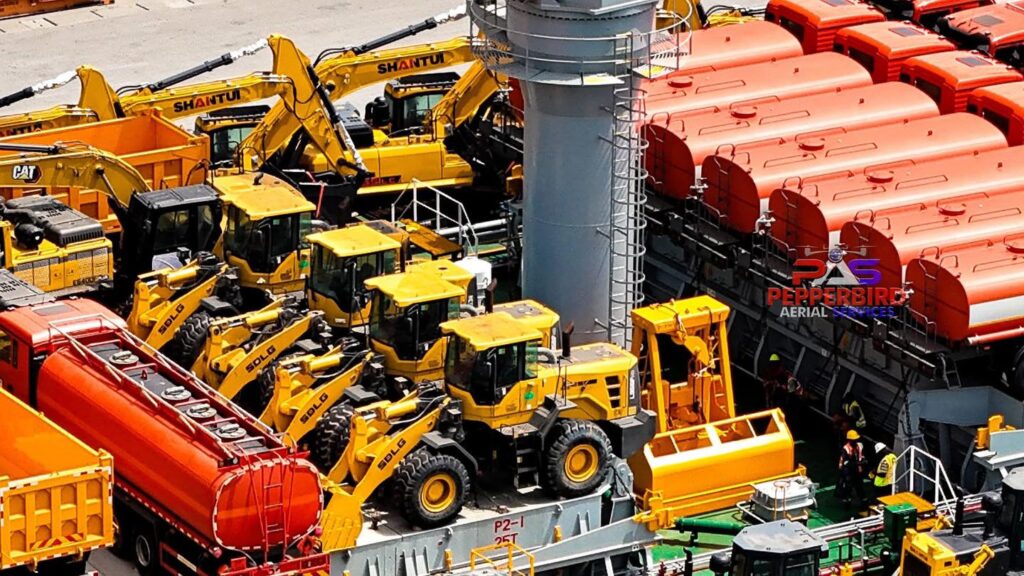
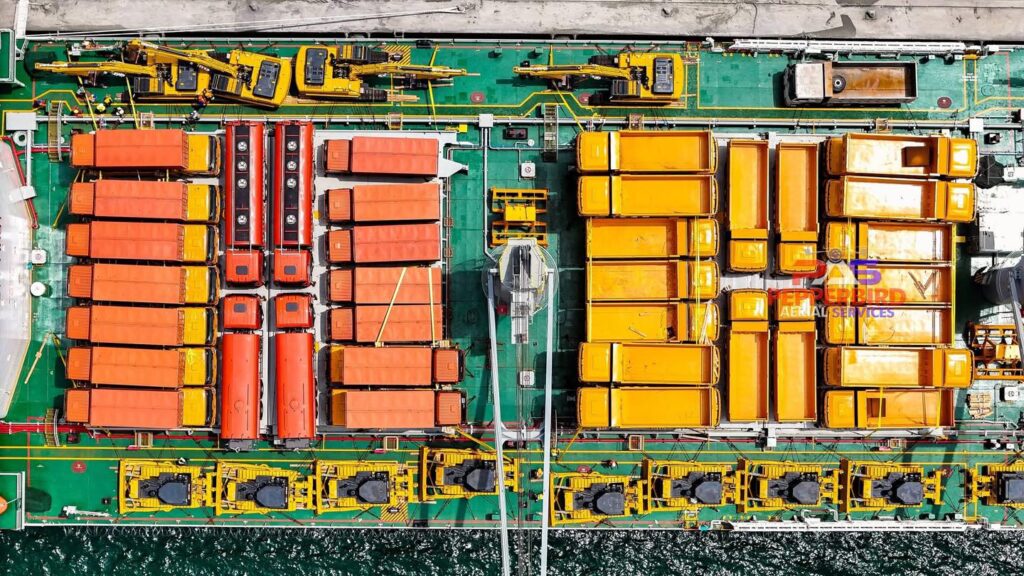
Shortly after 11:30 a.m., the black-and-maroon vessel anchored at the APM Terminals, carrying excavators, bulldozers, fuel and water tankers, low beds, service trucks, pickups, and other heavy-duty machinery destined for Liberia’s counties.
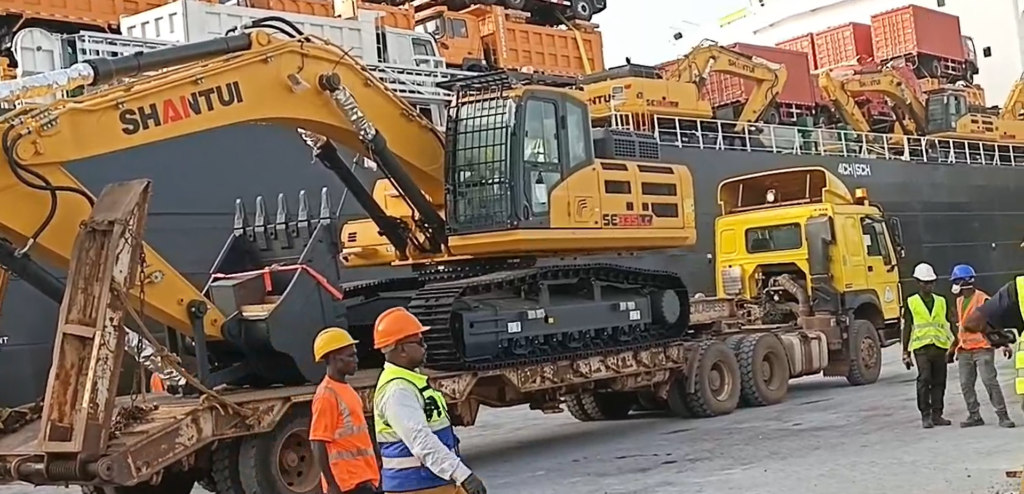
By mid-afternoon, under tight safety supervision and with Liberian and Chinese technicians working side by side, the offloading began—ushering in what many observers have dubbed “Yellow Machine Day” in Liberia.
Rivercess Breaks History
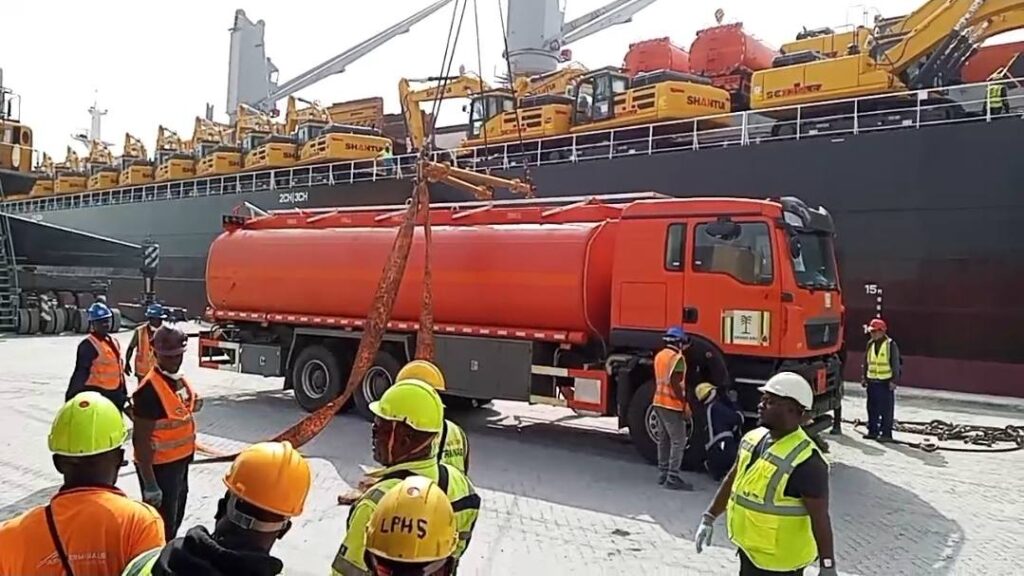
In a moment that drew cheers both at the port and across live broadcasts, the very first piece of equipment to touch Liberian soil was a 2,000-gallon fuel truck bearing the flag of Rivercess County.
As the mobile harbor crane gently lowered the truck onto the dock at approximately 3:27 p.m., it became the symbolic start of what government officials describe as a transformative decentralization of road-building capacity.
Rivercess, a Southeastern region county—long challenged by road connectivity issues—claimed the historic honor of receiving the first machine to be discharged.
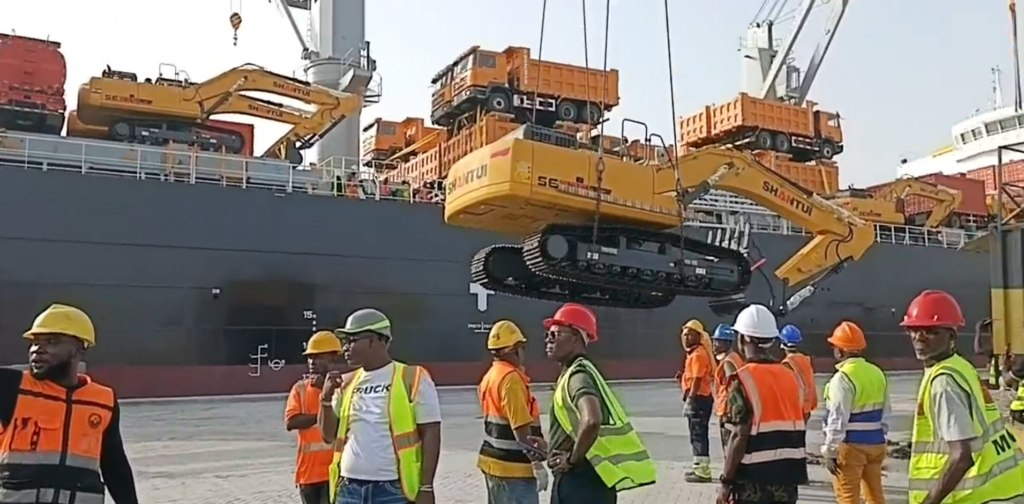
Moments later, additional counties followed in sequence, with Gbarpolu and Grand Kru among the early recipients of offloaded equipment.
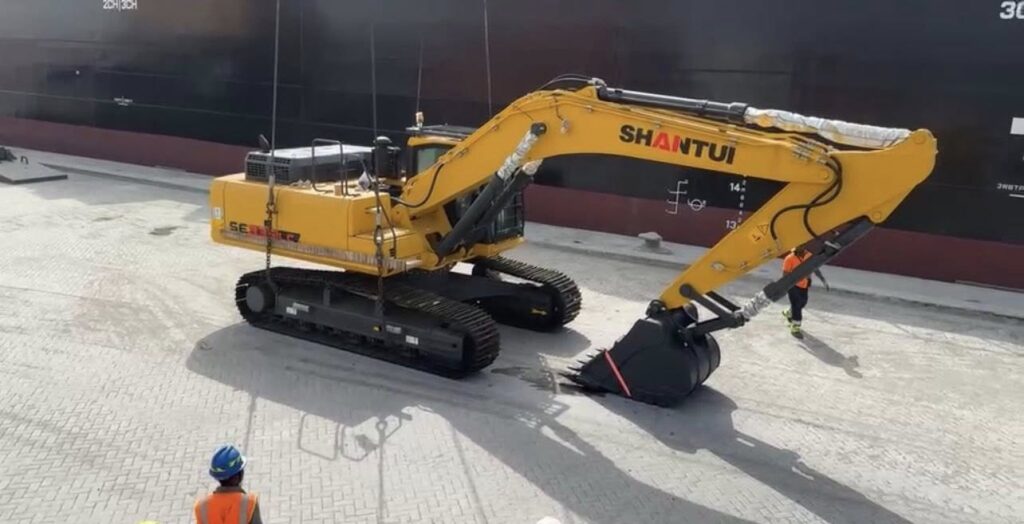
When the first actual “yellow” excavator—model SE335LC manufactured by Shantui—was hoisted from the vessel, it bore the flag of Grand Kru County, further energizing counties across the southeast. Grand Kru is the home county of former President and opposition figure George Manneh Weah.
For many Liberians watching live across multiple online television platforms, the offloading was more than logistics—it was symbolic confirmation that a long-promised initiative had materialized.
137 Machines in First Shipment
According to the official manifest and briefings provided at the port, the first consignment includes:
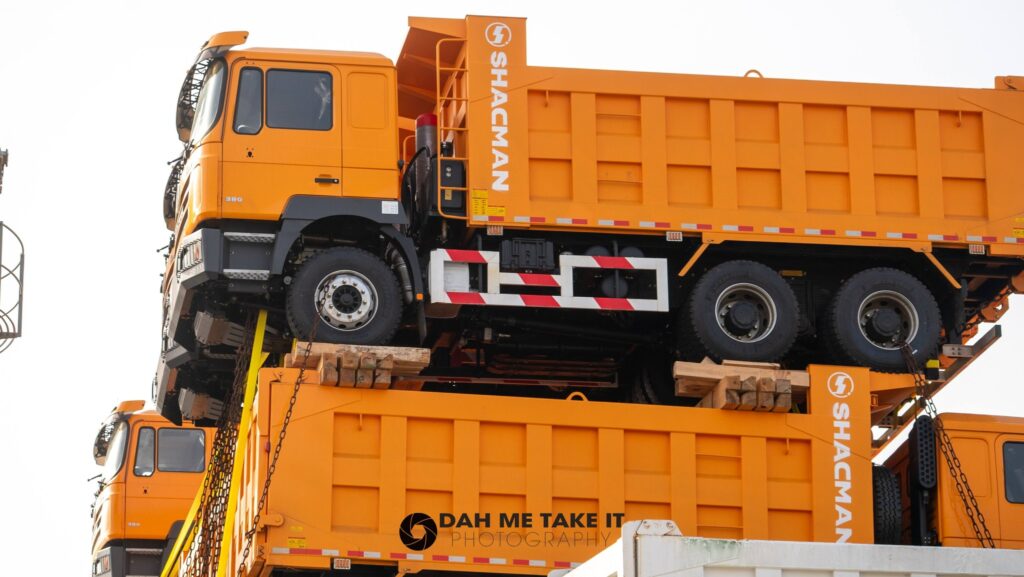
- 19 low-bed trucks
- 19 service trucks
- 20 utility pickups
- 1 backhoe
- 19 excavators
- 1 roller
- 19 bulldozers
- 1 tractor head
- 19 fuel tankers
- 19 water tankers
A total of 137 pieces of equipment in this initial shipment.
Two additional batches are expected to arrive in the coming weeks, completing the nationwide rollout.
Chairman of the Yellow Machine Board of Authority, former Defense Minister J. Brownie Samukai, earlier explained that once fully assembled, the equipment will be temporarily housed at the Armed Forces of Liberia’s Camp Sandee S. Ware in Careysburg before being deployed to regional hubs across the country.
Counties to Receive Structured Allocations
Samukai disclosed that four counties—Bong, Lofa, Grand Bassa, and Nimba—will receive two sets of equipment due to their size and workload demands, while the remaining counties will receive one set each.
He emphasized that the machines will not be used for political purposes but will instead operate under what he described as a disciplined, centralized maintenance and management structure guided by the “Commander-in-Chief’s Intent.”
A total of 532 primary operators and 532 backup operators are expected to be recruited and trained to handle the equipment nationwide.
The initiative includes not only machinery but also spare parts, technical training, and maintenance packages negotiated during Liberia’s delegation visit to Chinese manufacturers—including Shantui and other heavy-duty equipment producers.
A Project That Survived Scrutiny
The Yellow Machine initiative has undergone intense public scrutiny since its announcement nearly two years ago. Initial price projections sparked public debate, leading President Boakai to appoint Vice President Jeremiah Kpan Koung to head a review committee tasked with renegotiating terms and ensuring value for money.
The delegation subsequently traveled to China to inspect factories and negotiate comprehensive packages covering training, spare parts, and after-sales support.
Sunday’s arrival at the Freeport is being viewed by supporters as validation that the administration’s persistence—and the restructuring of the procurement process—ultimately delivered tangible results.
From Harbor to Hinterland
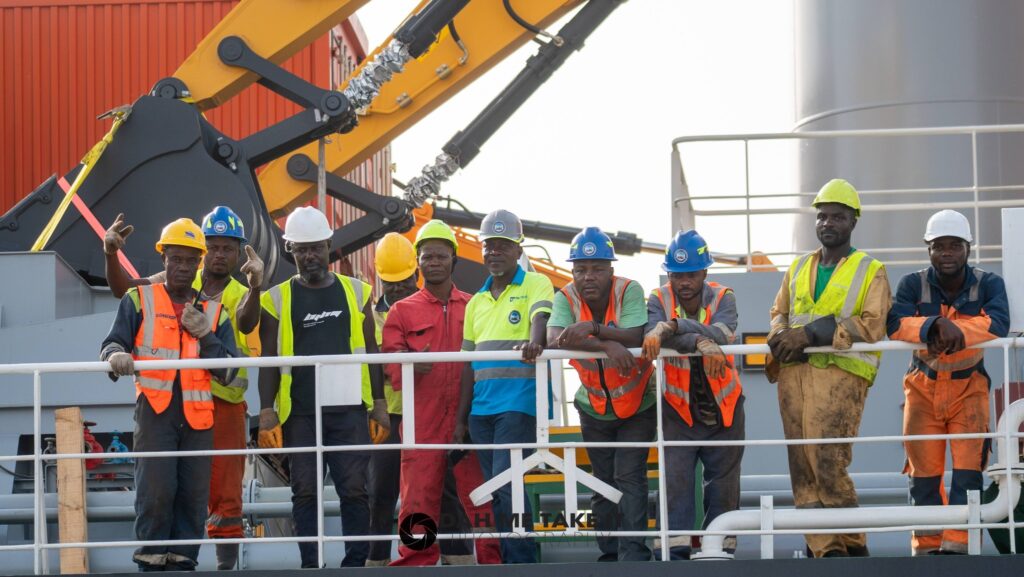
As engines roared to life and brand-new tires rolled off the dock, the sense of national ownership was palpable. The offloading was methodical and meticulous, with safety protocols strictly observed in what port authorities described as a heavy-lifting red zone operation.
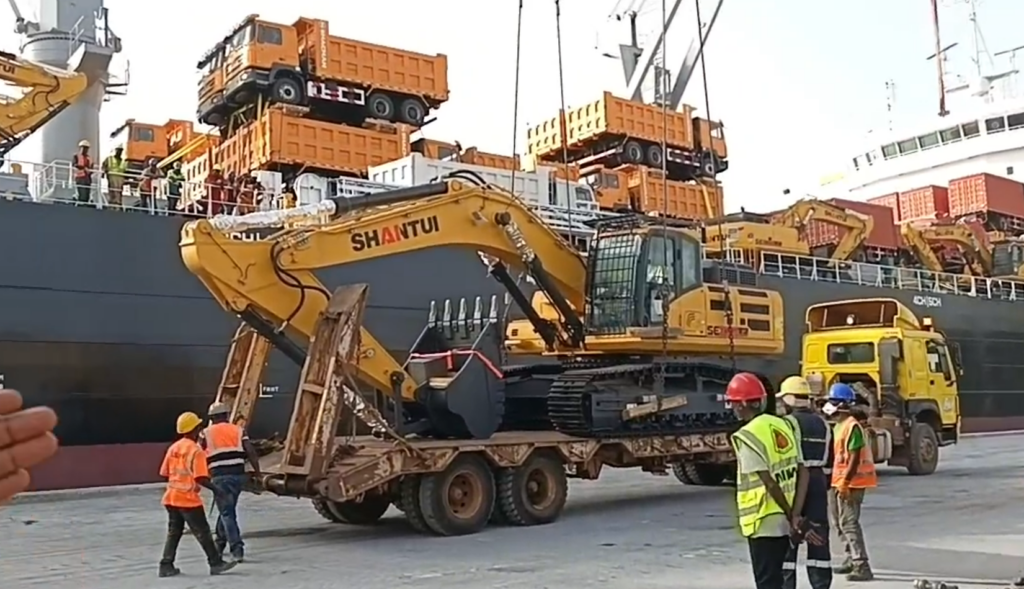
Low-bed trucks lined up to transport the equipment to Camp Sandee S. Ware, where the machines will be secured until the remaining consignments arrive.
From there, they are expected to be dispatched to counties to tackle farm-to-market roads, feeder roads, and other infrastructure gaps that have historically isolated rural communities.
President Boakai has repeatedly framed the Yellow Machine project as central to his administration’s agenda of restoring county-level productivity—particularly in agriculture and commerce.
Supporters argue that for decades counties have depended almost entirely on central government mobilization for road equipment. With this initiative, counties are expected to have more direct operational access to machinery.
Finance Minister Ngafuan Congratulates Boakai & Koung
Not only the ordinary people on the streets are happy with the arrival of the first batch of earth-moving equipment. Finance and Development Plannng Minister Augustine Kpehe Ngafuan has joined his voice to the chorus praising President Boakai and Vice President Jeremah Kpan Koung. “I extend tons of congratulations to President Joseph Nyuma Boakai and Vice President Jeremiah Kpan Koung for the able leadership and determination that culminated into the arrival of the first batch (137 pieces) of yellow machines meant to be dispatched to the counties to enhance our nation’s development.
“We still have miles to trek on our development journey. But as I often say, while we are not yet where we want to be, we are certainly not where we used to be. Our today is better than yesterday. And based on the tremendous efforts we are applying, our tomorrow will be better than today; and the day after tomorrow will be better than tomorrow.”
A Moment Etched in National Memory
For many Liberians, February 22, 2026, now stands as a symbolic turning point.
What began as skepticism and controversy has culminated in the visible presence of heavy equipment on Liberian soil—steel and rubber ready to carve access routes into remote communities.
As one broadcaster remarked during the live coverage, future students of history may be asked: Which county’s equipment was the first to touch down on Yellow Machine Day?
The answer: Rivercess County.
But beyond trivia, the broader story is about infrastructure, decentralization, and the test that now begins—not merely in procurement, but in performance.
The real measure of success will not be at the dock, but on county roads—where these machines are expected to reduce travel times, open markets, and strengthen local economies.
For now, the sight of excavators and tankers rolling off the HJ Singapore has given Liberians something tangible: a visual symbol of progress.
Follow The Liberian Post on Facebook and X (formerly twitter)