By Jacqueline Dennis
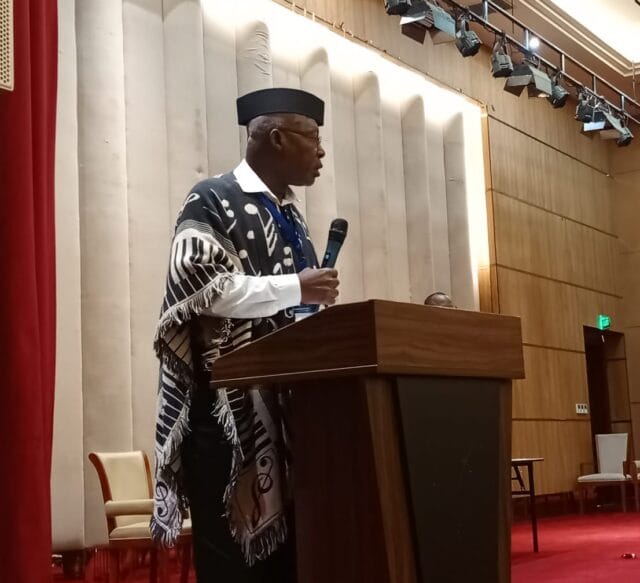
MONROVIA – The Governance Commission (GC), in partnership with the Ministry of Information, Cultural Affairs and Tourism (MICAT) and the Liberia National Tourism Authority (LNTA), convened a one-day public policy dialogue titled “A Review of Liberia’s Tourism Sector for Sustained Economic Growth and Development” at the Ministerial Complex in Congo Town.
The forum brought together government officials, industry experts, civil society, and private sector stakeholders to discuss strategies for revitalizing and expanding Liberia’s tourism industry.
Tourism as a Strategic National Asset
Acting Chairman of the Governance Commission, Alaric Tokpa, opened the session by commending President Joseph Nyuma Boakai’s leadership in prioritizing tourism as a key driver of economic growth. He noted the recent passage of the Liberia National Tourism Act as a landmark achievement that positions tourism not just as a leisure activity, but as a platform for cultural diplomacy and international branding.
Tokpa emphasized that the dialogue would address critical themes such as government leadership, capacity building, tax reforms, and the digitization of the tourism sector—with technical support from MICAT, the Liberia Institute of Statistics & Geo-Information Services (LISGIS), and the Liberia Revenue Authority.
“This gathering is more than a policy conversation; it is a national call to reimagine Liberia’s future through tourism,” Tokpa stated.
A Vision for Reform and Growth
Acting Vice Chairperson of the Governance Commission, Sianeh S. Juah, highlighted the Commission’s ongoing efforts to strengthen Liberia’s tourism governance. She traced the origins of reform initiatives to several years ago when the GC identified the need to separate the Departments of Culture and Tourism from MICAT to create an autonomous regulatory authority.
Supported by former President Ellen Johnson-Sirleaf, the GC drafted the Liberia National Tourism Authority Bill in 2014, laying the groundwork for today’s LNTA. Juah noted that continuous stakeholder consultations were essential in shaping the current reforms.
Government’s Commitment to Tourism Development
Political Advisor to President Boakai, Macdalla Cooper, spoke on behalf of the Executive Mansion, underscoring tourism’s potential to diversify Liberia’s economy, create jobs, and promote the country’s rich cultural heritage.
She reaffirmed the government’s dedication to integrating tourism into its broader ARREST development agenda (Agriculture, Roads, Rule of Law, Education, Sanitation, and Tourism) and emphasized that tourism is viewed as a catalyst for sustainable development and community empowerment.
A Unified Approach for Sustainable Tourism
Princess Eva Cooper, Acting Director General of the LNTA, described tourism as a collaborative effort requiring coordination among government, private sector, and communities.
She outlined the Authority’s vision to position Liberia as a premier destination for eco-tourism, cultural heritage, and creative industries.
“Our mission is to generate employment, support small businesses, promote cultural preservation, and protect the environment for future generations,” Cooper said.
She also noted progress in modernizing tourism policies and regulations to facilitate investment and promote community-based tourism. This approach seeks to engage local citizens as active stakeholders, offering visitors authentic and meaningful experiences.
“For too long, others have narrated Liberia’s story. With the LNTA, we reclaim that narrative—showcasing our people’s warmth, the safety of our communities, and the unmatched beauty of our land to the world,” she added.