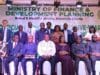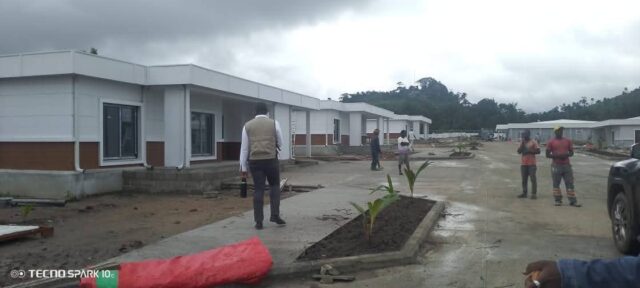
MONROVIA, Liberia — The Government of Liberia has issued a formal statement defending the Mano River Union (MRU) Presidential Center for Regional Peace and Development, clarifying its purpose, ownership, and strategic intent amid rising controversy and public speculation over construction in Foya District, Lofa County.
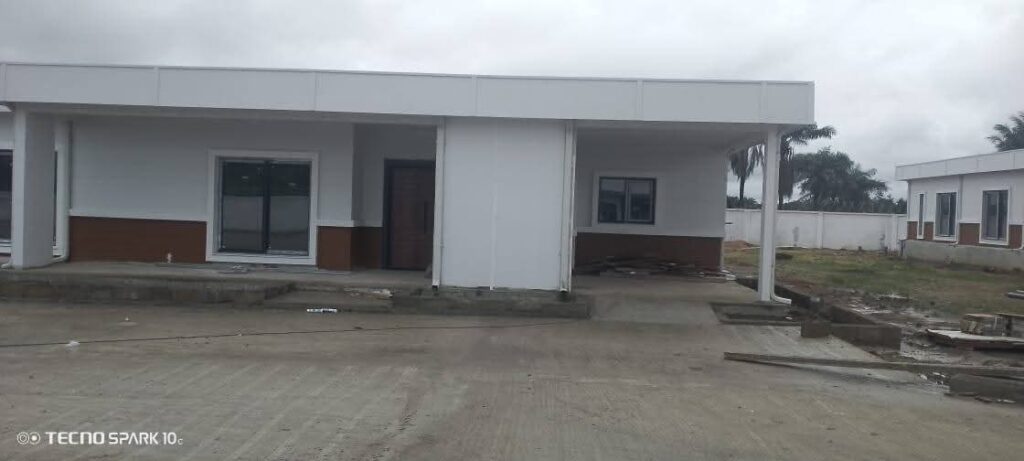
The statement, released by the Ministry of Information, says the project is a government initiative designed to host sub-regional, regional, and global high-level forums on mediation, conflict resolution, and economic integration. It notes that the facility will include a 500-seat conference hall and nine secure accommodation units for visiting dignitaries on approximately seven acres of land in Foya.
Government officials stress the center is public property with national, regional, and global implications, not private property as some political actors and media outlets have claimed. It says the location was chosen due to Foya’s strategic position at the confluence of Liberia, Sierra Leone, and Guinea, and its historic role in cross-border peace dialogues.
Public Backlash and Rising Suspicion
Despite the government’s explanation, the project has sparked significant public controversy — driven by unauthorized aerial footage, conflicting statements from government officials, and ongoing media coverage that describes the site as an expensive residential complex or “villa” linked to the presidency.
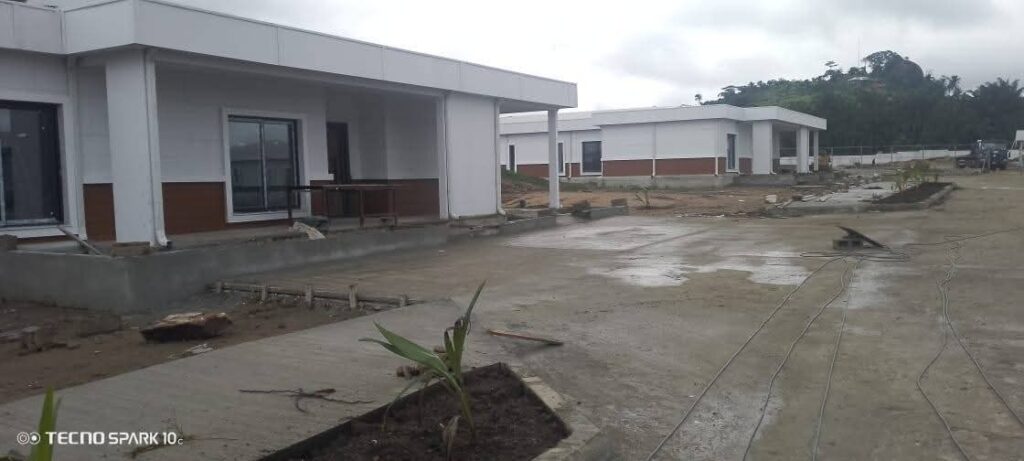
The controversy traces back to early September 2025, when aerial photos circulated showing a walled and heavily guarded construction site in Foya described by civil society activists as a multi-unit, multimillion-dollar presidential residence. The head of civil society organization NAYMOTE-Liberia initially raised alarm over what he described as a US$10 million “presidential villa.”
These claims drew scrutiny because no such project appeared in Liberia’s 2024 or 2025 national budgets, and observers noted no Public Procurement and Concessions Commission (PPCC) record of competitive tendering for the work, raising questions about compliance with procurement law for projects exceeding $200,000.
Government Responses and Conflicting Messages
Deputy Information Minister Daniel O. Sando has been the government’s most visible defender of the project, repeatedly posting online that it is a legitimate MRU-related initiative intended for peace and security talks, not a personal residence for the President or his family.
Sando and the Ministry of Information have also cited security protocols to justify the initial confidentiality around project details, explaining that facilities intended to host visiting heads of state and other dignitaries require careful handling of plans and blueprints to prevent vulnerabilities.
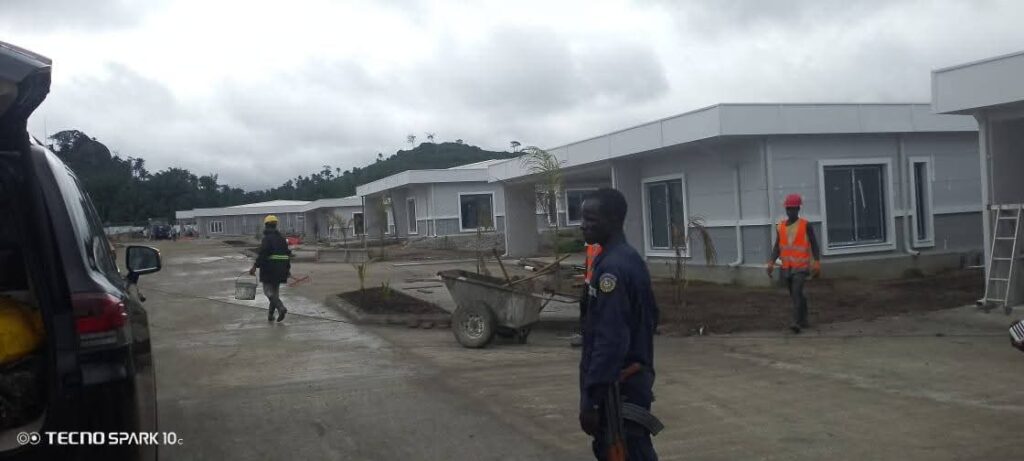
However, conflicting statements from other senior officials earlier in 2025 — including some who either declined to comment or professed limited knowledge of the project — helped fuel public doubt and confusion. A November editorial in a notable Liberian news outlet argued that “four officials, four different stories” created a perception of a government struggling with transparency on the issue.
Calls for Transparency and Accountability
Civil society and media advocacy groups have not retreated from their demands for clarity. The Association of Liberian Journalists in the Americas (ALJA) criticized the government for what it described as “deeply troubling secrecy” surrounding a multimillion-dollar project tied to the presidency, calling for full disclosure of project funding, procurement arrangements, and ownership. It pointed out that while the government claims no national budget link, documentation and public records remain scarce.
ALJA is urging an independent investigation into the project’s financing and implementation, saying that accountability and transparency are essential to maintaining public trust — particularly in a context where citizens continue to demand openness from government institutions.
MRU Denies Funding Link
Complicating the narrative, the Mano River Union Secretariat has publicly rejected claims that it is funding a presidential palace in Liberia, calling such rumors “devoid of truth” and clarifying that constructing presidential residences is outside its mandate. The Union emphasized that its focus remains on economic growth, social progress, and peace initiatives among member states.
Government’s Position and Next Steps
In its statement, the Government of Liberia reiterated that the center is a strategic regional asset to support Liberia’s role as a leader in peace and security dialogues — particularly given its current and future roles on the United Nations Security Council and other continental forums. It said the US$6.1 million project is funded through a mix of national, regional, and global contributions, including private individuals and businesses, though it did not provide a detailed breakdown.
Officials said President Joseph Nyuma Boakai, senior government representatives, and security officials will inspect the site in December as part of a broader review of national development projects. A regional launch is expected after project completion in 2026.
Public Confidence and Transparency Imperatives
As debate continues, analysts say the government’s challenge will be to bridge the gap between strategic intent and public confidence. Liberia’s recent emphasis on transparency, public participation, and good governance — themes central to the Boakai administration’s campaign rhetoric — means that unresolved questions about high-profile infrastructure projects will remain politically salient.
Observers note that, while the project may have legitimate economic and diplomatic rationale, government communication must be consistent, transparent, and backed by verifiable documentation to mitigate speculation and restore public trust.