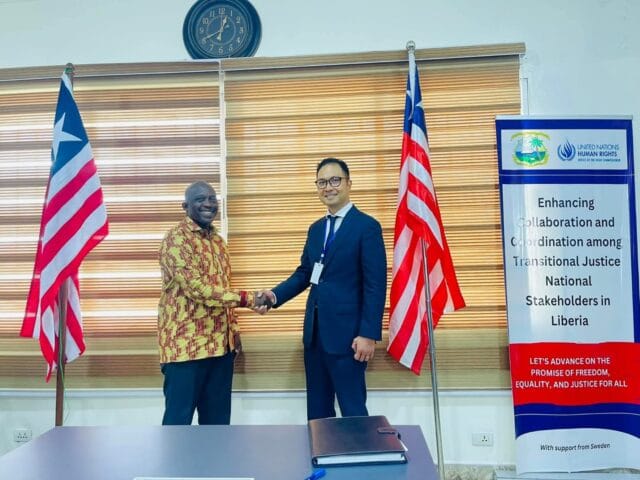
MONROVIA– A high-level delegation from the International Monetary Fund (IMF) has paid a courtesy visit to the Office for the Establishment of War and Economic Crimes Court for Liberia (OWECC-L), signaling growing international support for Liberia’s quest to strengthen justice, accountability, and anti-corruption efforts.
The delegation, led by Andrew Flex Arsenio De Castro, met with Dr. Cllr. Jallah A. Barbu, Executive Director of OWECC-L, at the institution’s Monrovia headquarters. Discussions focused on Liberia’s ongoing plans to establish two historic judicial bodies — the War and Economic Crimes Court and the National Anti-Corruption Court.
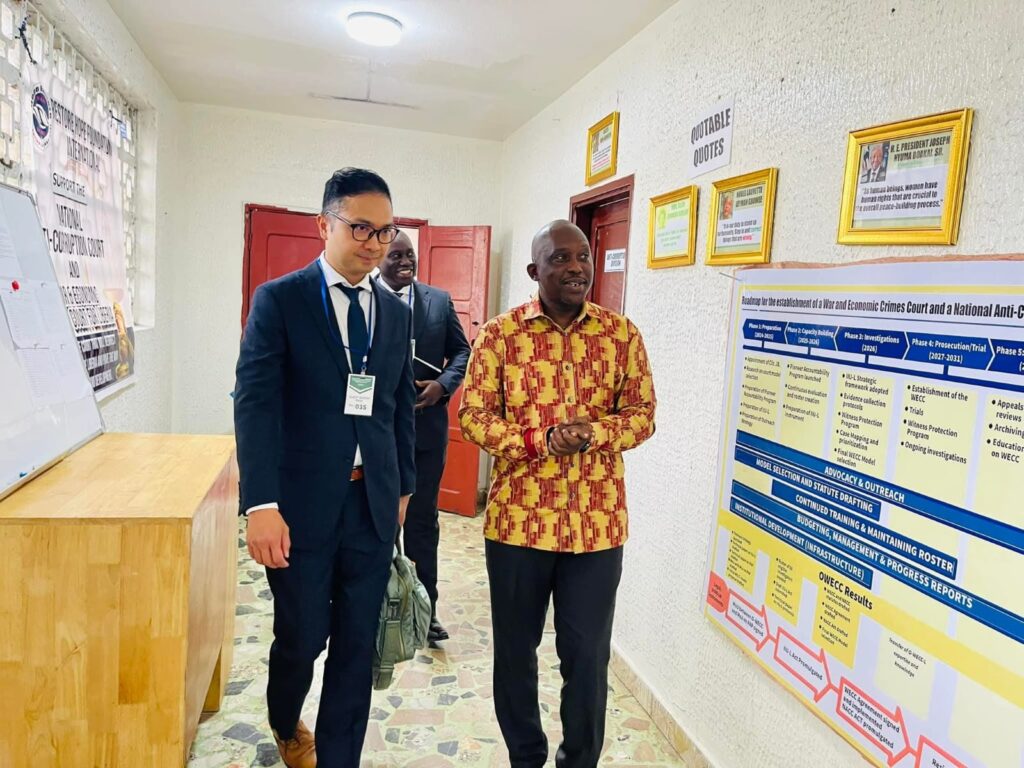
According to both sides, the courts are designed to address two of Liberia’s most pressing challenges: justice for atrocities committed during the country’s brutal civil wars, and the fight against entrenched corruption that has long undermined governance and development.
“The establishment of credible judicial institutions to address war crimes and economic offenses is not only a moral imperative but also a cornerstone for sustainable economic growth and investor confidence,” the IMF delegation emphasized in its remarks.
The team, which also included Alexander Deline, an Economist in the IMF’s Africa Department, reaffirmed the Fund’s readiness to provide technical support for Liberia’s justice sector reforms. They stressed that transparency, rule of law, and strong institutions are essential foundations for economic recovery and inclusive development.
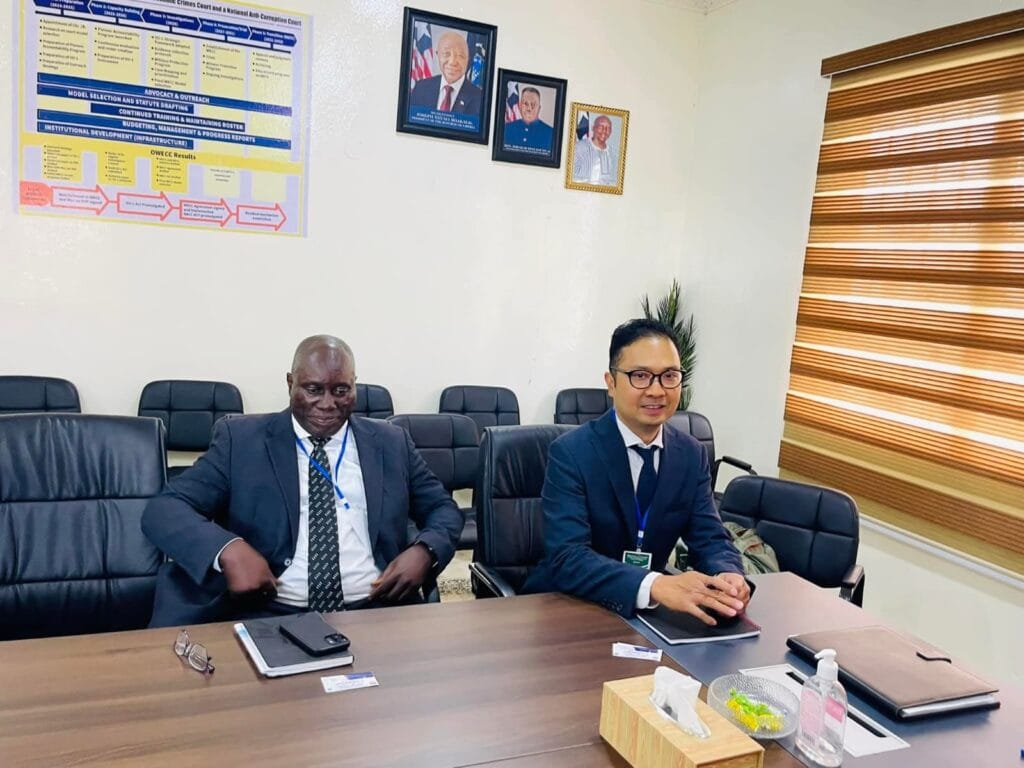
For his part, Dr. Barbu updated the IMF officials on ongoing national consultations, civil society engagement, and legislative preparations to set up the courts. He highlighted OWECC-L’s roadmap, which includes drafting bills, building judicial capacity, and conducting public outreach to ensure nationwide understanding and ownership of the process.
The IMF visit comes at a time of heightened expectations. The proposed War and Economic Crimes Court is expected to prosecute individuals accused of atrocities during Liberia’s civil conflicts, while the National Anti-Corruption Court would handle high-profile graft cases and asset recovery. Both institutions are expected to operate independently and meet international standards of justice and due process.
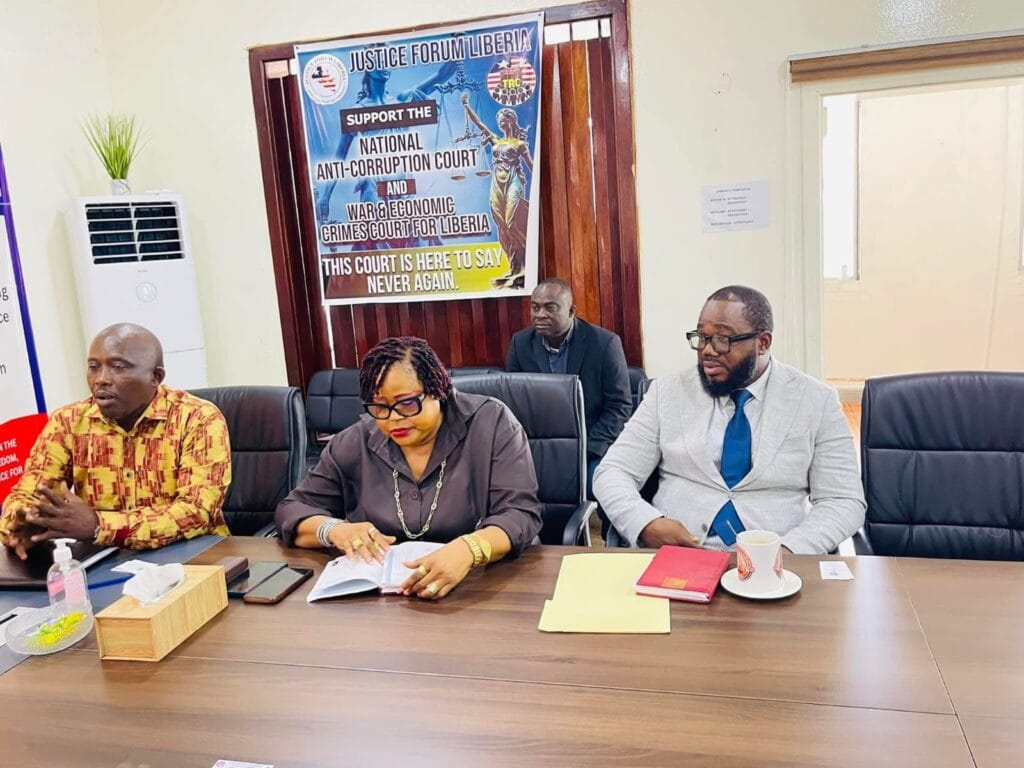
Liberia’s international partners and human rights advocates have widely endorsed the initiative, describing it as a vital step toward ending impunity and rebuilding public trust. Citizens across the country have also called for swift action to ensure that the courts become a reality.
The IMF delegation praised Liberia’s progress and encouraged stronger collaboration with development partners. They also underscored that judicial independence and institutional safeguards would be critical to ensuring the effectiveness and credibility of the courts once established.