MONROVIA, Liberia — At a time when media institutions across Liberia are grappling with shrinking revenues and rising digital disruption, Mrs. Whinnel T. Shasha, lecturer at the University of Liberia and media management expert, delivered a compelling and solutions-oriented presentation at the Integrity Media Forum 2026, urging traditional media to rethink survival—not as desperation, but as strategy.
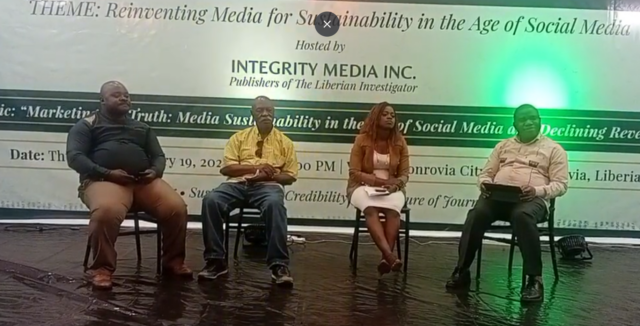
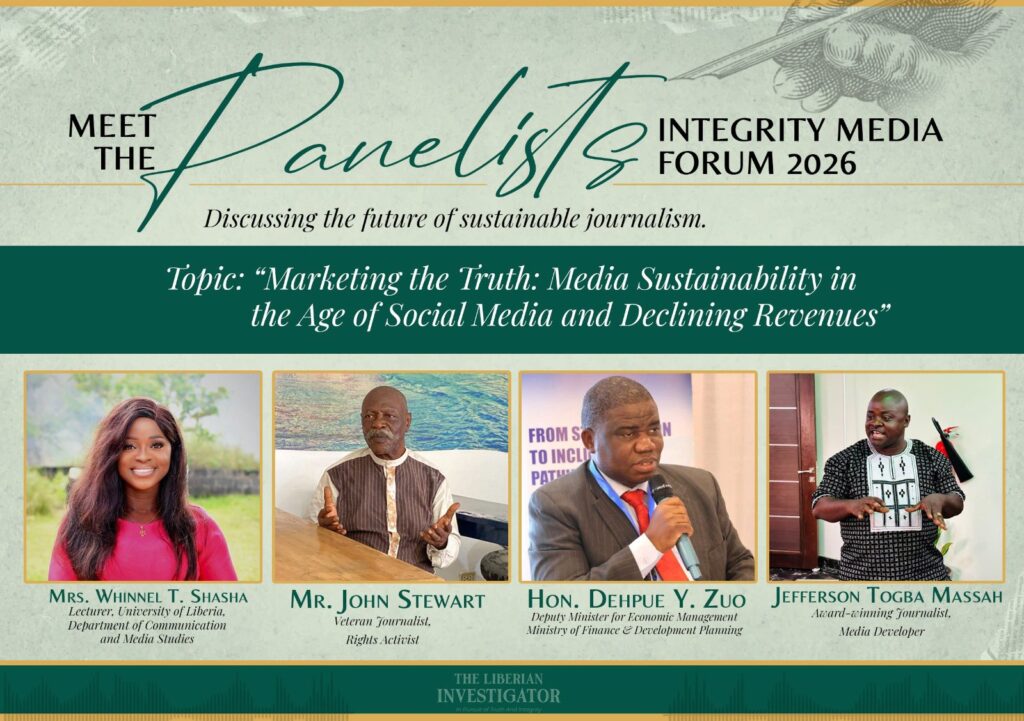
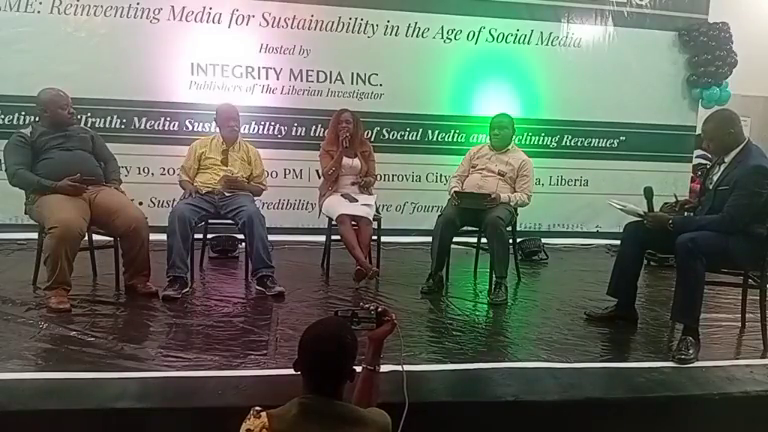
The forum, organized by The Liberian Investigator as part of its first anniversary commemoration, convened journalists, policymakers, academics, and development partners under the theme: “Marketing the Truth: Media Sustainability in the Age of Social Media and Declining Revenues.” Mrs. Shasha was one of four panelists invited to interrogate the future of sustainable journalism in Liberia.
From the outset, Shasha framed the crisis confronting media institutions as both structural and strategic.
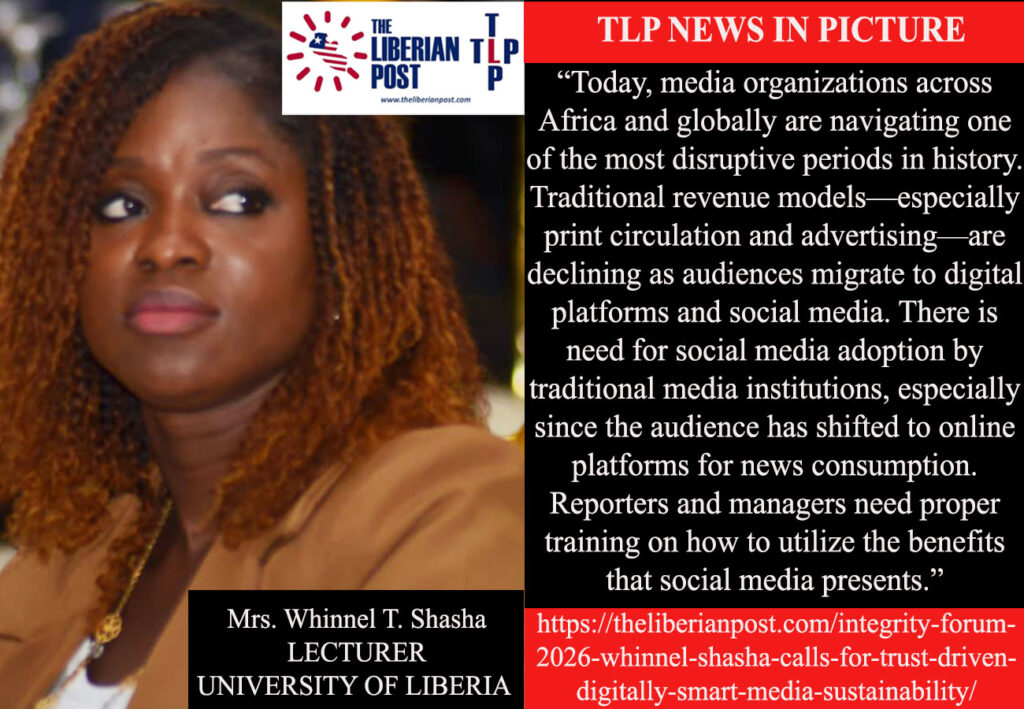
“Today, media organizations across Africa and globally are navigating one of the most disruptive periods in history,” she said. “Traditional revenue models—especially print circulation and advertising—are declining as audiences migrate to digital platforms and social media.”
Her message was clear: the crisis is real, but it is not insurmountable.
Social Media Is Not the Enemy — It Is the Battlefield
Contrary to narratives that blame social media for the collapse of traditional media, Shasha argued that digital platforms represent opportunity, not obstruction.
“There is need for social media adoption by traditional media institutions, especially since the audience has shifted to online platforms for news consumption,” she emphasized. “Reporters and managers need proper training on how to utilize the benefits that social media presents.”
Her call was not merely about opening Facebook pages or posting headlines online. It was about digital literacy at the institutional level — training newsroom managers in analytics, audience engagement strategies, and content monetization.
In her view, digital adaptation must move from reactive posting to intentional branding.
“Media must reposition itself as a brand built on trust, not just a content factory,” she said.
That single line resonated deeply across the hall.
Trust as the Core Competitive Advantage
In a digital ecosystem where misinformation spreads faster than verification, Shasha insisted that credibility—not speed—must become the primary market differentiator.
“Trust becomes the core value proposition which creates competitive advantage,” she noted. “Through clear editorial policies, transparency, responsible data use, and ethical engagement, trust is built.”
She warned that sustainability and integrity are inseparable pillars.

“Media institutions must market not just content—but credibility,” she declared. “Only by protecting truth can media secure long-term survival.”
Her argument reframed the discussion from mere economic survival to institutional identity. Media houses, she suggested, must decide whether they want to compete on sensationalism or stand on credibility.
In the age of viral headlines and algorithm-driven visibility, Shasha’s emphasis on ethical branding struck a chord.
Diversify or Decline
Beyond digital adoption and credibility, Shasha turned to the economic architecture of media institutions. According to her, reliance on a single revenue stream—particularly advertising—is a formula for vulnerability.
“Sustainability requires a diversified revenue model,” she stressed, listing subscriptions, partnerships, events, grants, training, and consultancy as viable alternatives.
She was careful, however, to draw a boundary between innovation and compromise.
“Diversification reduces financial vulnerability but must never undermine editorial independence,” she cautioned.
Her position aligned with broader concerns raised during the forum that dwindling advertising revenues have made some outlets susceptible to political and commercial influence.
In this regard, Shasha’s intervention was not only academic—it was protective of democratic space.
Welfare of Journalists: A Moral and Strategic Imperative
Perhaps the most emotionally charged part of her presentation addressed newsroom welfare.
“Media managers must prioritize the welfare of their employees,” she said. “Passion alone is not sufficient.”
She noted that journalists without adequate salaries and tools are placed in ethically compromising positions.
“Journalists need to be motivated by providing the needed incentives. Doing this can prevent unethical practices such as taking bribes or gifts from newsmakers which could cloud their ethical news judgment.”
The room fell momentarily silent.
Her assertion was direct: sustainability is not just about platforms and policies—it is about people.
If journalists are not paid fairly, she implied, editorial integrity becomes fragile.
Government’s Role: Enable Without Controlling
Shasha also recognized the role of the state in strengthening the media ecosystem—without interfering in editorial independence.
“Governments have a role in creating a safe and enabling environment through fair advertising distribution, transparent policies, and media development funds—while safeguarding independence,” she stated.
Her balanced framing avoided confrontation while reinforcing accountability.
The presence of government officials at the forum—including senior representatives from the Ministry of Information and the Ministry of Finance—gave added weight to her remarks.
A Forum Anchored in Reflection
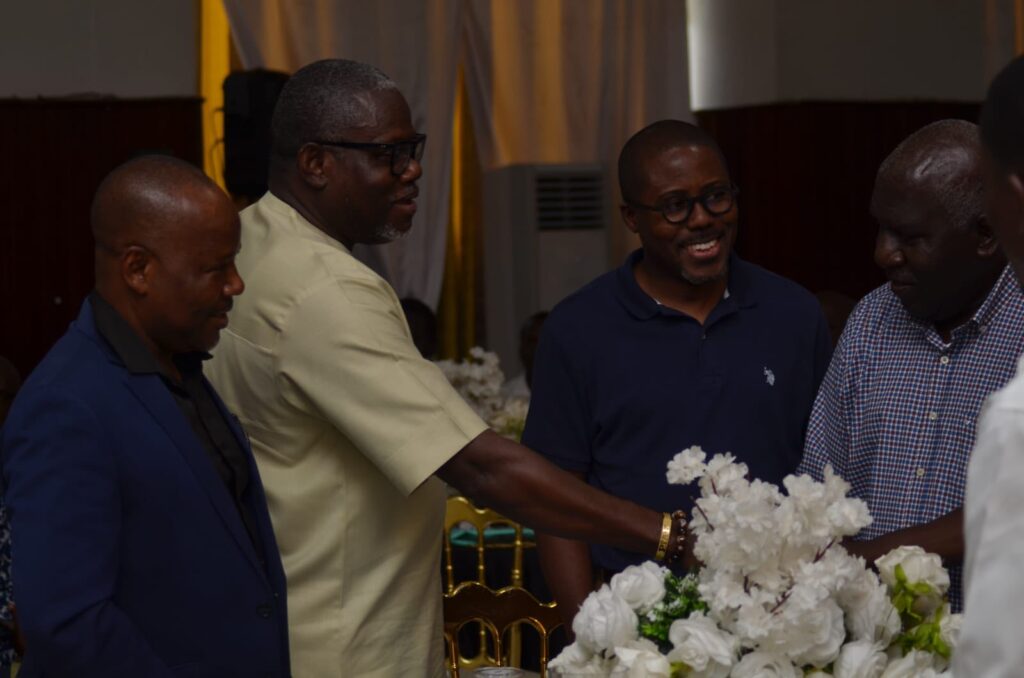
The Integrity Media Forum itself was part of The Liberian Investigator’s one-year anniversary celebration, a milestone that several speakers described as symbolic in a challenging media climate.

During the program, speakers reflected on the rapid transformation of communication—where, as one keynote speaker observed, “communication moves with the speed of light, yet trust often moves at the speed of traffic.”
It was within this reflective environment that Shasha’s contributions stood out—not as abstract theory, but as a roadmap.
From Survival Mode to Strategic Sustainability
Throughout her presentation, Mrs. Shasha returned to one fundamental question: How can media institutions survive in the age of social media?
Her answer was layered but precise:
- Embrace digital transformation strategically.
- Build brands anchored in trust.
- Diversify revenue without sacrificing independence.
- Invest in journalists’ welfare.
- Advocate for enabling policy frameworks.
Her tone was neither alarmist nor complacent. It was practical.
“We must market not just content—but credibility,” she reiterated.
In a marketplace where attention is monetized and speed often outpaces verification, her intervention reminded the audience that truth remains journalism’s most valuable asset.
As Liberia’s media landscape continues to evolve—with over 50 newspapers and more than 130 media institutions operating nationwide—the sustainability conversation is no longer optional.
It is urgent.
And at Integrity Forum 2026, Mrs. Whinnel T. Shasha positioned herself as one of its most strategic voices—bridging academia and newsroom reality, theory and practice, survival and sustainability.
The challenge now, as she implied, is not whether the media can adapt—but whether it is willing to transform.
Follow The Liberian Post on Facebook and X (formerly twitter)