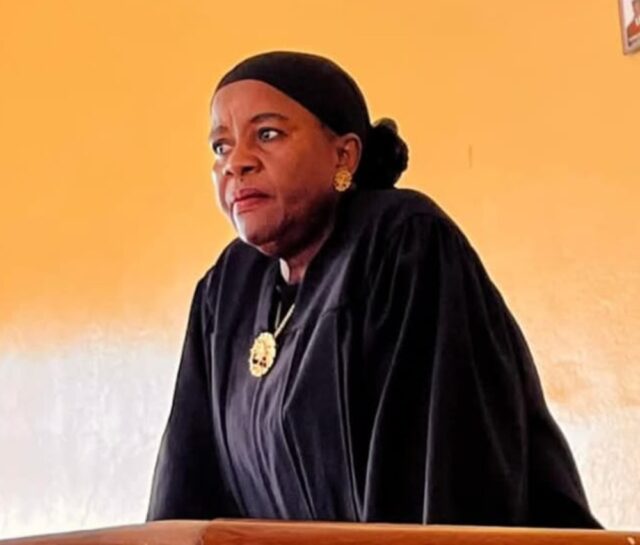
MONROVIA, Liberia — The Assigned Judge of Criminal Court “B”, Her Honor Mameita Jabateh- Sirleaf, has called on members of the legal profession to uphold the rule of law, professionalism, and ethical responsibility as a means of strengthening Liberia’s justice system.
Delivering the charge at the opening of the February Term of Court A.D. 2026, Judge Jabateh-Sirleaf spoke on the theme “The Rule of Law, Responsibility, and Management in the Legal Profession.” She emphasized that the rule of law remains the foundation of Liberia’s democratic system.
The judge noted that the Liberian Constitution guarantees equality before the law and stressed that no individual, regardless of status or position, is above it.
Describing lawyers as guardians of the rule of law, Judge Jabateh-Sirleaf said legal practitioners bear responsibility for protecting human rights, ensuring fair trials, and safeguarding justice.
To effectively perform these duties, she urged the Government of Liberia to increase budgetary support to the judiciary, particularly for legal education and professional training.
She further highlighted the important role lawyers play beyond the courtroom, noting their contribution to democracy, accountability, and national development.
Judge Jabateh-Sirleaf commended the Liberian National Bar Association (LNBA) for promoting ethical standards, advancing legal education, and advocating reforms aimed at strengthening good governance.
Addressing public confidence in the justice system, the judge urged legal practitioners to uphold the highest standards of professionalism, including maintaining client confidentiality, avoiding conflicts of interest, and remaining committed to justice and equality.
Judge Jabateh-Sirleaf also drew attention to Liberia’s dual legal system, which consists of formal statutory law and customary practices. While acknowledging that customary law is widely relied upon, she warned that certain practices particularly in land, marriage, and inheritance matters—often conflict with statutory protections, especially for women.
Citing the 2013 Land Rights Act and the 2001 Inheritance Law, she pointed to ongoing challenges in the implementation and enforcement of these laws and called for greater harmonization between customary and formal legal systems through transparent rules of engagement.
To address systemic challenges, Judge Jabateh-Sirleaf advocated increased funding for public defenders, enhanced transparency in judicial proceedings, strengthened whistleblower protections, and support for community-based legal aid initiatives.
She also called for long-term reforms in legal education, including curriculum updates, clinical training programs, and continuing legal education.
In closing, the judge urged all legal actors to recommit themselves to ethical conduct, accountability, and the pursuit of justice, stressing that peace and development are inseparable from a strong and trusted judiciary.