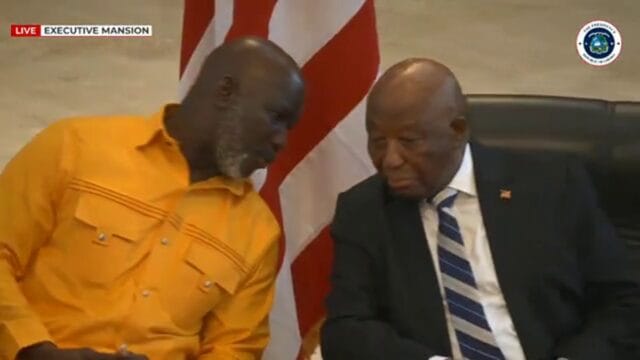
-Speaker Koon, Deputy Speaker Fallah Lead Delegation; Some Lawmakers Predict 2029 Victory as President Urges Focus on “Country, Not Party”
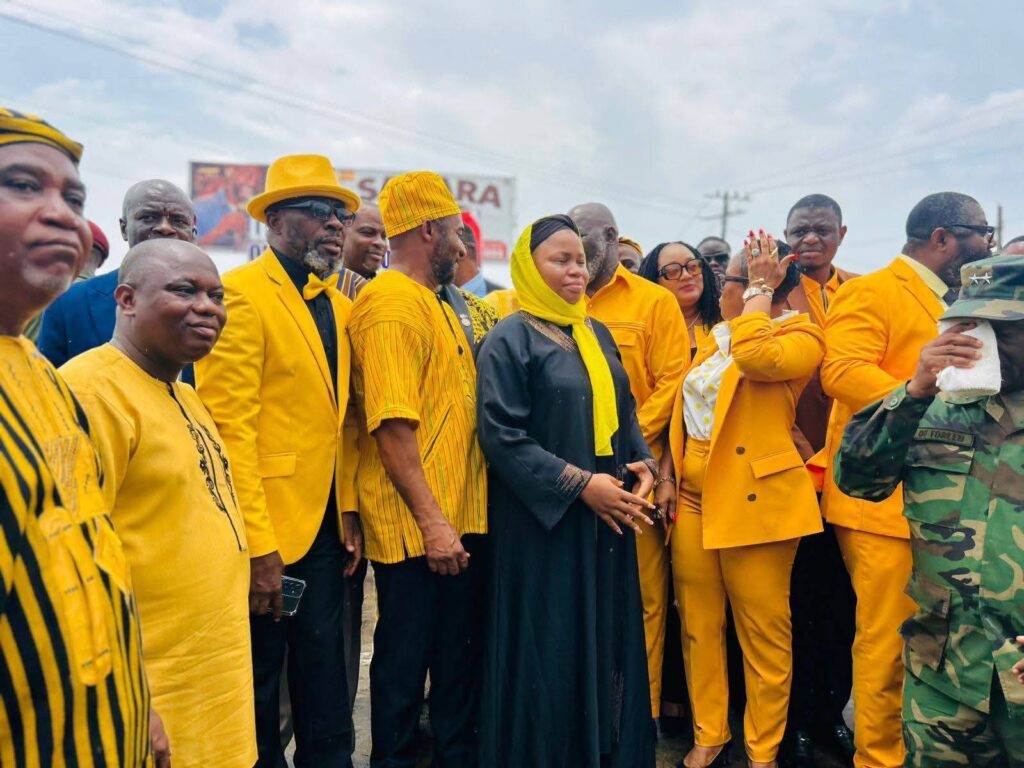
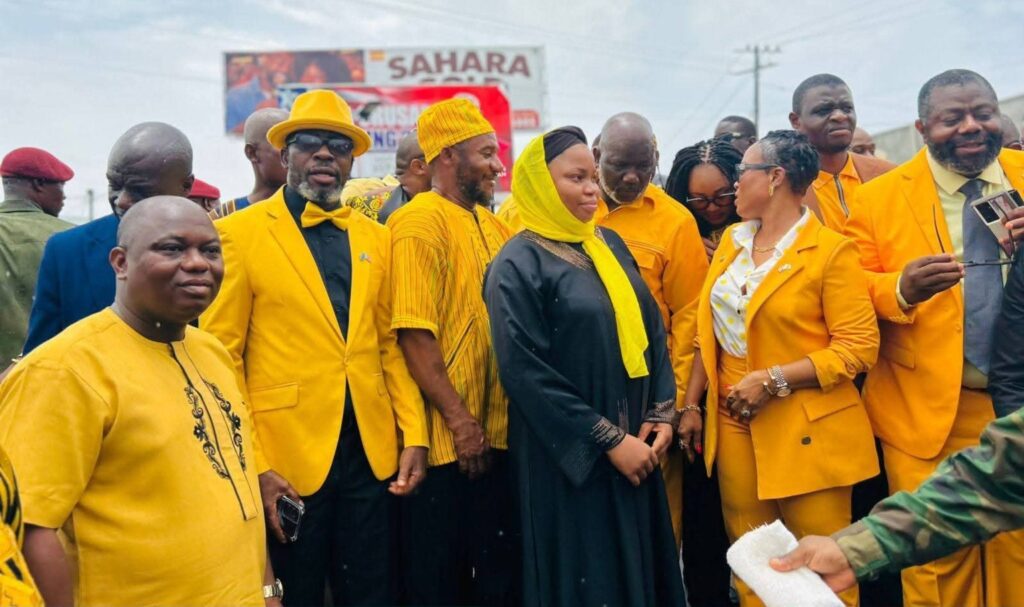
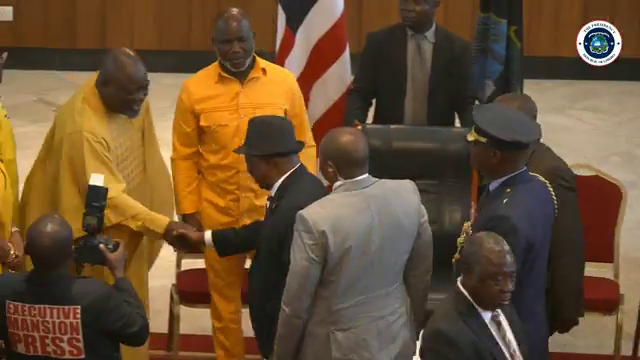
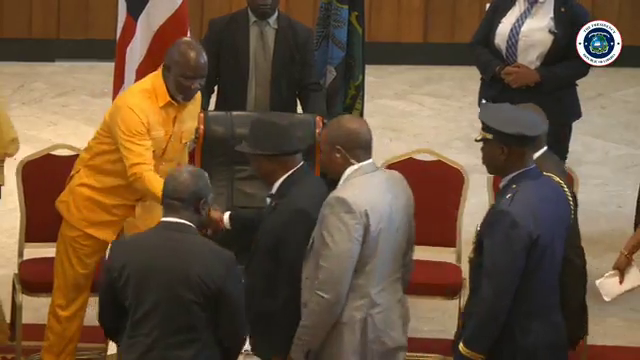
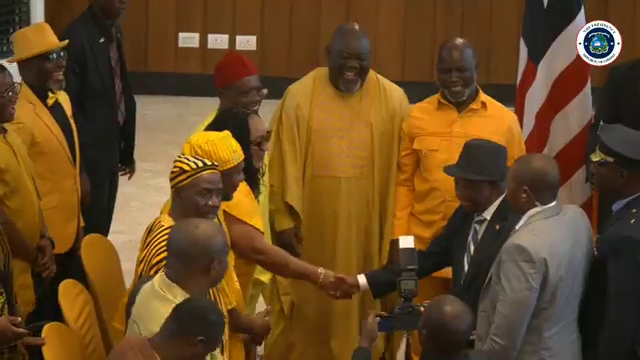
EXECUTIVE MANSION, Monrovia – In a rare show of collective enthusiasm, an overwhelming majority of members of the House of Representatives, clad in yellow attire to symbolize the newly arrived road equipment, paid a courtesy visit to President Joseph Nyuma Boakai at the Executive Mansion on Thursday morning, praising him for delivering on his promise to bring earth-moving machines to the counties.
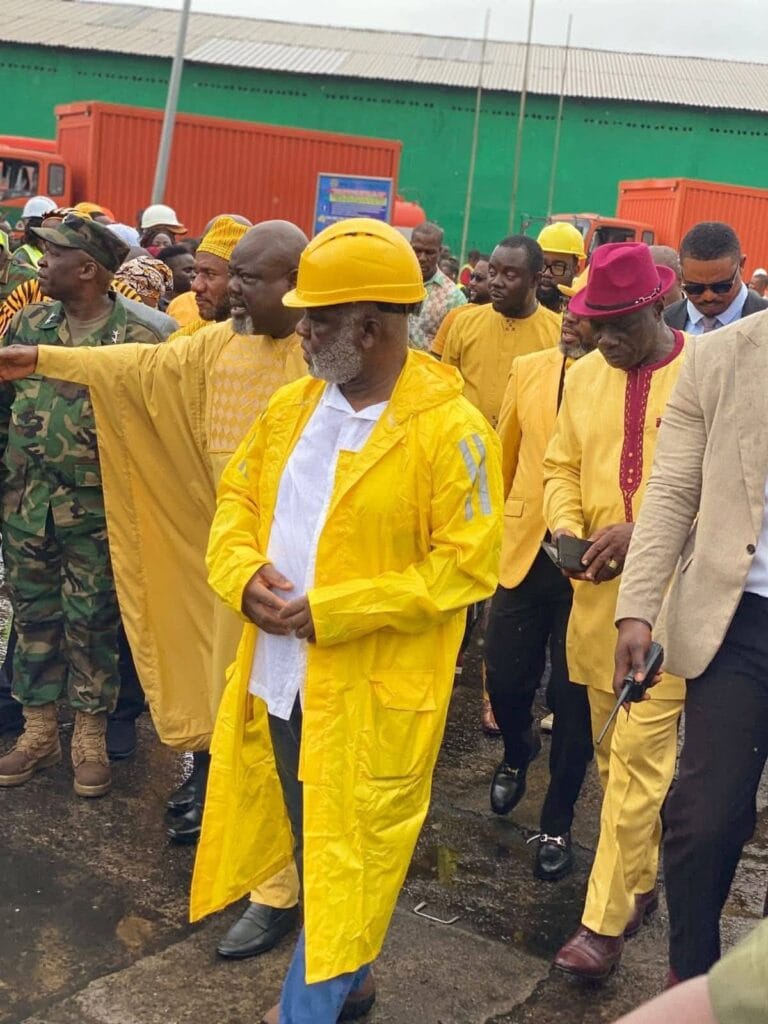
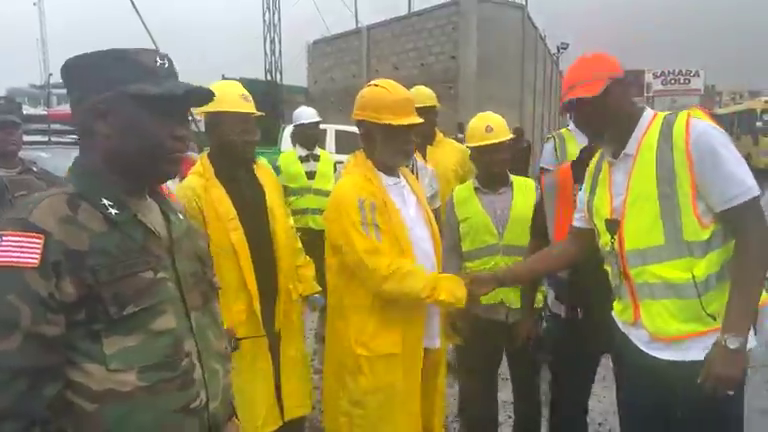
The visit came shortly after lawmakers drove to the Freeport of Monrovia to personally inspect the first batch of 137 pieces of heavy-duty equipment out of the 285 procured under the government’s infrastructure drive. The legislators said they wanted to “clear the myths” that the machines were used or misrepresented.
“We decided to go and see and test it physically,” House Speaker Richard Nagbe Koon told the President. “What we have seen today is that they are all brand-new machines.”
“Yellow Machine Day”
The delegation, led by Speaker Koon and Deputy Speaker Thomas P. Fallah, described the arrival of the machines as a historic milestone for rural connectivity. In a symbolic gesture, lawmakers declared February 26 as “Yellow Machine Day.”
“Today, we decided to move to the port to see the machines for ourselves,” Speaker Koon said. “We are here to acknowledge your hard work and to say thank you because we know these machines will open up our villages and towns.”
Deputy Speaker Fallah underscored the breadth of legislative support, telling the President that “90%, if not 95%, of members of the House of Representatives” were aligned in appreciation.
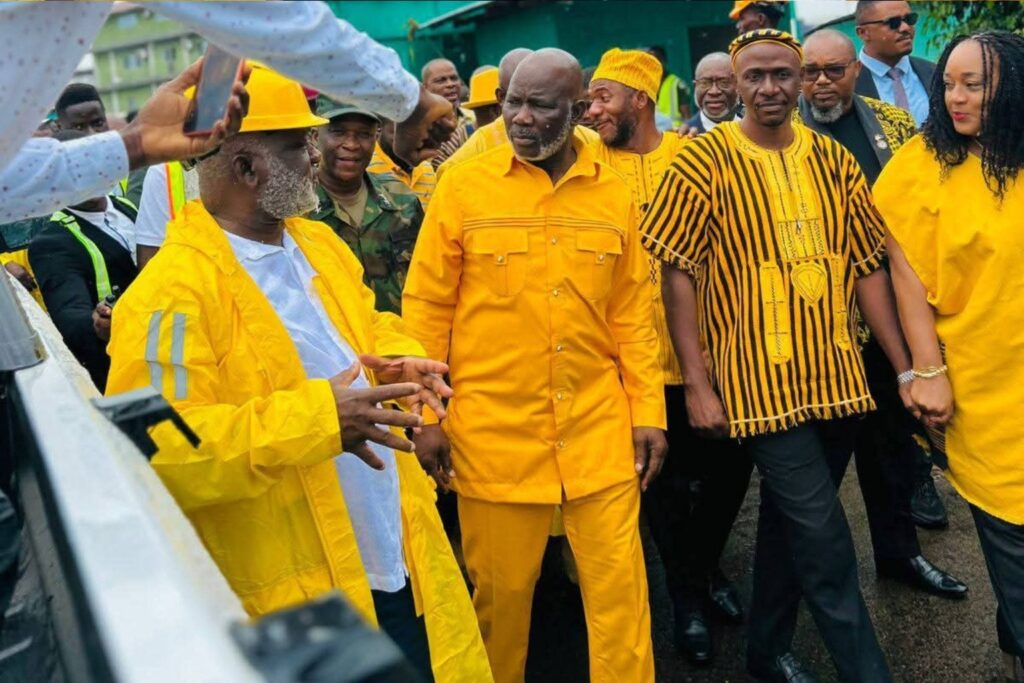
“We could not just enjoy that congratulations without coming to share it with you,” Fallah said.
Representatives from Montserrado, Nimba, Lofa, Grand Kru, River Gee, Rivercess, Grand Gedeh, Bomi, Maryland, Grand Cape Mount, Grand Bassa, Gbarpolu and other counties took turns expressing gratitude, with many emphasizing the dire road conditions in their respective districts.
Representative Rugie Yatu Barry of Montserrado County District 1 said the equipment was personal to her constituents.
“When I saw the machines, I said, this President really took this thing personally. When he said ‘roads, roads, roads,’ he took it personally,” she declared. “We ourselves are going to own it and possess it.”
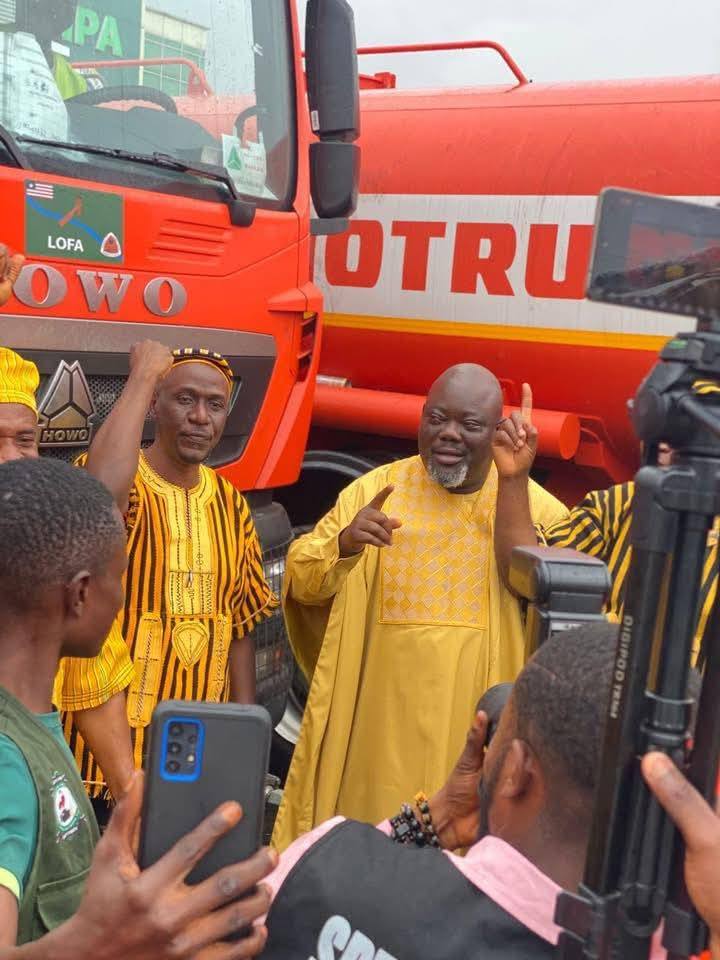
From River Gee County, Representative Johnson Samuel Nagbe Williams, Sr. described the machines as transformative.
“The district which I represent is grossly inaccessible,” he said. “The equipment just arrived has resolved our people’s problem.”
Campaign Overtones Emerge
While the visit was framed as an appreciation call, some lawmakers used the occasion to pivot toward electoral predictions.
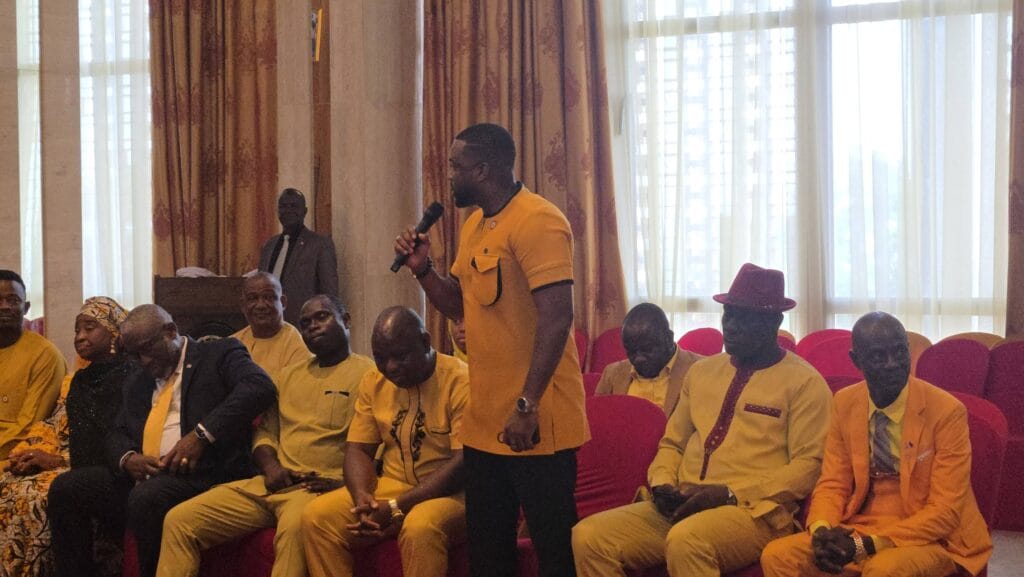
One representative from Lofa County boldly stated: “It is our hope that we will all work with you in ensuring that 2029 we will not have to struggle to get the ballot boxes out when we are electing you.”
Another lawmaker from River Gee declared simply: “2029 is over.”
Several others offered prayers and well-wishes for what they described as a second term, blending governance praise with early campaign undertones.
Deputy Speaker Fallah even joked about photo sessions by county caucuses being useful for banners in the future, drawing laughter from colleagues and prompting the President to caution lightly against overt political framing.
Boakai: “We’re Not Here for Party, We’re Here for Country”
In his response, President Boakai thanked the lawmakers but redirected the focus to collaboration and national development rather than partisan celebration.
“None of this would have happened if we were not working together to make it happen,” he said. “It’s your support, your approval, that made this happen.”
Boakai stressed that the arrival of the machines represents more than symbolism—it is part of a broader strategy to decentralize development and unlock Liberia’s economic potential.
“We can continue to say we are 179 years old and we have no roads, no water, no electricity,” the President remarked. “But this is one way we want to make our country accessible and bring benefit to our people.”
He disclosed that the equipment will be followed by the arrival of Bailey bridges to ensure access to riverine communities.
“There are places you cannot cross to reach,” Boakai noted. “The Bailey bridges will accommodate these machines so that road building becomes easier.”
The President also emphasized that a detailed management and distribution plan is being finalized to ensure transparency and accountability in the deployment of the equipment.
“The use of these machines is going to be very detailed—into the management, into the sources of funds—to make sure they are used for the respective counties,” he assured.
Infrastructure Push Beyond Machines
Boakai further revealed upcoming infrastructure projects, including the groundbreaking for a four-lane road from the St. Paul Bridge to Bo Waterside, aimed at enhancing cross-border trade and connectivity.
“Our country is rich and endowed,” he said. “The only way we can benefit from our country is to make these areas accessible.”
He urged lawmakers to see beyond short-term praise and focus on long-term transformation.
“You cannot always just be honorable,” Boakai told them candidly. “You must have a country.”
In a remark that drew applause, he added: “We’re not here for party. We’re here for country.”
Lawmakers Inspect Machines Amid Public Scrutiny
The lawmakers’ earlier stop at the Freeport was widely seen as a response to public skepticism circulating on social media about the quality and condition of the equipment.
Speaker Koon addressed the controversy directly, stating that the delegation’s visit was meant to dispel claims that the machines were used or artificially generated images.
“We have seen the machines people consider to be used machines or AI designs,” he said. “We decided to see and make sure we are seeing the actual machines.”
The inspection appeared to bolster confidence among the legislators, many of whom said their counties are already identifying priority road corridors for grading, rehabilitation and expansion.
A Political Moment, A Development Gamble
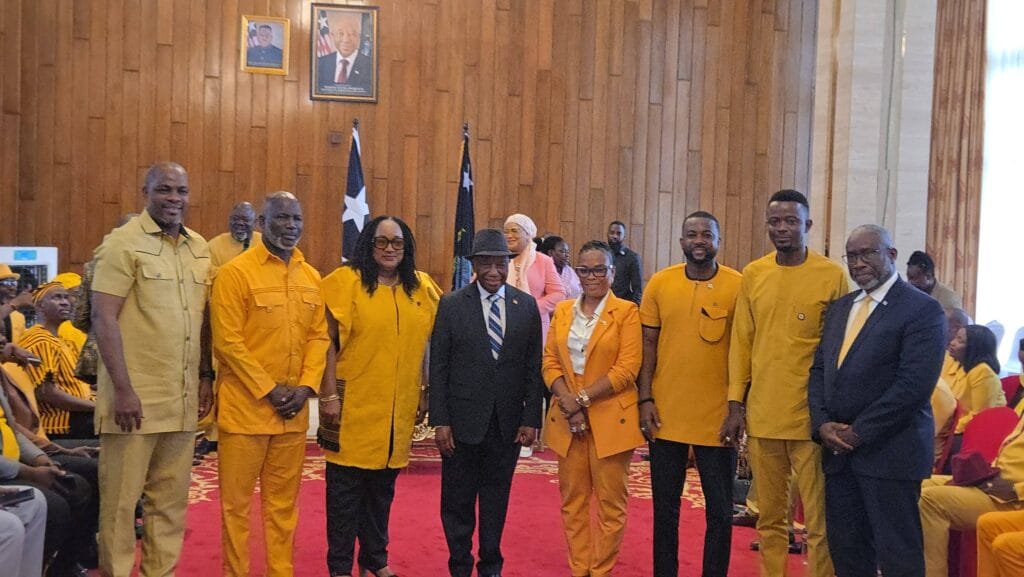
The scene at the Executive Mansion—lawmakers dressed in yellow, county caucuses lining up for photographs with the President, and declarations of early electoral victory—highlighted the political significance of the infrastructure initiative.
Yet, beyond the symbolism, the true test lies ahead: ensuring that the 285 machines are effectively deployed, maintained, and shielded from misuse.
For now, the “yellow machines” have become both a development symbol and a political statement—one that the Boakai administration hopes will translate into tangible road networks across Liberia’s often-forgotten hinterlands.
As President Boakai concluded: “This is a small country. By the time you open it up, you’ll find out you have relatives all over. That’s who we are. And that’s what I want to build upon.”
The next phase—distribution to the counties and operational rollout—will determine whether the optimism displayed at the Mansion transforms into lasting infrastructure change on the ground.
Follow The Liberian Post on Facebook and X (formerly twitter)