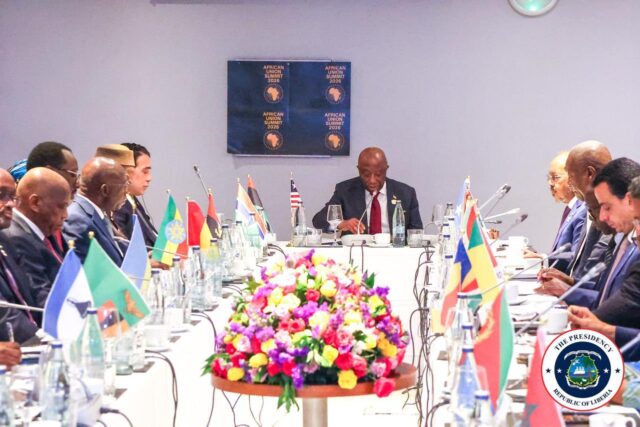
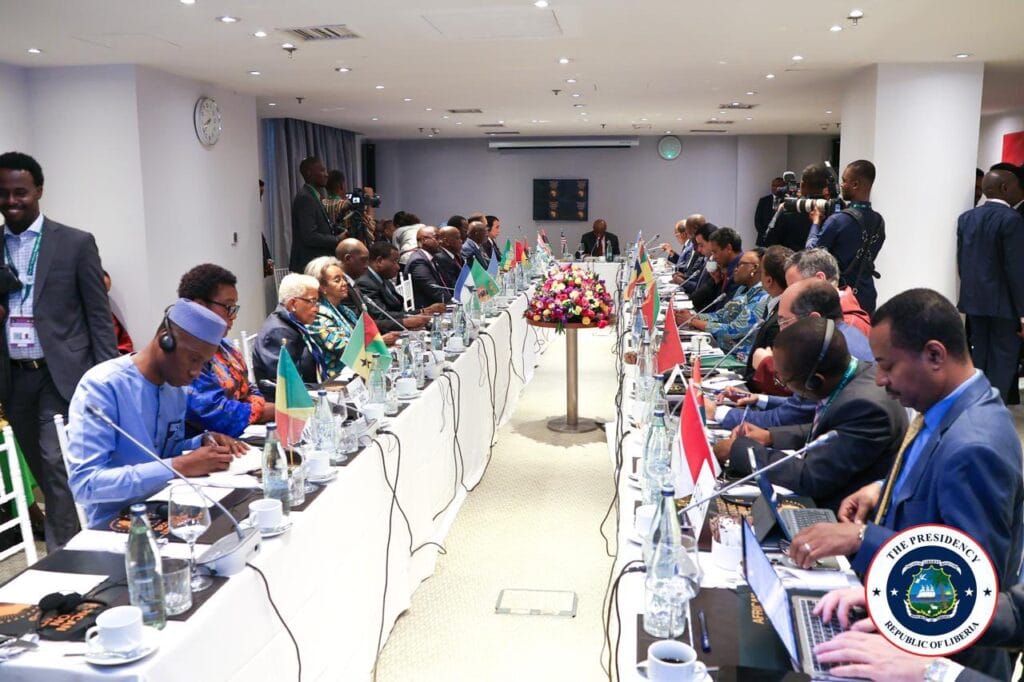
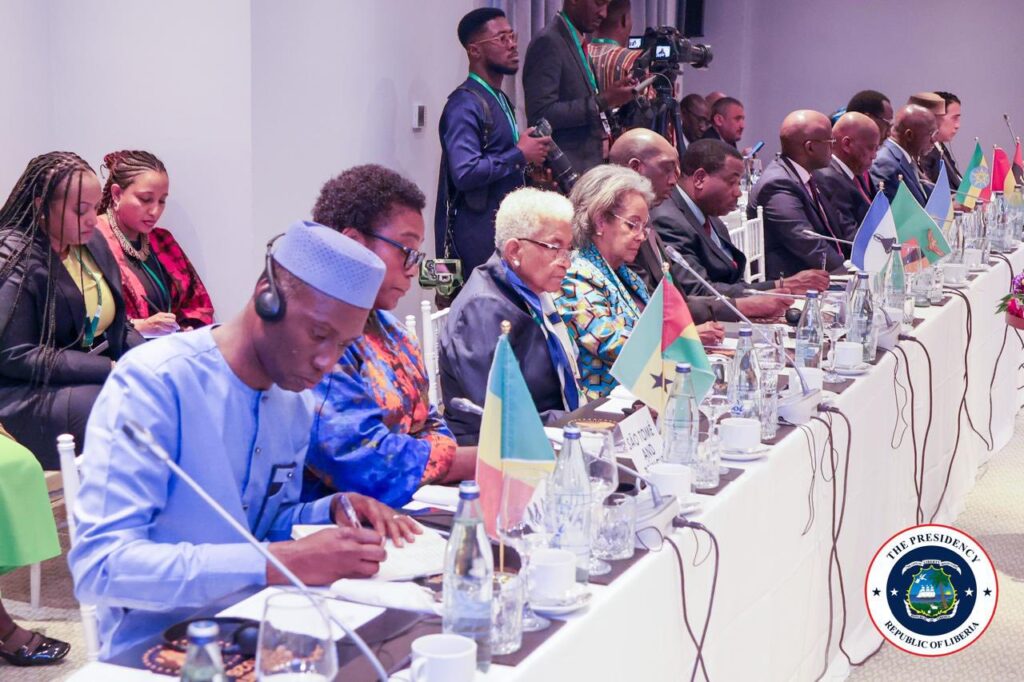
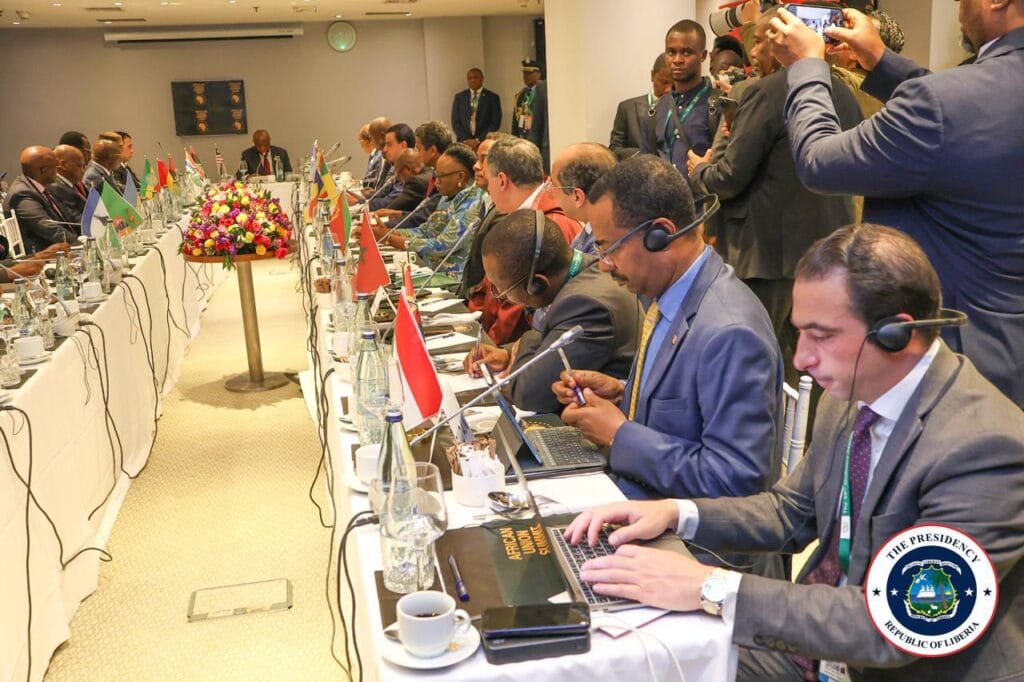
ADDIS ABABA, Ethiopia — President Joseph Nyuma Boakai on early Sunday morning hosted a high-level informal breakfast meeting on the margins of the 39th Ordinary Session of the African Union (AU) Summit, bringing together African heads of state, senior officials, and diplomats for strategic consultations on the future of the United Nations and Africa’s role in shaping global governance.
The closed-door meeting, convened at the Marriott Hotel in Addis Ababa, comes at a pivotal time for multilateral diplomacy, as the United Nations prepares for the selection of its next Secretary-General and continues to grapple with calls for institutional reform.
In opening remarks, President Boakai challenged African leaders to reflect deeply on whether incremental changes at the UN are sufficient to address its broader structural challenges.
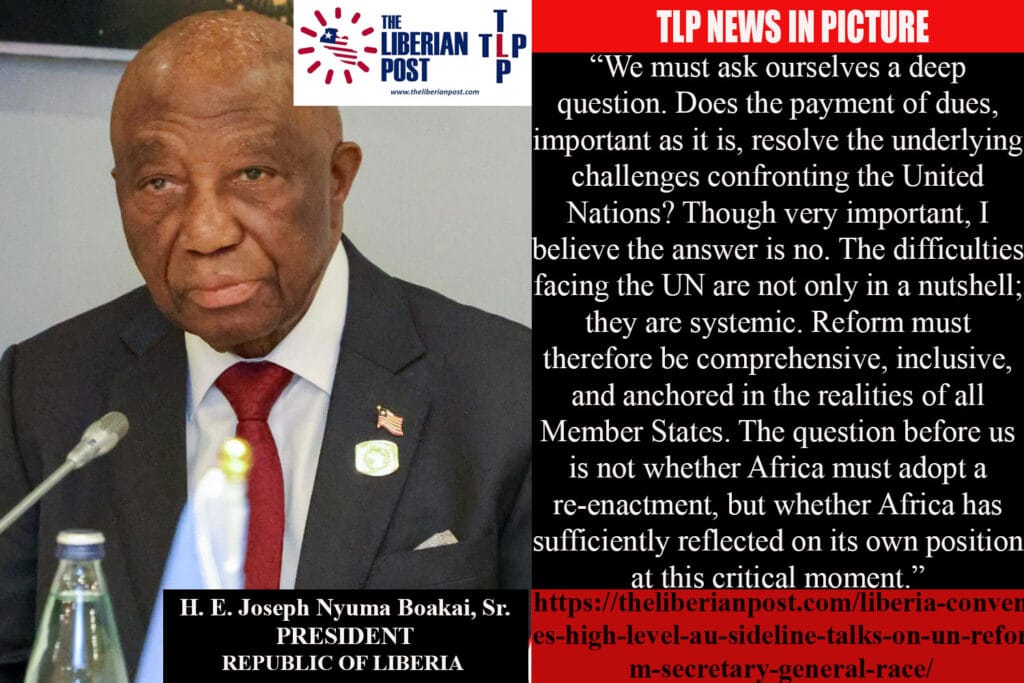
“We must ask ourselves a deep question. Does the payment of dues, important as it is, resolve the underlying challenges confronting the United Nations?” the Liberian leader said. “Though very important, I believe the answer is no. The difficulties facing the UN are not only in a nutshell; they are systemic.”
He underscored that the challenges facing the UN go beyond financing and instead touch on how mandates are implemented, how institutions coordinate, and how global leadership navigates an increasingly fragmented world marked by rivalry and declining trust.
“Reform must therefore be comprehensive, inclusive, and anchored in the realities of all Member States,” Boakai stressed.
Africa Must Not Be Peripheral
The Liberian President used the platform to call for a unified and strategic African position in the impending UN Secretary-General selection process, warning against complacency.
“The question before us is not whether Africa must adopt a re-enactment, but whether Africa has sufficiently reflected on its own position at this critical moment,” he said.
He urged African leaders to consider what qualities of leadership the United Nations now requires and how the continent can influence the outcome of the process.
“Africa must not be a peripheral participant. It must not be a passive observer in this process,” Boakai declared.
Representing more than a quarter of UN Member States, Africa, he argued, has both “the responsibility and the right” to articulate its expectations for the next Secretary-General and broader UN reforms.
“The future of the United Nations will be shaped by those who choose to lead with clarity and courage. Africa must be among them, speaking with one voice,” he said.
Liberia’s Rising Global Profile
The meeting also highlighted Liberia’s expanding diplomatic footprint. The country recently assumed the chairmanship of the African Group at the United Nations in New York and currently serves as a non-permanent member of the UN Security Council.
According to Deputy Minister for Public Affairs at the Ministry of State for Presidential Affairs, Anthony V. Kesselle, the President deemed it prudent to host consultations given Liberia’s current leadership roles.
“Liberia just assumed the position of chairmanship for the African Group at the United Nations,” Kesselle noted, describing the gathering as historic. “I don’t recall in history a gathering like this being convened by Liberia of other heads of state… to consult on the future of the United Nations.”
He emphasized that Liberia’s Security Council seat carries continental responsibility.
“The seat is Liberian, the position is Liberian, but the seat is Africa,” Kesselle said, reinforcing the administration’s position that Liberia is representing broader African interests at the global level.
Linking Diplomacy to Development
Addressing concerns that high-level diplomacy may not immediately translate into domestic economic benefits, Kesselle argued that peace, credibility, and global engagement are directly connected to investment and economic stability.
“Anything that goes up in your country that is good, it’s a bread and butter issue,” he said, explaining that global respectability attracts investment, strengthens bilateral relations, and fosters stability that ultimately benefits ordinary citizens.
He described Liberia’s growing visibility on the international stage as part of a broader restoration of the country’s historic leadership role in Africa and multilateral affairs.
Series of Bilateral Engagements
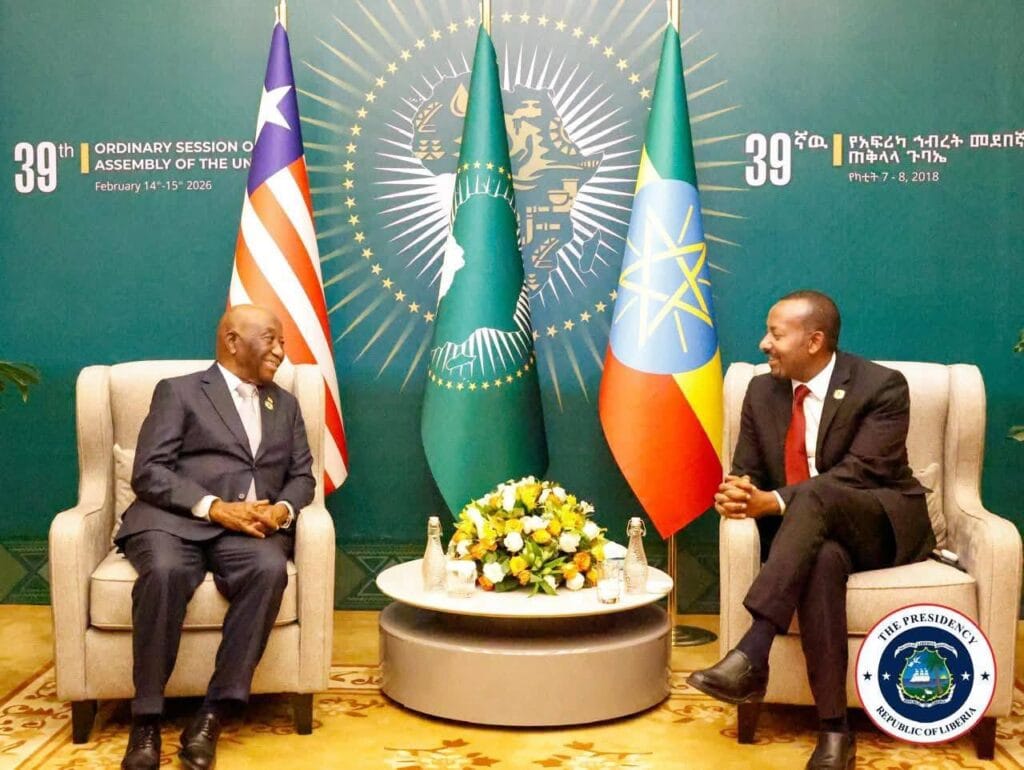
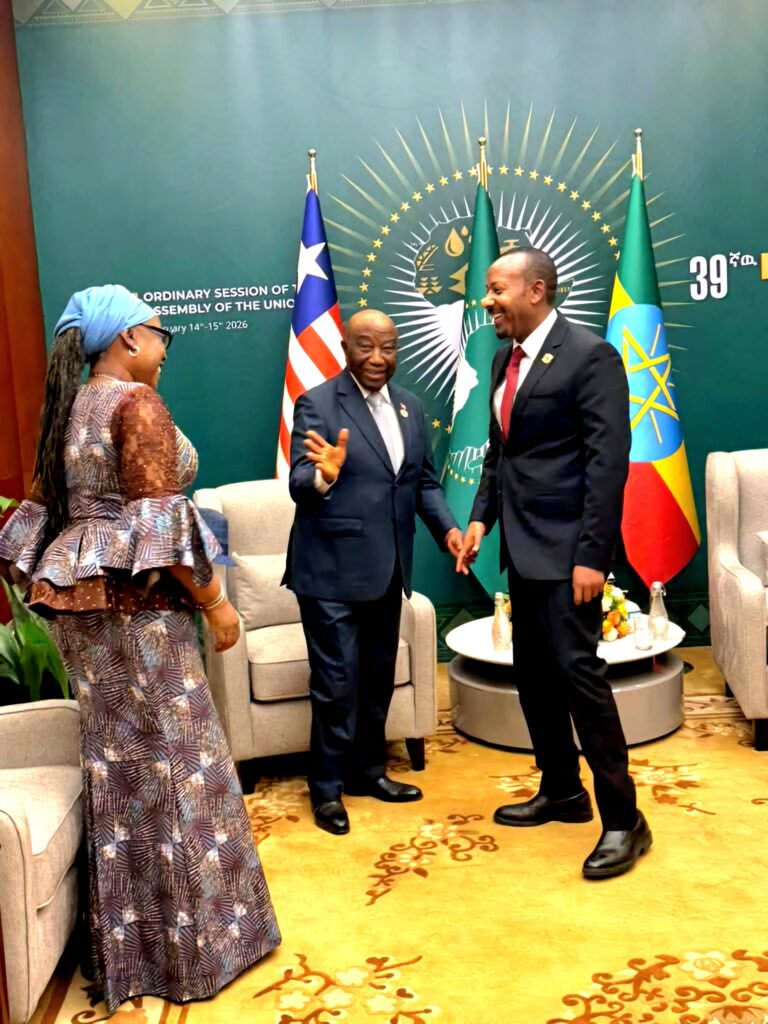
President Boakai’s breakfast meeting capped a series of high-level engagements during the AU Summit. According to officials, the Liberian leader met with Ethiopian Prime Minister Abiy Ahmed Ali, representatives of the Arab Bank for Economic Development in Africa (BADEA), and the Acting Chief Prosecutor of the International Criminal Court (ICC).
These meetings reportedly focused on infrastructure financing, international cooperation, and Liberia’s support for global justice mechanisms.
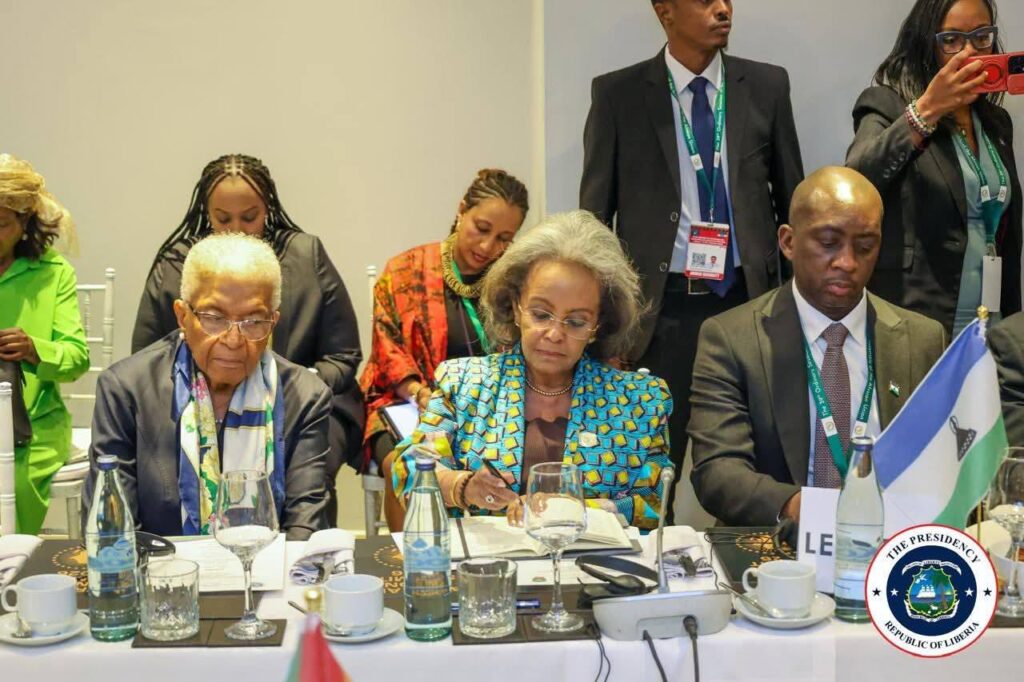
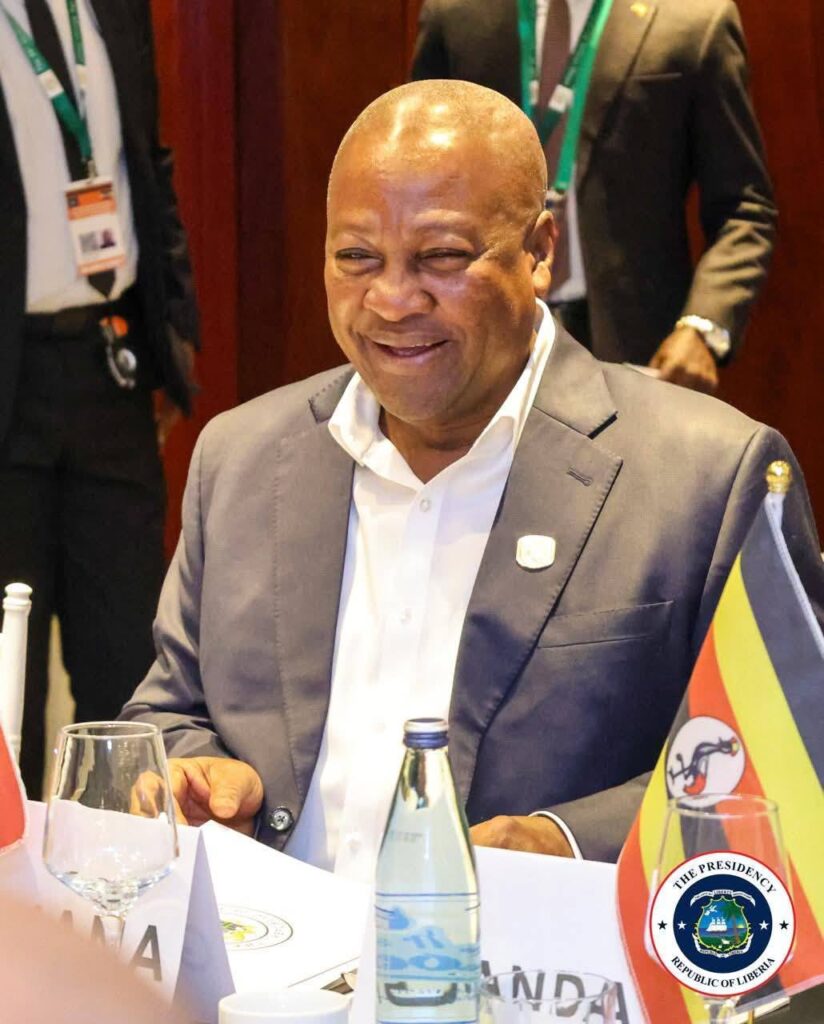
The breakfast gathering itself drew a significant turnout of African leaders, including the President of Ghana, the Vice President of The Gambia, the President of Libya, foreign ministers, ambassadors, and former Liberian President Ellen Johnson Sirleaf, among others.
Strategic Consultation
The objective of the high-level consultation, officials said, was to take stock of the current state of the United Nations and multilateralism; explore Africa’s collective position on UN reform and leadership; assess the feasibility of an African candidate for Secretary-General; and identify strategic pathways for Africa to shape global governance.
President Boakai concluded by urging constructive engagement and unity among African states.
“At this crossroads, our task is clear. We must engage constructively with all parties… and insist that reforms go beyond budget, addressing the deeper questions of relevance and effectiveness,” he said.
As Liberia continues to assert its voice at the AU and the UN, the Addis Ababa breakfast meeting signals a deliberate effort by Monrovia to help steer continental thinking at a time when the global order faces mounting uncertainty—and when Africa’s influence within that order is increasingly consequential.
Follow The Liberian Post on Facebook and X (formerly twitter)