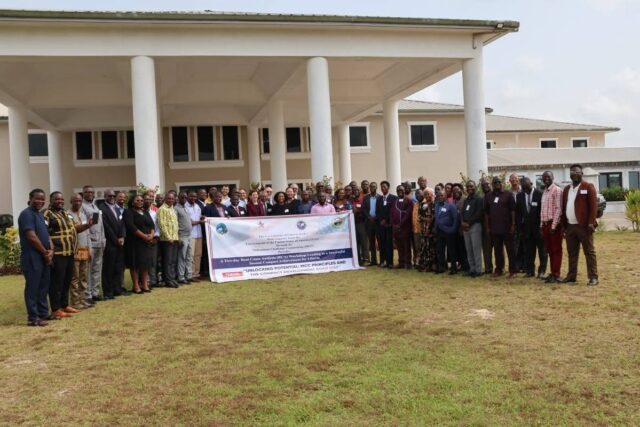
MONROVIA – The Government of Liberia, in partnership with the Millennium Challenge Corporation (MCC), has launched a Root Cause Analysis Workshop, marking a major step in the nation’s preparations for a potential Second MCC Compact aimed at transforming Liberia’s energy sector.
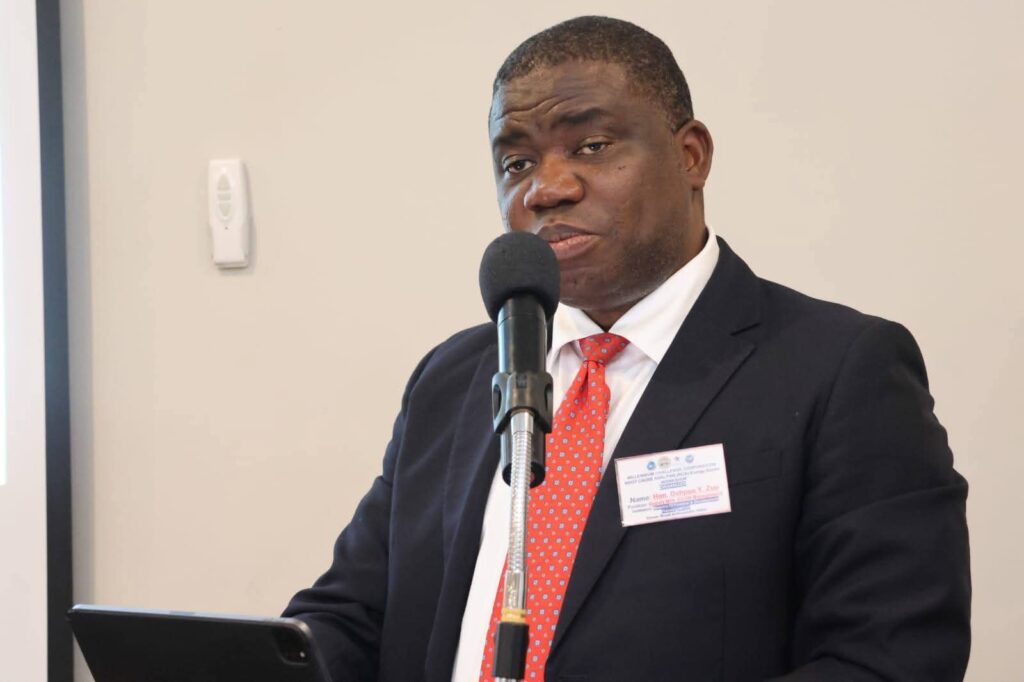
The workshop opened with remarks from Deputy Finance Minister for Economic Management, Hon. Dehpue Y. Zuo, who welcomed a broad cross-section of stakeholders and underscored the technical importance of the exercise.
“Today is an opportunity for us to see where we are as a country,” Hon. Zuo indicated. “This workshop is not only a technical gathering, but a clear demonstration of leadership and partnership between the Government of Liberia and the United States.”
Energy at the Center of Compact Preparation
Liberia is currently in the compact development phase with the MCC, following its successful passage of key governance and policy performance indicators required by the U.S. agency. The compact process is competitive and data-driven, relying on independent global indicators to determine eligibility and measure policy performance.
As part of this preparation, earlier economic analyses identified energy as a binding constraint to growth in Liberia. Limited access to electricity, high tariffs, frequent outages and heavy reliance on costly fuel imports have long undermined private sector productivity and slowed industrial expansion.

The Root Cause Analysis now underway is designed to move beyond identifying the symptoms of the problem and instead diagnose the underlying institutional, financial, regulatory and technical barriers preventing the sector from functioning efficiently.
According to Deputy Minister Zuo, reliable, affordable and sustainable electricity is fundamental to Liberia’s national development agenda. He noted that strengthening the power sector would drive industrialization, create jobs, improve healthcare and education services, and reduce the cost of doing business.
Technical Deep Dive
Participants at the workshop include representatives from government ministries and agencies, the national electricity utility, energy regulators, private sector operators, development partners, civil society organizations and advocacy groups.
The discussions are expected to examine policy and regulatory framework gaps, financial sustainability, including revenue collection and cost recovery—operational and governance weaknesses, technical challenges across generation, transmission and distribution, equity in access for women, youth and rural communities, and environmental sustainability considerations.
“We must speak frankly about what has worked and what has not worked,” Hon Zuo urged. “The solutions must be practical, evidence-based, and aligned with our national priorities.”
MCC’s Compact Development Process
MCC Senior Project Lead for Liberia, Carolyn Lesolchian, emphasized that the Root Cause Analysis is a foundational stage in designing a compact that delivers measurable and sustainable impact.
“This is when we dive deeply into the problems not just jumping to solutions,” Lesolchian said. “We need to fully understand the real constraints to economic growth before designing projects that can truly transform Liberia.”
The MCC compact development process typically spans several years and includes constraints analysis, root cause analysis, project identification, feasibility studies and the establishment of key policy reforms — known as “conditions precedent” that must be met before funding is disbursed.
If successfully concluded, a compact would provide significant grant funding to support targeted investments and policy reforms in the selected sector. In Liberia’s case, energy has emerged as the priority area.
Building on Past Engagement
Liberia’s engagement with the MCC builds on years of policy reform efforts aimed at strengthening governance, transparency and economic management. The country’s progress in meeting MCC scorecard indicators has enabled it to advance to this stage of compact development.
Officials say the current workshop signals a deeper level of technical collaboration and national ownership of the reform process.
“The work we do here will directly inform our policy decisions and future investments,” Minister Zuo asserted, adding that the government remains committed to creating a modern, efficient and financially viable power sector.
As deliberations continue, stakeholders have been encouraged to collaborate openly and contribute data, experience and expertise. The findings from the Root Cause Analysis will guide project design and reform priorities in the months ahead.
For Liberia, the workshop represents more than a technical exercise, it is a decisive step toward unlocking sustainable energy solutions that could power economic growth and reduce poverty nationwide.
Follow The Liberian Post on Facebook and X (formerly twitter)