MONROVIA, Liberia — Liberia has cleared a critical milestone in its partnership with the United States after passing the latest MCC eligibility scorecard, marking a renewed window of opportunity for a successor compact that could unlock hundreds of millions of dollars in development assistance.
The Millennium Challenge Corporation, the U.S. Government’s bilateral development agency, publishes an annual country scorecard assessing nations on governance, economic freedom and investment in people. Liberia’s improved performance, reflected in the FY 2025/2026 indicators, signals to the U.S. that the country remains a credible partner for a future compact.
Passing the scorecard is key because while eligibility doesn’t automatically guarantee a compact, it is a pre-requisite. The U.S. Embassy in Monrovia has reminded Liberians that eligibility “does not guarantee a program,” but it does start the negotiation process.

Why This Matters to Liberia
- A new compact would bring large-scale funding, typically ranging from US$100 million to US$700 million, aimed at infrastructure, institutional reform and private-sector growth.
- It signals strong international confidence in Liberia’s governance reforms, anti-corruption efforts and institutional strengthening — all priorities under President Joseph Nyuma Boakai’s ARREST Agenda.
- The compact process will force deep diagnostics of Liberia’s constraints to economic growth, meaning reforms may be locked in and sustained.
- It may help Liberia leverage other investor interest, as being MCC-eligible often signals a lower-risk environment.
What Liberia Must Do Next
While the scorecard pass is cause for celebration, analysts caution that Liberia must now convert eligibility into results. Key tasks ahead include:
- Conducting a rigorous Growth Diagnostic to identify the binding constraints to growth and poverty reduction.
- Ensuring the compact’s design is transparent, aligns with national priorities and that procurements are open and competitive.
- Demonstrating implementation capacity — Liberia’s prior compact (signed in 2015) faced delays and raised questions about absorptive and institutional capacity.
- Sustaining improvements on the indicators that triggered eligibility, to avoid slipping behind.
Voices from the Partnership

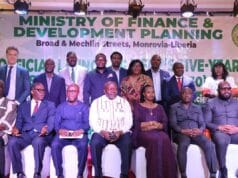
Minister of Finance and Development Planning, Hon. Augustine Kpehe Ngafuan, described the scorecard achievement as “a confirmation that our reforms and institutions are gaining international credibility” and pledged that Liberia will engage “with discipline and clarity” in the compact process.
The U.S. Embassy noted that the MCC Board’s decision “reflects the progress Liberia has made in governance and economic freedom but stresses this is the start of a deeper negotiation, not the finish line.”
Looking Ahead
For Liberia, the MCC eligibility marks the beginning of the next chapter — transforming potential into development impact. Success will depend not only on securing the compact, but on how well the government and its partners execute it.
If done well, the compact could accelerate Liberia’s drive for jobs, infrastructure and economic transformation. If mishandled, the promise of “another chance” may fade. In that light, passing the scorecard is less about victory and more about responsibility — for Liberia, the U.S. and all stakeholders engaged in this partnership.