MONROVIA, Liberia — The Liberia Political Centrism Movement (LPCM) has released its 2025 Year-End Governance and Development Statement, offering a sober, evidence-based assessment of Liberia’s political, economic, and social trajectory while urging balanced reforms anchored in national interest rather than partisan contestation.
In the report, the centrist group acknowledges Liberia’s continued democratic resilience, citing international governance benchmarks that show the country maintaining electoral continuity and civic space despite lingering institutional constraints. Referencing the Mo Ibrahim Index of African Governance and Freedom House, the LPCM notes that Liberia remains “partly free,” with active civil society engagement and improving institutional norms, even as challenges persist in judicial efficiency and enforcement.
Against this backdrop, the Movement calls for targeted justice-sector reforms, including court automation, reduced pretrial detention, and stronger coordination between justice and security institutions. It describes the rule of law as a “critical national asset” that must be strengthened to sustain peace and investor confidence.
On accountability and anti-corruption, the statement points to Liberia’s improved performance on the Millennium Challenge Corporation scorecard as a sign of renewed international confidence—particularly in fiscal policy, democratic rights, and control of corruption. Passing the scorecard, the LPCM argues, opens a pathway toward a future MCC compact. Still, it warns of a perception gap at home and urges deeper public financial management reforms, including full digitization of procurement, payroll, and revenue systems, alongside stronger independence for integrity institutions.
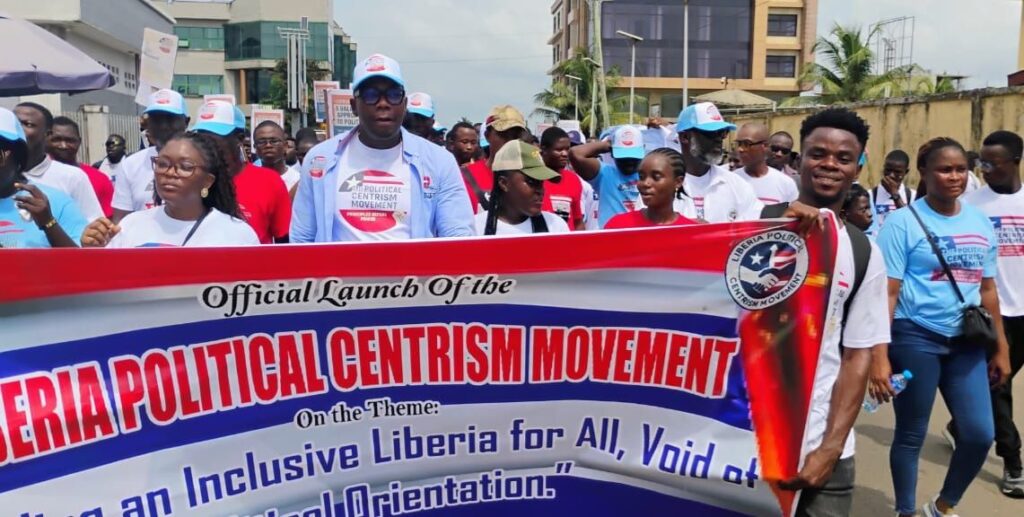
Economically, the report identifies cost-of-living pressures as the dominant concern for Liberian households. While macroeconomic management has improved, the LPCM says growth remains insufficiently inclusive, constrained by import dependence and limited job creation. It recommends a focused diversification strategy centered on agriculture value chains, MSMEs, tourism, and the creative economy, supported by access to finance and regulatory reform.
The Movement also flags infrastructure and energy deficits—poor roads, unreliable electricity, and high logistics costs—as persistent barriers to productivity. It urges accelerated investment in renewable energy and feeder roads that link farmers to markets and industrial zones.

In the social sectors, the LPCM recognizes incremental gains in education access and health service reach, largely supported by development partners, but calls for a pivot toward quality—teacher training, learning materials, primary healthcare staffing, and stronger county-level systems.
With youth unemployment posing long-term governance risks, the report emphasizes scaling practical skills training, digital literacy, and youth enterprise financing aligned with labor-market demand. On peace and cohesion, it credits Liberia’s sustained stability while cautioning against complacency, recommending expanded civic education, community policing, and youth engagement to counter drugs, crime, and social fragmentation.
Concluding with a pledge of constructive engagement in 2026, the Liberia Political Centrism Movement reiterates its credo—Nation Before Party, Principle Before Power—and calls for disciplined leadership, accountable institutions, and inclusive growth choices to translate cautious optimism into durable progress.