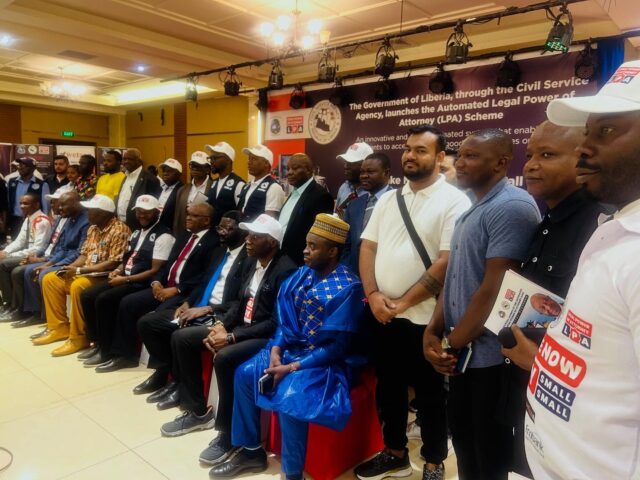
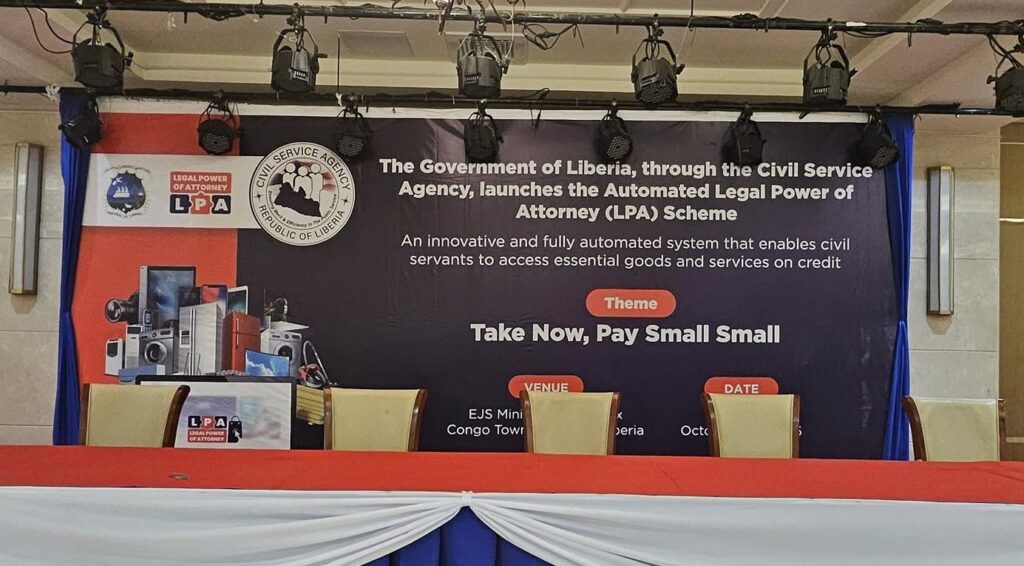
MONROVIA — In a major stride toward modernizing public administration and restoring an old legacy of trust between government and workers, President Joseph Nyuma Boakai through one of his trustworthy men, Ambassador at-Large Charles A. Snetter, Wednesday, October 22, officially launched the Automated Legal Power of Attorney (LPA) System, a landmark initiative designed to expand financial access and improve the welfare of thousands of Liberian civil servants.
The long-awaited digital platform, developed by the Civil Service Agency (CSA), replaces the old paper-based LPA system that collapsed during the country’s civil war in the early 1990s. Back in the day, the older folks referred to the scheme locally as “Liberia Pay After.”
Under the previous scheme — widely used in the 1970s and 1980s — public employees could obtain household goods, clothing, and other essentials from stores and vendors, with payments automatically deducted from their monthly salaries. The system was abruptly halted when conflict and institutional breakdown swept across the nation in 1989.
Now, more than three decades later, the Boakai administration has revived and modernized the LPA with biometric and real-time verification features, enabling government workers to purchase approved goods on credit and pay over six months through salary deductions.
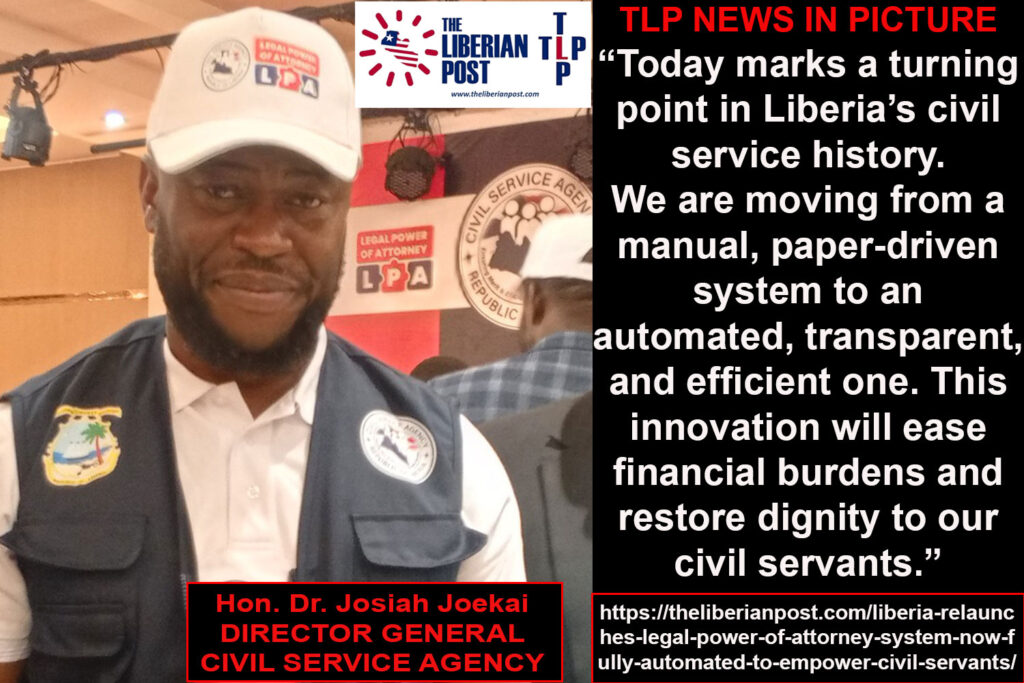
“Today marks a turning point in Liberia’s civil service history,” declared CSA Director General, Dr. Josiah Joekai, at the launch event in Monrovia. “We are moving from a manual, paper-driven system to an automated, transparent, and efficient one. This innovation will ease financial burdens and restore dignity to our civil servants.”
Dr. Joekai added that the Automated LPA System eliminates the inefficiencies, fraud, and administrative delays that plagued the old setup, ensuring that every transaction is recorded digitally and verifiable.
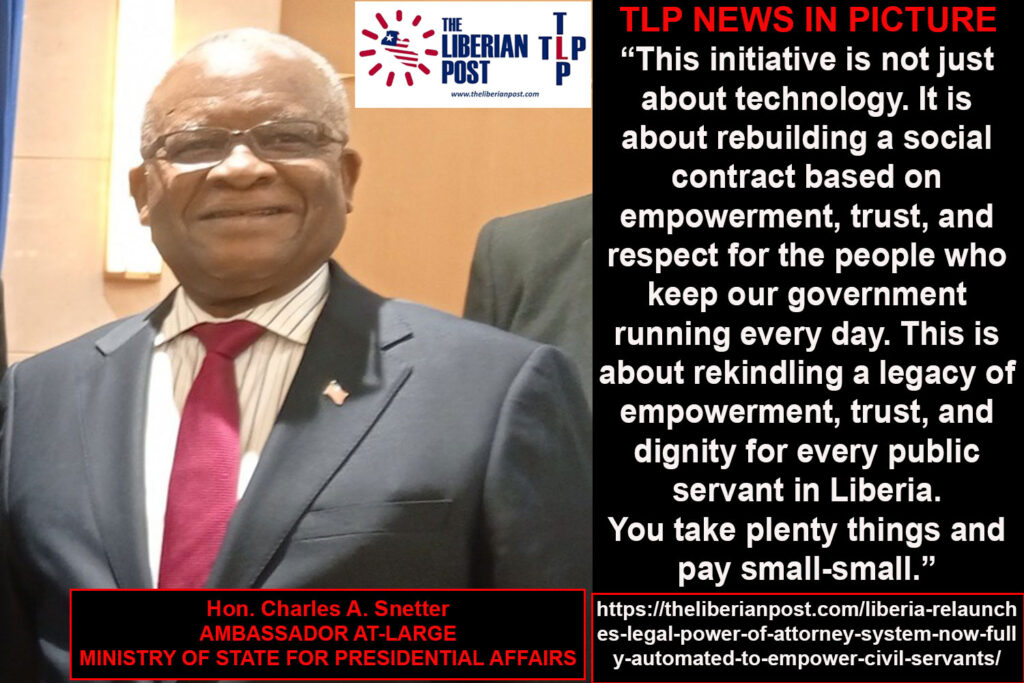
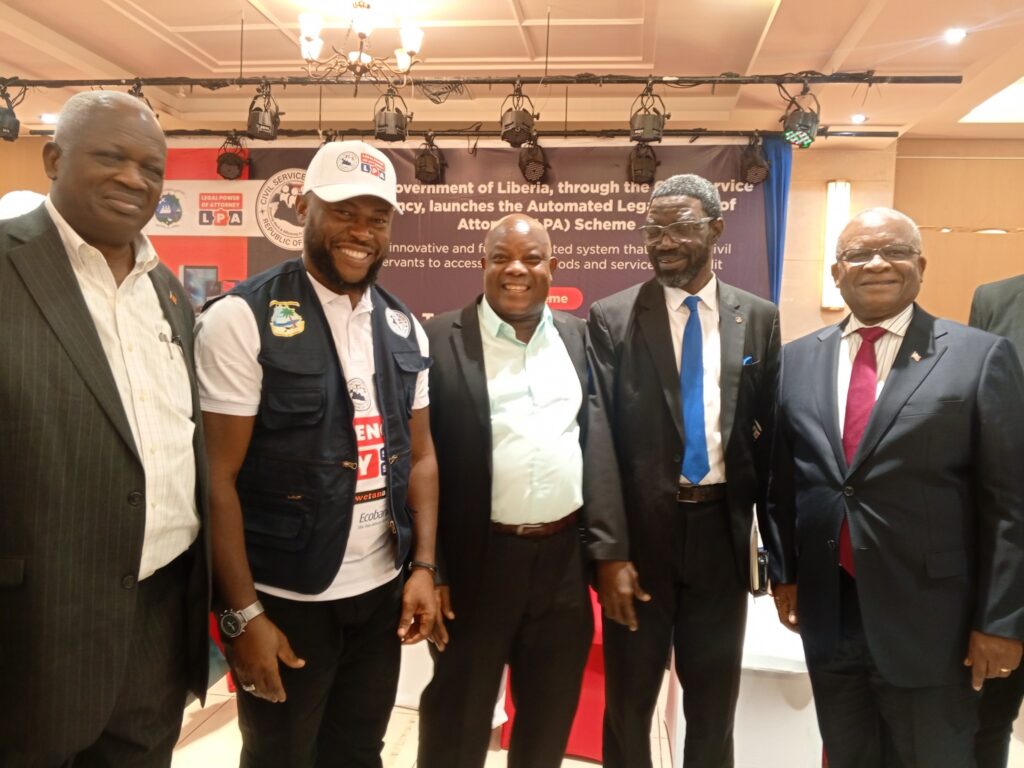
Representing President Boakai, Ambassador Snetter reaffirmed the government’s commitment to improving civil servants’ livelihoods, noting that “no civil servant earns less than US$150” following recent salary adjustments affecting more than 23,000 essential workers across the education, health, agriculture, and security sectors.
“This initiative is not just about technology,” Ambassador Snetter said. “It is about rebuilding a social contract based on empowerment, trust, and respect for the people who keep our government running every day.”
He added that the new LPA system allows workers to access essential goods “without falling prey to loan sharks or informal credit schemes,” describing it as “a symbol of hope for the nation’s struggling workforce.”
President Boakai, in a statement read on his behalf, praised the initiative as part of his ARREST Agenda for Inclusive Development (AAID) — focusing on Agriculture, Roads, Rule of Law, Education, Sanitation and Health, and Tourism — and reaffirmed that his government’s reforms are anchored on “improving the lives of those who serve.”
“This is about rekindling a legacy of empowerment, trust, and dignity for every public servant in Liberia,” the President said.
“You take plenty things and pay small-small,” he added in local parlance, emphasizing affordability and fairness.
The Automated Legal Power of Attorney System is seen as a pillar of the administration’s wider digital transformation and governance modernization drive, aiming to reduce bureaucracy, enhance accountability, and ensure that public workers have easier access to financial and material support.

Analysts say the move could help curb corruption and boost morale within the civil service, which has long struggled with low pay, salary delays, and limited access to financial services.
The government hopes that as the new system rolls out nationwide, it will not only revive a beloved pre-war program but also usher in a new era of efficiency and dignity in public service — symbolizing Liberia’s steady march toward institutional renewal and people-centered governance.