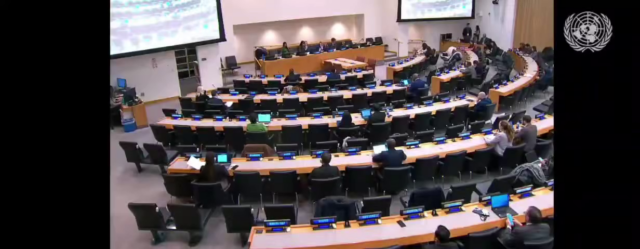
NEW YORK, USA — Liberia has renewed its call for far-reaching reform of the United Nations Security Council (UNSC), demanding permanent African representation as the Intergovernmental Negotiations (IGN) on Council reform resumed under the Eightieth Session of the United Nations General Assembly.
Speaking during the Informal Plenary of the negotiations, Liberia’s Deputy Permanent Representative to the United Nations, Baba Sillah, outlined the country’s position on behalf of the Government of Liberia, aligning fully with the African Group’s Common Position while delivering remarks in Liberia’s national capacity.
Liberia welcomed the General Assembly’s decision to continue the long-running reform process, describing it as a reflection of the international community’s determination to address what Monrovia termed a “long overdue” institutional injustice. Sillah noted that the current phase of negotiations builds on previous work, including the Chair’s letter of July 2, 2025, the revised Co-Chairs’ Elements Paper, and earlier resolutions and text proposals, which Liberia said should remain central reference points for advancing meaningful reform.
At the core of Liberia’s intervention was a strong critique of the Security Council’s structure, which has remained largely unchanged since the UN’s founding nearly eight decades ago. According to Liberia, this stagnation has undermined the Council’s legitimacy, representativeness, and effectiveness, particularly for developing regions.
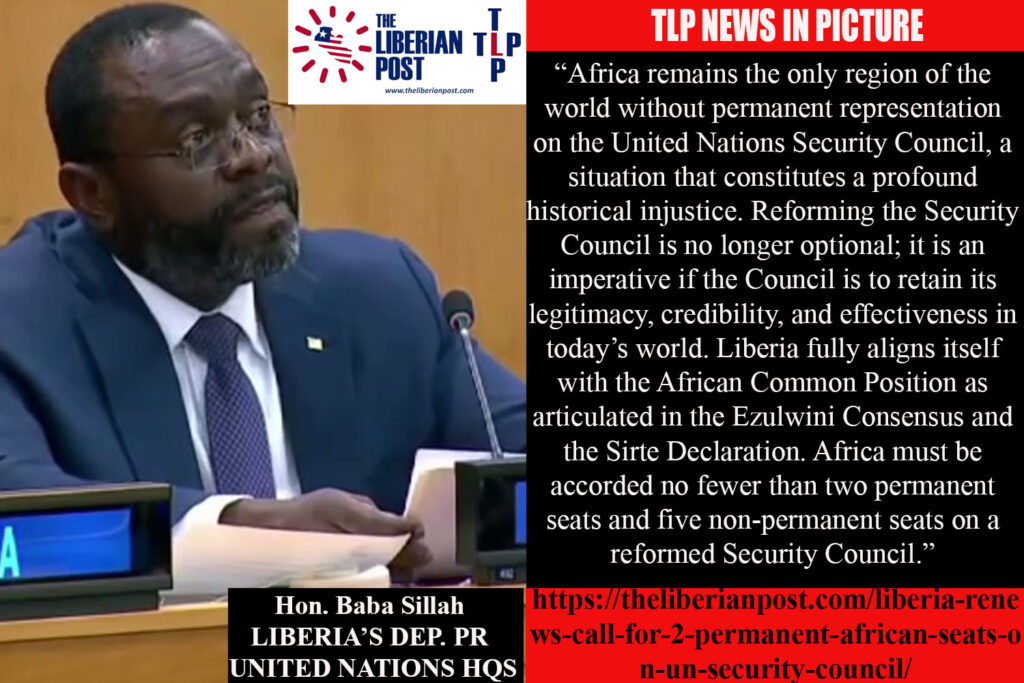
“Africa remains the only region without permanent representation on the Security Council,” Sillah told the plenary, describing the exclusion as a “profound historical injustice” that must be urgently corrected.
Liberia reaffirmed its support for the African Common Position, as articulated in the Ezulwini Consensus and the Sirte Declaration, which calls for at least two permanent seats and five non-permanent seats for Africa. The Liberian delegation emphasized that permanent African members must enjoy the same rights and privileges as existing permanent members, including veto powers, as long as the veto remains part of the Council’s architecture.
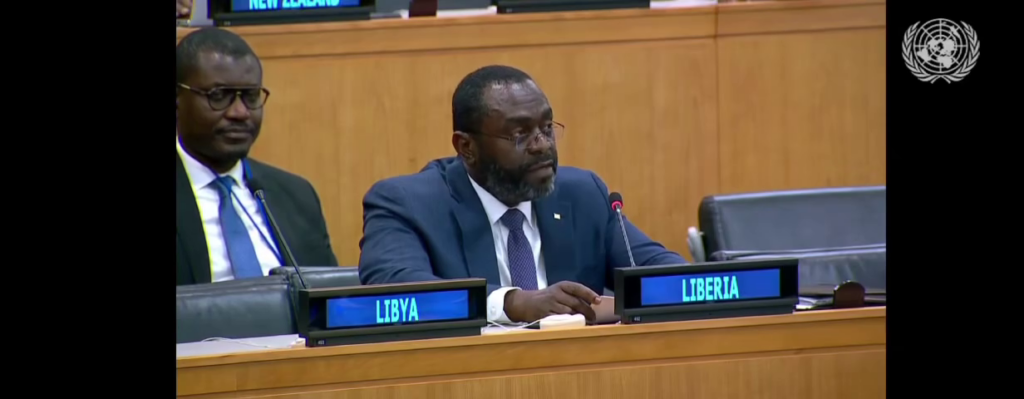
The delegation stressed that reforms which avoid addressing the veto issue would merely perpetuate global imbalances. While acknowledging recent initiatives aimed at increasing transparency in veto use, Liberia argued that such measures cannot substitute for comprehensive reform or resolve Africa’s systemic marginalization.
Beyond representation, Liberia urged improvements in the Council’s working methods and called on the IGN process to move beyond repetitive statements toward structured, inclusive, and text-based negotiations capable of producing concrete outcomes. Liberia concluded by reaffirming its commitment to working with all UN Member States to achieve a balanced, just, and credible Security Council reform that reflects contemporary geopolitical realities and upholds the principles of the UN Charter.