MONROVIA – With just days to World AIDS Day, the National AIDS Commission (NAC) has announced a troubling rise in the number of Liberians living with HIV/AIDS.
According to the Commission, the national figure has climbed from 34,000 in 2024 to 36,000 in 2025, signaling ongoing challenges in prevention, awareness, and access to treatment across the country.
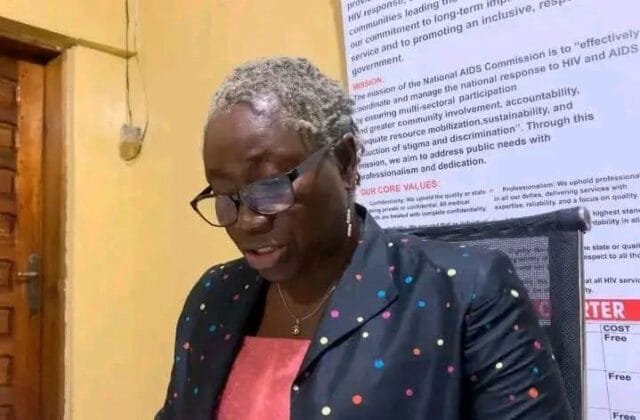
During a recent press briefing, NAC Chairperson Dr. Cecelia Nuta revealed these alarming statistics, which have prompted urgent concerns about the health crisis facing the nation. Notably, Dr. Nuta highlighted that women continue to bear the brunt of the epidemic, representing a staggering two thirds of all HIV cases in Liberia.
This growing gender gap demands immediate action and more targeted interventions to combat the rising tide of infections among women.
“Women by far constitute the most affected group in Liberia’s HIV burden,” Dr. Nuta emphasized. “We urgently need increased domestic support and more focused programs if we are to reverse this trend and protect vulnerable populations.”
Supporting Dr. Nuta’s statements, data from UNAIDS indicates that among adults aged 15 to 49, the HIV prevalence rate stands at 1.2% for women double the 0.6% for men.
This means that approximately 24,000 of the 36,000 Liberians living with HIV in 2025 are women, solidifying their majority status among those affected.
Health experts attribute this significant disparity to a range of interconnected factors, including biological differences, social inequalities, and economic vulnerabilities.
Challenges such as unequal access to healthcare, gender-based violence, pervasive poverty, and insufficient sexual health education primarily impact young girls and women, exacerbating their risk of contracting HIV.
In light of these findings, Dr. Nuta has called for a multifaceted response that includes enhanced government funding, renewed community engagement, and increased investment in HIV prevention and treatment services.
Although progress has been made in raising awareness and expanding testing initiatives, Liberia’s HIV programs still heavily rely on international donor support a situation that the NAC believes must be rectified to ensure a sustainable and effective national response.
“Liberia cannot continue to depend largely on external funding,” Dr. Nuta cautioned. “If we are to meet global HIV targets and protect our citizens, especially women, we must take ownership of our national response.”
As the country gears up to join the global community in commemorating World AIDS Day on December 1, the NAC is urging local communities, civil society organizations, and policymakers to use this occasion as a moment for reflection and a renewed commitment to fighting the HIV epidemic.
To mark the observance, the Commission has organized a series of nationwide awareness activities which will include mobile testing campaigns, community dialogues, media engagements, and youth-focused outreach initiatives.
These efforts aim to galvanize public interest and encourage proactive measures among citizens.
The troubling rise in HIV infections underscores Liberia’s ongoing struggle with the epidemic and highlights the pressing need for a sustained, gender-sensitive approach to healthcare.
With women accounting for nearly two-thirds of all people living with the virus, experts warn that failing to address this inequality could hinder broader national health goals.
For now, the NAC hopes that the newly released data will serve as a wake-up call for the nation pushing Liberia toward stronger domestic investment expanded prevention strategies, and a unified national response to HIV/AIDS. As the world unites in the fight against this global health crisis, Liberia’s commitment to addressing its own challenges will be crucial in the years to come.