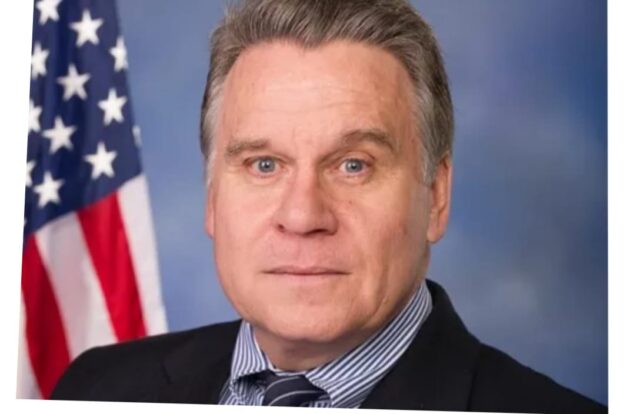
United States Congressman Chris Smith has urged Liberian lawmakers to protect women from what he described as the “dangerous abortion pill,” citing new research that links mifepristone the abortion drug to serious health risks.
Speaking in a communication on October 22, 2025, from Washington, D.C., Congressman Smith, who chairs the U.S. House Foreign Affairs’ Africa Subcommittee, warned that the global promotion of abortion pills by the United Nations and foreign-funded NGOs poses what he called “an existential threat to women and children, particularly in Africa.”
Smith voiced strong concern over Liberia’s proposed Public Health Act amendment, which seeks to legalize abortion on demand and expand access to the abortion pill.
“Supporters are falsely claiming that abortion pills will save lives,” Smith said. “But the evidence and the experience of nations that have gone down this path show the opposite.”
According to Smith, the abortion pill mifepristone not only ends pregnancies but also endangers women’s lives. He cited a recent study titled “The Abortion Pill Harms Women” conducted by the Ethics and Public Policy Center (EPPC), which reportedly found that serious adverse events from mifepristone occur 22 times more frequently than recognized by the U.S. Food and Drug Administration (FDA).
“This is absolutely shocking. The abortion pill is not safe, and the cover-up must end,” he stated.
The study, released on April 28, reportedly found that 11% of women who took mifepristone experienced sepsis, infection, hemorrhaging, or other serious complications.
Smith announced plans to introduce a new bill the Safe Passages Act aimed at addressing maternal mortality by improving access to trained health workers, emergency obstetric care, and rural healthcare infrastructure.
“These are the pathways to life and dignity,” Smith said, “not the mass distribution of five-dollar baby poison pills.”
The U.S. Congressman further alleged that foreign donors, including Ireland, UNFPA, and UNICEF, are funding Liberia’s abortion expansion campaign through the Protect, Empower, and Nurture Programme, while Sweden has reportedly financed newspaper coverage supporting the abortion bill.
“This is a new form of neo-colonialism outsiders using development funds to impose abortion on African nations under the false banner of women’s rights,” he argued.
Smith concluded by describing abortion pills as “chemical violence” against both mother and child.
“True compassion demands we invest in life-saving maternal care, not life-ending drugs. Liberia’s children and their mothers deserve far better.”
Meanwhile, access to abortion pills, costing as little as US$5, has quietly expanded in Liberia, helping some women access safer abortions despite legal restrictions.
Rights groups, however, warn that unsafe abortions continue to drive the country’s high maternal mortality rate, while religious leaders and conservative politicians strongly oppose the legalization effort leaving the bill’s passage in the Senate uncertain.