By Jacqueline L. Dennis
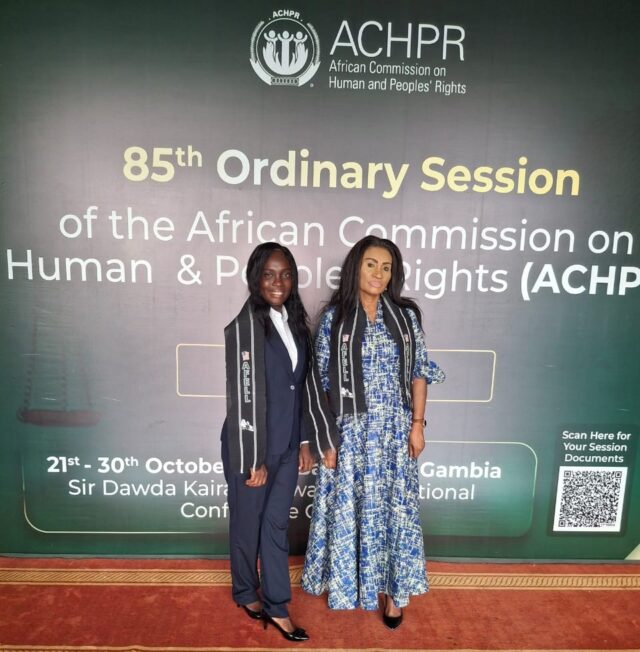
Monrovia, Liberia — The Association of Female Lawyers of Liberia (AFELL) and the Community Healthcare Initiative (CHI), key members of the Dignity Consortium, have called on the Liberian government to criminalize Female Genital Mutilation (FGM), issuing a joint statement ahead of the 85th Session of the African Commission on Human and Peoples’ Rights in The Gambia.
FGM, defined by the World Health Organization as procedures that remove or injure female genitalia for non-medical reasons, is recognized internationally as a severe violation of human rights. The practice causes long-term physical and psychological harm, disrupts girls’ education, undermines reproductive health, and entrenches gender inequality.
While acknowledging the role of cultural traditions, AFELL and CHI stressed that no custom can justify actions that inflict irreversible harm. They highlighted that FGM contravenes Liberia’s constitutional guarantees of life, liberty, and personal security, as well as international and regional treaties including the Convention on the Elimination of All Forms of Discrimination Against Women (CEDAW), the Convention on the Rights of the Child, and the African Charter on Human and Peoples’ Rights.
The organizations also praised President Joseph Nyemah Boakai for his remarks at the 80th session of the United Nations General Assembly, where he advocated for a permanent ban on harmful traditional practices, including FGM. However, AFELL and CHI emphasized that policy statements must translate into enforceable legislation to protect women and girls and hold perpetrators accountable.
In their statement, the groups urged the Liberian government and Legislature to:
Issue an Executive Order immediately banning FGM;
Fast-track comprehensive legislation criminalizing all forms of FGM, including measures for prevention, protection, justice for survivors, and sufficient resources for enforcement and support.
AFELL and CHI further called on the African Commission to:
Encourage Liberia to adopt and implement the ban without delay;
Recommend monitoring and reporting mechanisms to ensure compliance and protection for survivors;
Provide technical assistance to create victim-centered, culturally sensitive laws consistent with Liberia’s human rights obligations.
“Protecting women and girls from FGM is not only a matter of health and safety but of fundamental human rights,” the statement concluded.