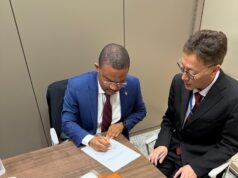
Liberia has taken many symbolic steps over the years in its long and painful journey from civil conflict to democratic recovery. But few announcements carry the weight and historic promise of the one made during the 178th National Flag Day celebration: the planned establishment of a National Anti-Corruption Court by November 2026, and a War and Economic Crimes Court by November 2027.
These courts, long demanded by civil society and victims of war-time atrocities, offer a real opportunity to confront the ghosts of Liberia’s violent past and tackle the chronic corruption that continues to bleed the nation’s progress.
The announcement, delivered by Cllr. Jallah A. Barbu, head of the Office for the Establishment of the War and Economic Crimes Courts, was powerful, timely, and long overdue. It also signals that President Joseph Nyuma Boakai, unlike some of his predecessors, is at least prepared to speak the language of justice and accountability. But rhetoric alone is not enough. Liberia has heard grand pronouncements before — from truth commissions to executive orders — only to watch them gather dusts on shelves.
What is needed now is action, consistency, and courage.
Justice Delayed for Too Long
Liberia’s descent into civil war between 1989 and 2003 left scars that remain visible in every aspect of national life. Over a quarter-million people died. Children were conscripted into armed groups. Civilians were tortured, raped, and murdered with impunity. And yet, almost quarter of a century later, no one has been held criminally accountable in a court of law.
The Truth and Reconciliation Commission (TRC), established in 2006, gave Liberia a roadmap for healing — one that included the formation of a War and Economic Crimes Court. But that roadmap was abandoned, ignored by past administrations who lacked either the political will or moral courage to confront the nation’s darkest chapter.
That failure to act has allowed perpetrators to rebrand as politicians and influencers, while victims remain voiceless, and impunity has become institutionalized.
Accountability Begins at the Top
It is encouraging that President Boakai has signaled support through Executive Order No. 148, which created the Office of the War and Economic Crimes Court in 2024. But support cannot end with signatures and speeches.
As Cllr. Barbu rightly pointed out, executive orders must be enforced, not selectively ignored. And the Legislature must ensure that funding and legal frameworks are firmly in place. Failure to do so will not only undermine the courts’ legitimacy but will once again make a mockery of justice.
Let it be clear: establishing these courts is not a favor to the people. It is not a presidential legacy project. It is a constitutional and moral obligation. Justice is not optional — it is foundational.
Corruption: Liberia’s Silent War
Equally important is the formation of the National Anti-Corruption Court. While war crimes are more visible and dramatic, the daily looting of public funds, the manipulation of public contracts, and the abuse of office have quietly destroyed Liberia’s schools, hospitals, roads, and future.
We cannot talk about development while corruption remains unchecked.
The new Anti-Corruption Court must not be another toothless institution added to the pile. It must be independent, adequately resourced, and capable of prosecuting even the most politically connected. Anything less would betray the Liberian people.
This Time, We Must Get It Right
This editorial is a call — not just to government officials but to every Liberian — to insist that these courts are built, resourced, and protected from political interference.
Civil society must stay vocal. The media must stay vigilant. International partners must hold Liberia to its commitments. And the Boakai administration must understand that the success of these courts will define its legacy — not only in the history books, but in the hearts of Liberians who still hope for justice.
We’ve waited too long. We’ve buried too many. We’ve seen what impunity looks like. It’s time we see what justice feels like.
Let these courts not become another national illusion. Let them be the beginning of true accountability — and perhaps, at long last, national healing.