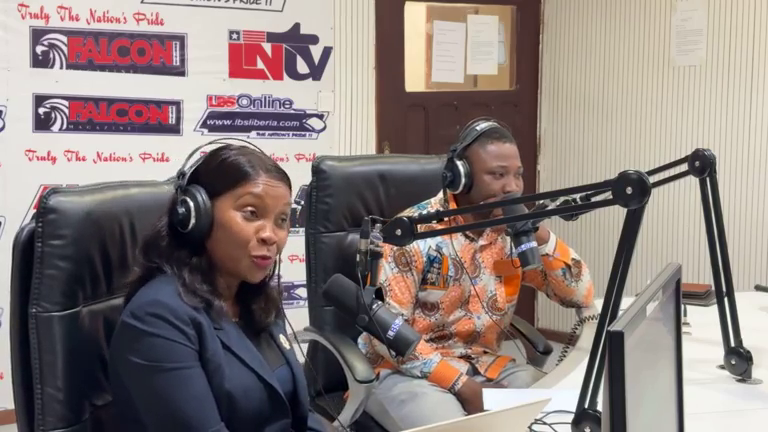
When a Central Bank technocrat starts explaining policy in street language—“fast, quick, nah‑nah‑nah”—you know something important is happening.
The Inclusive Instant Payment System (IIPS) that the Central Bank of Liberia (CBL) will launch on December 16 is not just another IT project. If implemented and governed well, it could be one of the most consequential reforms of the Boakai era: a quiet, technical revolution in how money moves, how people are paid, and how the state does business.
But that promise will only be realized if policymakers, banks, mobile‑money operators and citizens treat it as a public‑interest infrastructure—not a shiny toy.

Why This Matters
For decades, Liberia’s poor and middle class have carried the heaviest cost of a slow, cash‑based system.
The example CBL’s Miatta Kuteh used on radio—“Peter Flomo,” a police officer in rural Lofa waiting days or weeks for a paper check to clear—captures a painful reality. Teachers, nurses, and security agents have all learned the hard way that distance from Monrovia often means distance from your own salary.
The new instant payment system begins to change that. For the first time:
- Civil servants can be paid in seconds, directly into bank accounts or mobile wallets.
- Mobile‑money users will eventually send money across networks without juggling SIM cards.
- Government can collect taxes and fees digitally, with less leakage and fewer queues.

This is how serious countries now move: real‑time, traceable, digital.
The CBL is right to be proud. Liberia will be joining more than 25 African nations with national instant‑payment platforms. And because we are late to the game, we can learn from others’ mistakes.
The Opportunities—and the Risks
The potential gains are huge:
- Financial inclusion: When every phone and every basic bank account can plug into a real‑time system, the excuse that rural citizens are “unbankable” begins to die.
- Lower corruption risk: Digital trails make it harder to “ghost” employees or divert checks. If the system is fully integrated with payroll and the Liberia Revenue Authority, the era of envelopes can finally start to close.
- Cheaper, safer commerce: Traders, farmers, and ordinary families won’t have to carry cash over bad roads just to send money or get paid.

But there are real risks:
- High fees set by banks or mobile‑money operators can turn a public good into an elite service.
- Weak consumer protection can leave users exposed to fraud, mistaken transfers, or abusive charges.
- Exclusion can deepen if the system is built without serious investment in digital literacy and rural network coverage.
If the IIPS ends up mainly helping people in Monrovia “nah‑nah‑nah” money between smartphones, while a teacher in Grand Kru still waits days for pay, we will have missed the point.
What Policymakers Must Do Next
The technology is only the first leg of the race. To turn this into a true game‑changer, three things are needed:
- Strong, enforced rules on pricing and interoperability
The CBL must publish and monitor clear rules to prevent anti‑competitive behavior and hidden charges. If moving 1,000 LRD costs a day’s wage for a market woman, she will stay with cash. Instant systems in Kenya, Ghana and Nigeria all wrestle with this problem. Liberia should not repeat their mistakes. - A serious rural and low‑literacy strategy
The Bank and government should work with civil society and county authorities to run digital‑literacy campaigns, using radios and community meetings. People must know how to use the system, what to do when things go wrong, and who protects them. - Transparency from day one
Who is on the platform? How many transactions? What’s the average fee? What complaints are being logged? Regular public reporting will build trust—and pressure participants to improve.
Citizens Also Have Work to Do
We cannot demand a modern financial system and then cling entirely to the old one. Citizens, especially civil servants, must be willing to:
- Open and use basic accounts or mobile wallets;
- Ask employers and government to pay them digitally;
- Report abuses, suspicious charges, or failed transactions.
The more we use the system, the more leverage we have to demand fair treatment.
A Chance to Break Old Habits
For too long, Liberia has treated time as if it were free. Queues at banks; trips to Monrovia just to change a check; days lost in transit. The instant payment system is, at its heart, a recognition that our time and safety are worth something.
If we get this right, we will look back on December 16, 2025 as more than a launch date. We will see it as the day Liberia quietly began to dismantle one of the most invisible walls of poverty: the distance between ordinary people and their own money.
But if we allow predatory fees, weak oversight, and half‑hearted adoption to define the system, we will prove that technology alone cannot rescue a country from old ways of thinking.
The Central Bank has taken an important step. It is now up to government, providers, and citizens to ensure that this “nah‑nah‑nah” money doesn’t just move faster—it moves Liberia forward.