
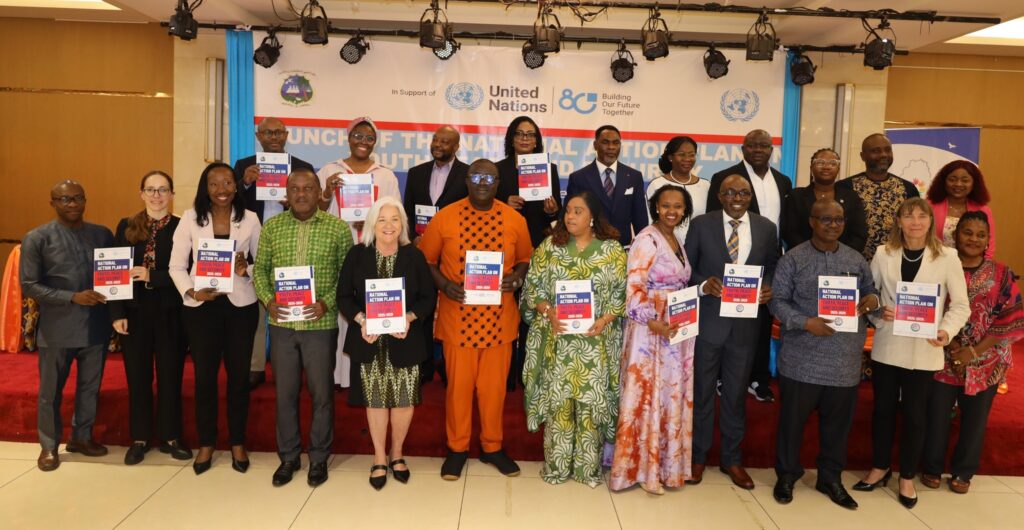
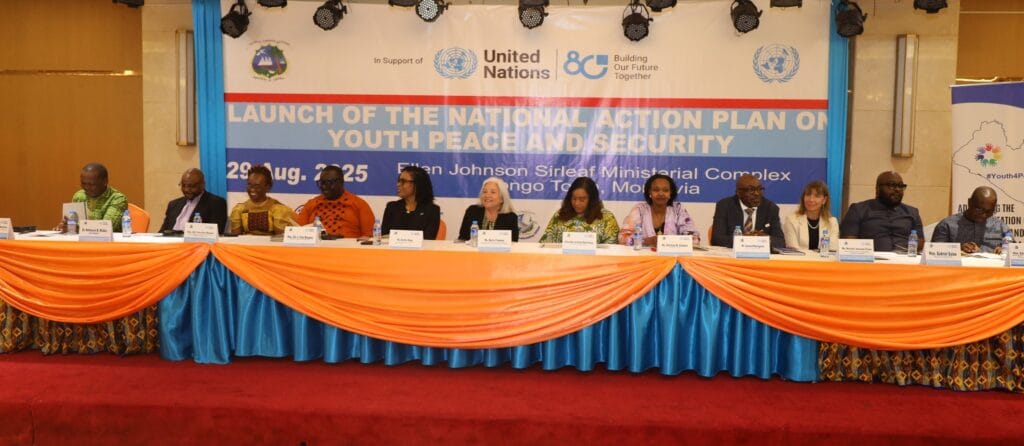
On August 29, 2025, Liberia took a bold and commendable step toward securing its future by launching the National Action Plan on Youth, Peace, and Security (NAP YPS) — a blueprint meant to ensure that young Liberians are not only protected from conflict but are empowered as peacebuilders and leaders in their own right.
This launch, held at the Ellen Johnson Sirleaf Ministerial Complex, brought together high-ranking government officials, civil society actors, youth organizations, and international development partners — all unified by a shared goal: to put young people at the center of national peace and development strategies.
As a media institution committed to Liberia’s democratic advancement, The Liberian Post welcomes this development. But we also issue this caution: the success of the NAP YPS will depend not on its content, but on its implementation.
From Policy to Practice
Liberia’s history is marked by beautiful frameworks and powerful speeches. Too often, however, they are followed by weak follow-through. We sincerely hope the NAP YPS will break that pattern.

This plan — built on five core pillars: Participation, Prevention, Protection, Partnerships, and Disengagement & Reintegration — reflects global standards outlined in UN Security Council Resolutions 2250, 2419, and 2535. It is also rooted in local priorities and realities, thanks to 16 months of nationwide consultations involving youth voices.
But let us be clear: no action plan, however well-written, will change lives unless it is backed by money, political will, and accountability. The plan’s projected cost of US$15.4 million over five years must not remain on paper. It must be financed, tracked, and publicly reported. If young people are to believe in the system, they must see tangible results in education, employment, security, and civic engagement.
Youth: Not Just a Demographic, but a Driver
Vice President Jeremiah Kpan Koung was correct in stating that Liberia’s youth are “partners of today.” With over 75% of the population under 35, Liberia is a young nation — not just in numbers, but in energy, potential, and aspirations.
For too long, however, our young people have faced barriers to opportunity. Many remain unemployed, underpaid, excluded from leadership, or vulnerable to crime and manipulation. If the NAP YPS is to mean anything, it must address these “bread and butter” realities — not just with new rhetoric, but with targeted programs and sustained investment.
A Chance for Liberia to Lead by Example
With Liberia set to join the UN Security Council in January 2026, this is a defining moment. Liberia, once a nation torn by war, has the chance to showcase a youth-led peace model that others in the region — and across Africa — can emulate.
As noted by Ms. Barrie Freeman, Deputy Special Representative of the UN Secretary-General, Liberia’s launch of the NAP YPS sends a global signal: that peace is possible when youth are included, protected, and empowered.
This is an opportunity Liberia cannot afford to waste.
What Must Happen Now
- Secure financing: The Ministries of Youth & Sports and Finance must work with donors and private sector partners to fund the plan fully.
- Ensure youth leadership: Implementation committees should include youth leaders at all levels — from counties to communities.
- Strengthen oversight: Civil society and the media must play an active role in monitoring progress and ensuring transparency.
- Protect inclusivity: Special attention must be paid to gender equality, marginalized youth, and those in post-conflict reintegration.
In Conclusion
This Action Plan is more than a document. It is a social contract between the government and its young citizens. As a media institution, The Liberian Post pledges to do its part by informing, monitoring, and holding power to account.
But we also call on the government: do not let this become another well-intentioned plan left to gather dust. Our youth have waited long enough for meaningful change. This is your moment to deliver it. Let this be the turning point where promises to the youth are not just made — but kept.