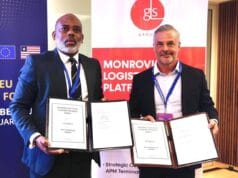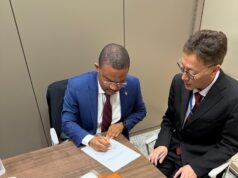
MONROVIA – The Liberia Medical Health Regulatory Authority (LMFRA) and the Quality Management System (QMS) have entered into a Memorandum of Understanding (MoU) to cleanup pharmaceuticals in Liberia with the setup of a quality control state-of-the-art Laboratory that will strengthen the LMHRA’s national capacity, improve quality assurance and contribute to the safety, quality, and reliability of health products within the health sector.
At an inception meeting held on Friday, November 21, 2025, at LHMRA offices in Mamba Point, the two institutions had the opportunity for the formal initiative of the project and created a space for them to align their expectations, clarify their roles and chat a clear roadmap for a successful implementation.
Dr. Patricia Quaye-Freeman, Deputy Managing Director- LMHRA in her welcome remarks said the establishment of the quality control state-of-the-art laboratory is a major milestone for the LMHRA as it plays a critical role in ensuring that health products circulating on the Liberian markets meet acceptable standards and comply with national and international requirements.
DMD Quaye-Freeman thanked LMHRA’s partners, stakeholders, and technical teams whose commitment and expertise have brought them to the moment of establishing the laboratory. “Your support and collaboration are essential to the long-term impact and sustainability of this initiative,” she stressed.
As discussions for the laboratory has begun, she encouraged an open dialogue, shared learning, and collective problem-solving. “Together, we have the opportunity to build a facility that will serve as a model of excellence in quality assurance and contribute significantly to public health, consumer protection, and economic development.”
On his part, the managing director of the LMHRA Luke L. Bawu giving the purpose of the inception meeting, averred that it is significant milestone and acknowledged that the health system is at a breaking point because health commodities that are in circulation quality are not assured.

“We cannot authenticate their quality of commodities that are in circulation. Over the last 10-15 years, significant advancement has been made in improving healthcare in Liberia. Healthcare facilities have been opened. There is now a decentralization of critical diagnostic tools in the counties, healthcare workers have been trained, we have specialists in most areas, even pharmacists are now becoming specialists.”
MD Bawo noted that with all this happening in the health sector, the critical gap has been health commodities in circulation. He said since taking over the LMHRA about a little over a year and seven months ago they did a root-branch analysis of the problem and the gap, and they identified that as one of the critical issues. “There is a saying that the quality of any health system is directly dependent on the quality of commodities that are in circulation. Our mandate is to ensure that we have good commodities in circulation. And as part of our analysis, we realized that we have a quality control laboratory but its output was at a minimum. We could only do visual and physical testing, we could not determine impurities in products, we could determine if a commodity is at a particular strength, we could not authenticate that. We also had issues around prompt testing. Our quality control laboratory had not attained certification, ISO – 17025 certification, which is the goal standard for laboratories globally. Even our regulatory system as we met it had not attained the minimum level qualification, which is referred to as WHO level-3. We gathered our team and we aim to do just that. We aimed and resolved that within two years we should get those qualifications.”
He disclosed that he and team at the LMHRA established a quality control unit that was mandated to go and bring all of the deficiencies that they had with the WHO bench-marking. “And I am proud to say that with our assessment and the level of work that we have done, we are very close to attaining WHO level-3 and with the incoming of the public-private partnership that will strengthen our laboratory and enable us to test and authenticate every product that will be in circulation in the country, we are very certain that we will attain ISO-17025 certification as early as possible. That is our mandate and that is our preoccupation void of any distraction. So, anything we hear, we pay low heed to it and we are on a mission”.
MD Bawo further stated that the planned establishment of the quality control state-of-the-art laboratory is a big leap for the health sector and its system. “You may ask why we have not invited government dignitaries, including health stakeholders the legislatures and partners, but to keep this low key and when we are commissioning the laboratory in four months’ time then we will make bit fanfare of it. This here, today is the inception and official handover of the MOU to our partner.”
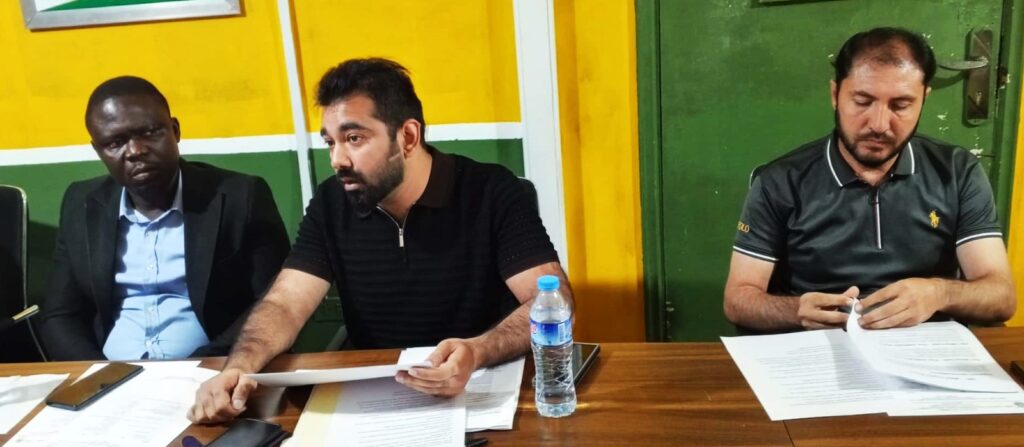
He acknowledged the LMHRA’s partners for their patience by standing with them during the journey approximately one year three months ago. “Because we were insistent on doing everything the right way, the process has been long and very tedious but, it started with sitting together and developing a MOU, and taking documents that outlines the procedure visa-vie, the partnership. We had to submit it to the Executive that took sent us to the Public Procurement Concession Commission (PPCC) where we got the approval, but with the approval, we had to go to the concession committee at the Ministry of Finance, and do two separate presentations, and we received from the concession committee a concession certificate and then they directed us to the NIC. We went to the NIC and they went thru all of this and we have an official signing program.”
Concluding, MD Bawo noted that in the official signing program, they also had to get attestation signature from the MFDP as well as the Ministry of Justice. He said the MOJ having reviewed the MOU, had some suggestions on it and they did a revision. “We are proud to say that we received the official approval to modernize an ultra-modern state-of-the-art laboratory which we are very proud. This is a new dispensation; this is a new day. Despite of the distraction we are headed in the right direction, so, member of the media and our partners, we are headed to a new day.”
On what the quality control laboratory will offer, Quality Management System (QMS) general manager, Shoiab Mirza firstly disclosed that ISO/IEC – 17025: 2017 is an international standard that specifies the general requirements for the competence impartiality and consistent operation of laboratories.
The ISO – 17025 defines like laboratories, testing, calibration and sampling.
Mr. Mirza stated that QMS Lab will be legally identifiable, have a quality management system, and define roles and responsibilities. “We will implement a QMS, document policies, and ensure it is understood and implemented”.
QMS will also generate or prepare control documents, including procedures, work instruction, and records.
QMS will ensure a labor which can meet requirements and has necessary resources to test all kinds of medicines.

Technical Requirements:
QMS will ensure that personnel are competent, have necessary education, trained and are experienced.
QMS will ensure facilities are sustainable for activities and don’t compromise results.
QMS will be responsible for calibration and maintain equipment, ensuring it is fit for purpose.
QMS in collaboration with LMHRA will prepare SOP/SAP for sampling, handling, testing products, instruments operation maintenance, closing, operation of whole lab and hiring policy.
QMS will maintain records of technical data, including test results and calibration data.
QMS will monitor and ensure that validity of results, and report will be generated within 15-30 days.
QMS will report accurately, clearly and objectively.
QMS lab will be impartial and avoid conflicts of interest.
QMS will protect confidential information.
Concluding, Mr. Mirza expressed joy for working with the LMHRA in efforts to clean and clear Liberia of ‘harmful’ medicines that are in circulation on the markets.
Components of the MoU
LMHRA’s Laboratory Constraints
• Unaccredited laboratory
• Incomplete quality control laboratory
• Unstable electricity
• Human capacity challenges (quality & control)
• Inadequate equipment
• Insufficient laboratory reagents
• Overreliance on costly third-party testing
The MoU focuses on Staff Training and Certification; Staffing & Compensation; Sample Management; Infrastructure & Upgrade; Cost Per Test; Fees Distribution; Technical Operations & Protocols; and Laboratory Handover.
Meanwhile, the LMHRA with the establishment of a quality control state-of-the-art laboratory in about few months, will protect the Liberian populace by ensuring that the strength of medicines is actually what they are in their composition and packaging to safeguard consumers.
The LMHRA will also institute measures that will protect the populace by introducing QR-coding of health products and medicines that are imported by dealers to ensure safety, thus strengthening the LMHRA to cleanup the markets of substandard, expiring and dangerous medicines.
The LMHRA has given itself a timeline to cleanup the markets and has vowed to curtail the importation of substandard and dangerous health products.