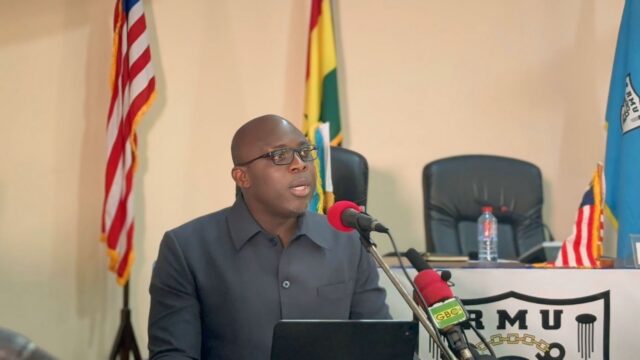
ANTWERP, BELGIUM – Liberia’s Maritime Commissioner/CEO, Cllr. Neto Zarzar Lighe, Sr., has rallied Liberians at home and abroad to seize the growing opportunities within the country’s maritime sector, which he described as a powerful driver of trade, commerce, and national development.
Speaking during the European Federation of Liberian Associations (EFLA) Annual General Assembly and Liberia’s 178th Independence Day celebration in Antwerp, Belgium, Commissioner/CEO Lighe emphasized the urgent need for Liberian investors to take the lead in shaping the maritime economy.
“To put it bluntly, the Liberia Maritime Sector needs Liberian investors!” he declared. “We need a healthy investment climate that will see Liberians play a dominant role. The opportunities are in abundance, and as a government and sector leader, we are committed to providing a smooth path and easy processing for Liberian investors.”
Commissioner/CEO Lighe highlighted the critical role the maritime sector plays in Liberia’s economic development, noting that it has long served as a vital source of national revenue, skills development, and global engagement.
“Proceeds from our maritime program have contributed significantly to our national budget and supported education and skills development in marine engineering, nautical science, shipping logistics, and more,” he said.
Commissioner/CEO Lighe, called on Liberians to explore diverse investment areas, including trucking, warehousing, human resource development, cargo handling, ship supply, bunkering services, dry docking, and short sea shipping between major Liberian ports like Monrovia, Buchanan, Greenville, and Harper.
“The maritime sector provides a playing field for investments across all scales,” Lighe added. “What separates most of us in Liberia from you in the diaspora is the ocean, something very dear to us. But it is also your gateway to invest and contribute to Liberia’s growth.”
Commissioner/CEO Lighe recounted Liberia’s brief but impactful experience with offshore oil exploration, lamenting the missed economic opportunities due to a lack of local capacity.
“When multinational oil firms like Chevron and African Petroleum began operations offshore, Liberia lacked the trained workforce and local companies to meet the demand for services; even marine waste was exported to Ghana for processing,” he said. “We cannot afford to miss out again.”
He also encouraged investments in ship chandelling, marine eco-tourism, marine insurance, and port reception services, all of which, he said, would create jobs and stimulate economic activity.
Highlighting security and international recognition, Lighe underscored Liberia’s strong presence at the International Maritime Organization (IMO) in London and the role of the Liberia Maritime Authority in protecting the nation’s coastal and marine environments against threats such as piracy, smuggling, and illegal fishing.
He praised the launch of Liberia’s first post-war state-of-the-art maritime training institute in Marshall, Margibi County, and ongoing partnerships with global institutions such as the World Maritime University in Sweden and the International Maritime Law Institute in Malta.
“We have developed a Five-Year Strategic Plan to guide our programs, and we are focused on goal-driven, financially guided initiatives that will bring sustainable impact,” Commissioner/CEO Lighe noted.
He reaffirmed the government’s commitment under President Joseph Boakai to support Liberian entrepreneurs and investors. “The government has its arms wide open. Liberia needs businesses that create decent jobs and contribute to a better quality of life for our people.”
Commissioner Lighe’s message to the diaspora was clear: the time to invest in Liberia’s maritime future is now.