



-Promises Balance Between Livelihoods and Public Safety
MONROVIA — In the heat, noise, and congestion of Duala Market, where thousands of Liberians struggle daily to earn a living, Monrovia City Mayor John-Charuk Siafa is pushing what he describes as a long-overdue reset—one that seeks to restore order without destroying livelihoods.
On the same day the Monrovia City Government convened a high-level stakeholder meeting at Duala Market, Mayor Siafa spoke bluntly with journalists on the ground, explaining why the City is now taking a firmer stance after years of failed attempts to decongest the area.
“We have to have a harmonized approach to trading,” the Mayor said. “There has to be a balance between the people who are selling, the pedestrians, and the people who are buying. It’s for the good of everybody.”

A Market at the Breaking Point
For years, unregulated trading around Duala has spilled into major roads and intersections, blocking pedestrian movement, choking traffic, and creating serious sanitation and safety hazards. Vendors sell food on bare ground beside open drains, while vehicles inch through narrow passages, often sustaining damage in the process.
Mayor Siafa stressed that the City’s intervention is not driven by hostility toward petty traders, but by necessity.
“The idea is not to take bread from the people’s mouths,” he explained. “But it’s to have recognition—a sense of order in this place.”
City officials say the situation has reached a point where inaction is no longer an option, especially as emergency routes remain blocked and waste management has become unmanageable.

Empty Tables, Crowded Roads
One of the Mayor’s strongest arguments is that space already exists inside the formal market—yet remains underused.
According to Siafa, an assessment by the City revealed that the main Duala Market building contains 1,024 tables, but only about 200 are currently occupied.
“People need to go in the market,” he said. “And it’s not every kind of food can just be on the ground.”
He pointed to public health risks associated with selling items such as fufu and other foodstuffs in unsanitary conditions, noting that consumers continue to buy them despite dirt and contamination.
What the City Is Putting in Place
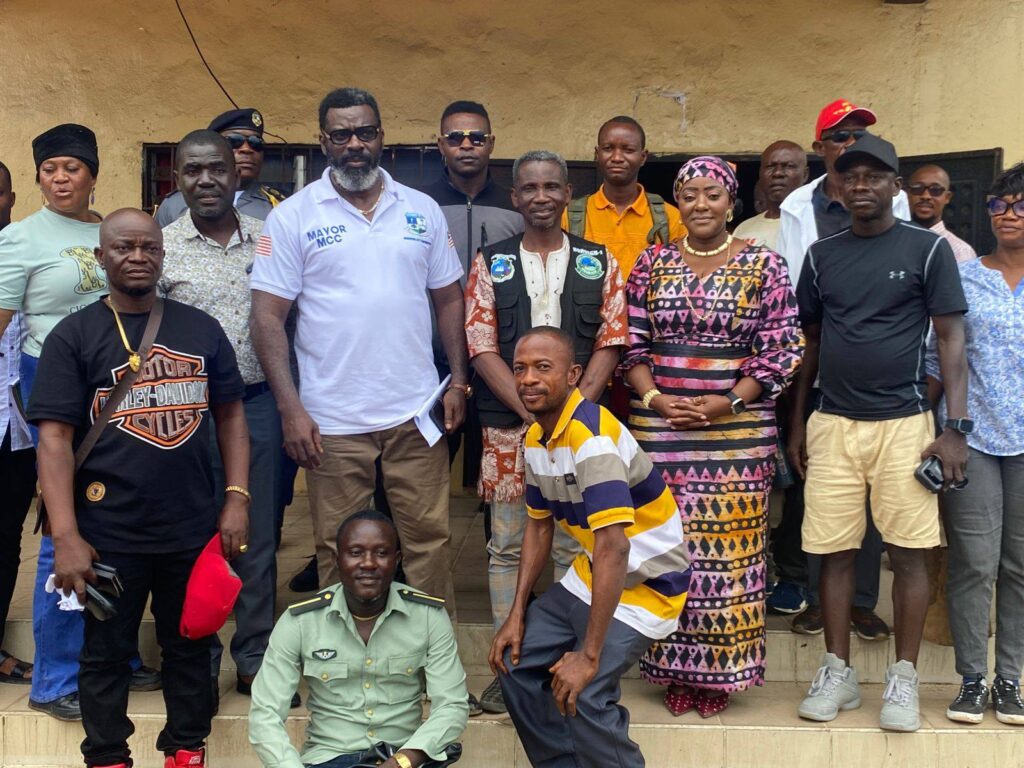
Following the stakeholder meeting—which brought together the Ministry of Internal Affairs, the Borough of New Kru Town, the Liberia Marketing Association, transport unions, and trader representatives—the City announced a series of measures aimed at restoring order while protecting livelihoods.
Key steps include:
- Clear zoning of trading areas by commodity, with strict non-trading zones to keep roads, clinics, schools, drains, and emergency routes open
- Formal recognition of trader leadership structures to improve accountability and coordination
- Approved operating rules, including trading hours, fixed spaces, and limits on temporary structures
- Mandatory trader registration and City-issued identification
- A transparent fee system, tied directly to services such as waste collection, toilets, cleaning, and security
- Firm enforcement against roadway encroachment and indiscriminate waste dumping
Mayor Siafa emphasized that demarcation lines have already been identified—and this time, they will be enforced.
“We have to agree that this is the line, and no one is to cross this line,” he said. “No one absolutely will be allowed to cross the line. It is good for everybody.”

‘This Time, We Are Decisive’
Asked why similar efforts in the past failed, the Mayor responded with characteristic bluntness, switching briefly into colloquial Liberian English to underline his resolve.
“The child who says his mom won’t sleep, that child himself won’t sleep,” he said. “Oh man, I’m here. My energy is plenty.”
According to the Mayor, a technical team has already been established and is engaging traders directly, while meetings continue at the Borough of New Kru Town with chairpersons, transport unions, and marketing associations.
Going forward, he said, no one will be allowed to sell without first going through the Borough authorities, and waste disposal rules will be strictly enforced.

Dignity, Not Displacement
City officials insist the exercise is about restoring dignity to Duala Market—not punishing the poor.
“This initiative is not about taking away livelihoods,” Mayor Siafa reiterated in his public statement. “It is about restoring order, safety, cleanliness, and dignity—for traders, customers, and road users alike.”
As enforcement begins, traders remain cautiously hopeful that the City will match firmness with fairness. For many, the success of the plan will depend not just on rules, but on whether promised services—cleaning, security, and proper facilities—actually materialize.
For now, one message from City Hall is unmistakable: Unregulated trading at Duala Market will no longer be tolerated—but organized, registered, and compliant traders will have a place in the new order.







Pretty section of content. I just stumbled upon your blog and in accession capital to assert that I acquire in fact enjoyed account your blog posts. Anyway I will be subscribing to your augment and even I achievement you access consistently quickly.
Comments are closed.