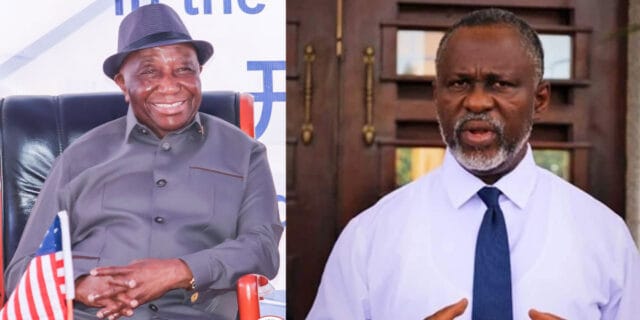
MONROVIA – Senator Nathaniel F. McGill of Gbarpolu County has launched a scathing attack on the Boakai administration, demanding full transparency over Liberia’s oil and agriculture sectors while accusing the government of repeating the “mistakes of the past” in handling national resources.
In a fiery statement posted on his official Facebook page, the opposition lawmaker—who is a senior figure in the Congress for Democratic Change (CDC) and a former Minister of State for Presidential Affairs—said the government must prove that it is truly committed to fighting corruption, starting with a thorough vetting of the controversial Arthur Eze oil deal.
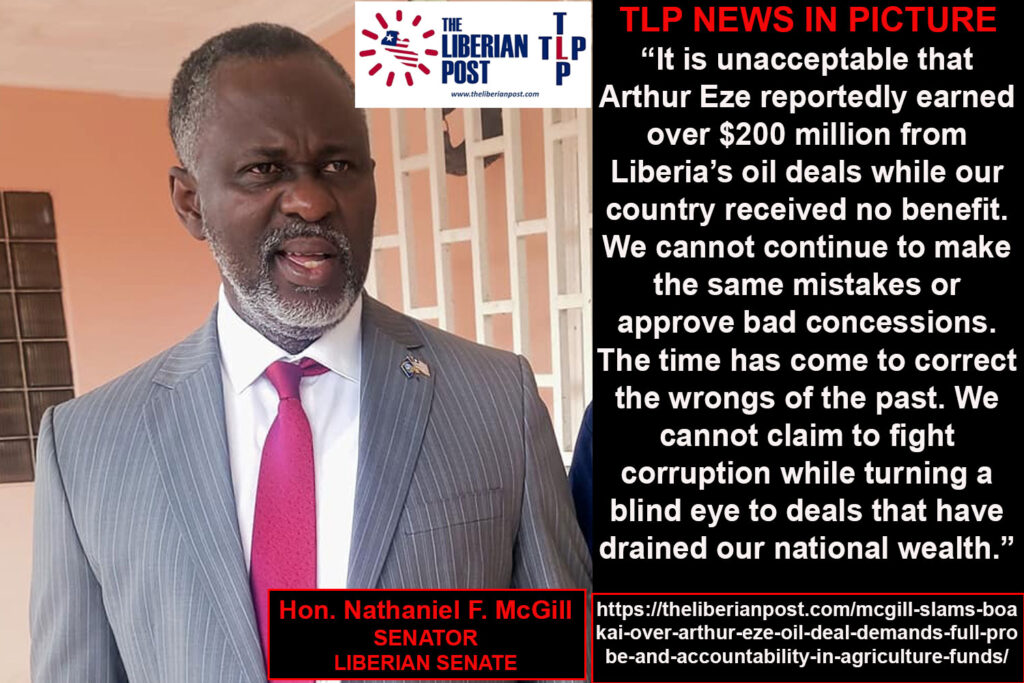
“It is unacceptable that Arthur Eze reportedly earned over $200 million from Liberia’s oil deals while our country received no benefit,” Senator McGill wrote. “We cannot continue to make the same mistakes or approve bad concessions. The time has come to correct the wrongs of the past.”
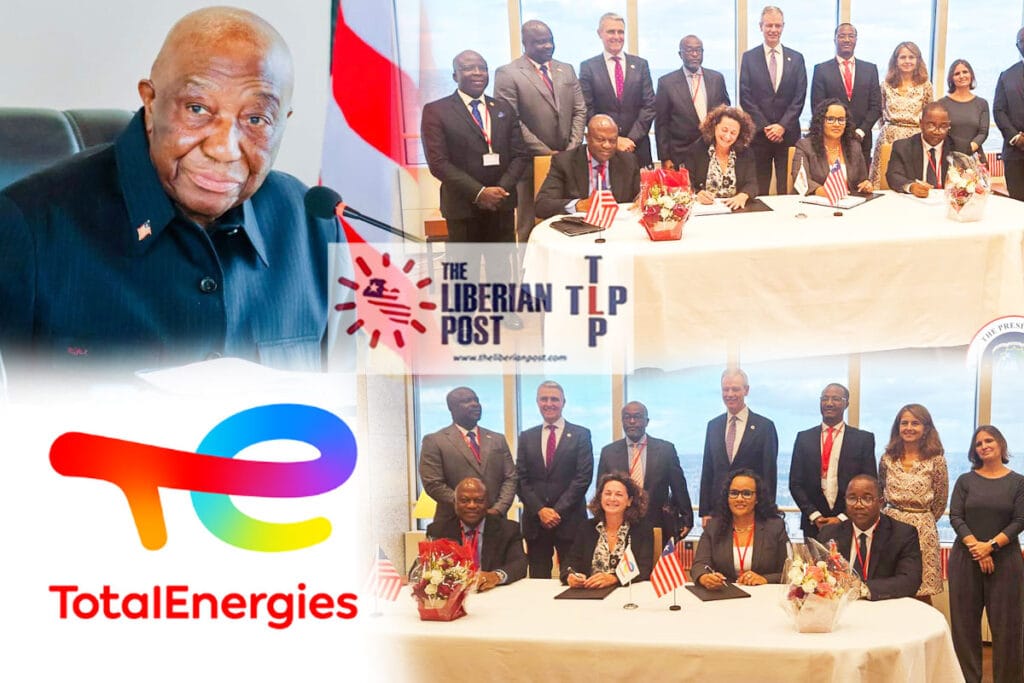
McGill’s comments come just days after President Joseph Nyuma Boakai transmitted eight new Production Sharing Contracts (PSCs) to the National Legislature for ratification — Liberia’s first oil exploration agreements in more than a decade. The contracts involve TotalEnergies EP Liberia LLC and Oranto Petroleum Liberia Limited, with the latter linked to Nigerian businessman Prince Arthur Eze, a long-time and controversial player in Liberia’s petroleum industry.
The Boakai administration has touted the deals as a breakthrough for economic revitalization, promising that the PSCs will attract investment, create jobs, and strengthen the country’s energy sector. But McGill, a key opposition voice, is demanding an audit of Eze’s past involvement, alleging that Liberia was shortchanged while foreign actors profited.
“We cannot claim to fight corruption while turning a blind eye to deals that have drained our national wealth,” McGill said.
The lawmaker’s statement also struck a populist tone, pledging that he and other lawmakers would push for full accountability and transparency in both the oil and agriculture sectors when the Legislature reconvenes.
He specifically cited the $200 million allocated under the Smallholder Agriculture Transformation and Agribusiness Revitalization Project (STAR-P) and the Rural Economic Transformation Project (RETRAP) — both financed through international development loans and grants to support smallholder farmers.
“The Ministry of Agriculture must account for the $200 million allocated under the STAR-P and RETRAP projects intended to empower our farmers,” McGill warned. “There must be full accountability. As we have returned to session, we will not rest until the Liberian people receive the truth and the transparency they rightfully deserve.”
Old Scars, New Promises
Liberia’s oil sector has a long and troubled history. Since the first offshore blocks were awarded in the early 2000s, several contracts have been dogged by allegations of corruption, political interference, and lack of transparency.
The Liberia Extractive Industries Transparency Initiative (LEITI) has repeatedly flagged irregularities in contract awards and payments, while critics have accused successive administrations — from Sirleaf to Weah — of using the sector for political patronage.
Although the Boakai-led government insists its new oil deals are cleaner and more investor-friendly, McGill’s criticisms tap into widespread public skepticism about whether ordinary Liberians will ever benefit from the country’s natural resources.
A Sanctioned Voice Still Resonating
Senator McGill’s tough talk comes despite his own controversial background. In 2022, the United States Department of the Treasury sanctioned him under the Global Magnitsky Human Rights Accountability Act, accusing him of public corruption and misuse of state resources during his time in the Weah administration.
While McGill has consistently denied wrongdoing, the sanctions froze his U.S.-based assets and barred him from entering the United States — a stain that continues to shadow his political career.

Yet, his latest remarks show that the outspoken CDC stalwart remains an influential voice in the opposition, willing to challenge the Boakai government on its anti-corruption credentials.
Rising Political Temperatures
Analysts say McGill’s statement underscores a brewing political showdown over the management of Liberia’s natural resources and development funds. The CDC has increasingly accused the Unity Party government of selective transparency — claiming that it preaches reform but continues to make opaque deals behind closed doors.
With the Legislature now back in session, the stage appears set for a fierce debate over the Arthur Eze-linked oil concessions, agricultural spending, and the broader issue of accountability in Liberia’s governance system.
For many ordinary Liberians — particularly those struggling amid high inflation and stagnant wages — McGill’s words may resonate, even coming from a man once accused of the very corruption he now denounces.
As one political observer put it: “It’s a twist of irony — but also a reminder that in Liberian politics, credibility often depends not on one’s past, but on who’s in power today.”