-Myers Says Talks with Finance Minister Set Stage for Expanded Liberia–UI Training Partnership
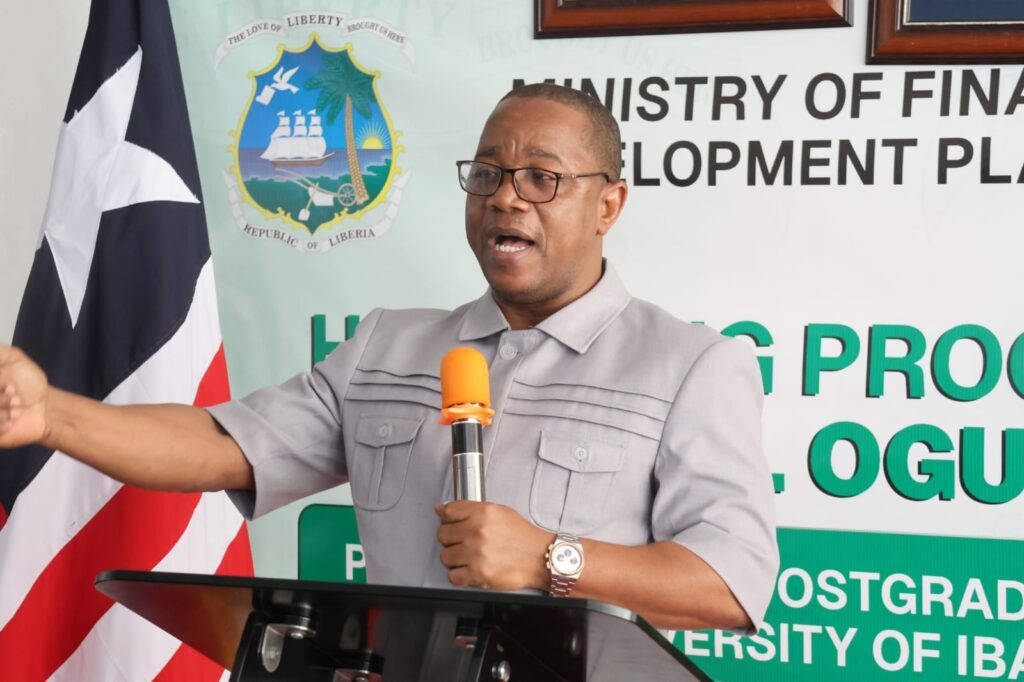
MONROVIA — The Ministry of Finance and Development Planning (MFDP) on Tuesday honored Prof. Ayodeji Samson Olatunji Ogunjuyigbe, Provost of the Postgraduate College at the University of Ibadan (UI), Nigeria, with Deputy Minister for Fiscal Affairs Anthony Myers announcing that discussions involving the Finance Minister, himself, and the Provost have begun laying the groundwork for an expanded cooperation that could bring UI facilitators to Liberia to train larger groups of public-sector professionals at significantly lower cost.
Myers told the gathering that Finance Minister Augustine Kpehe Ngafuan had been scheduled to deliver the main remarks but was diverted by an urgent national assignment. Still, Myers said the minister held “a few minutes of conversation with the Provost” earlier in the day, exchanged pleasantries, and discussed a path forward for deepening the partnership that last year trained Liberian officials in fiscal decentralization, treasury and accounting, and local government financial management.
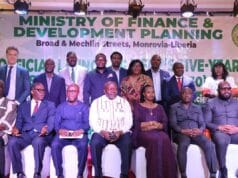
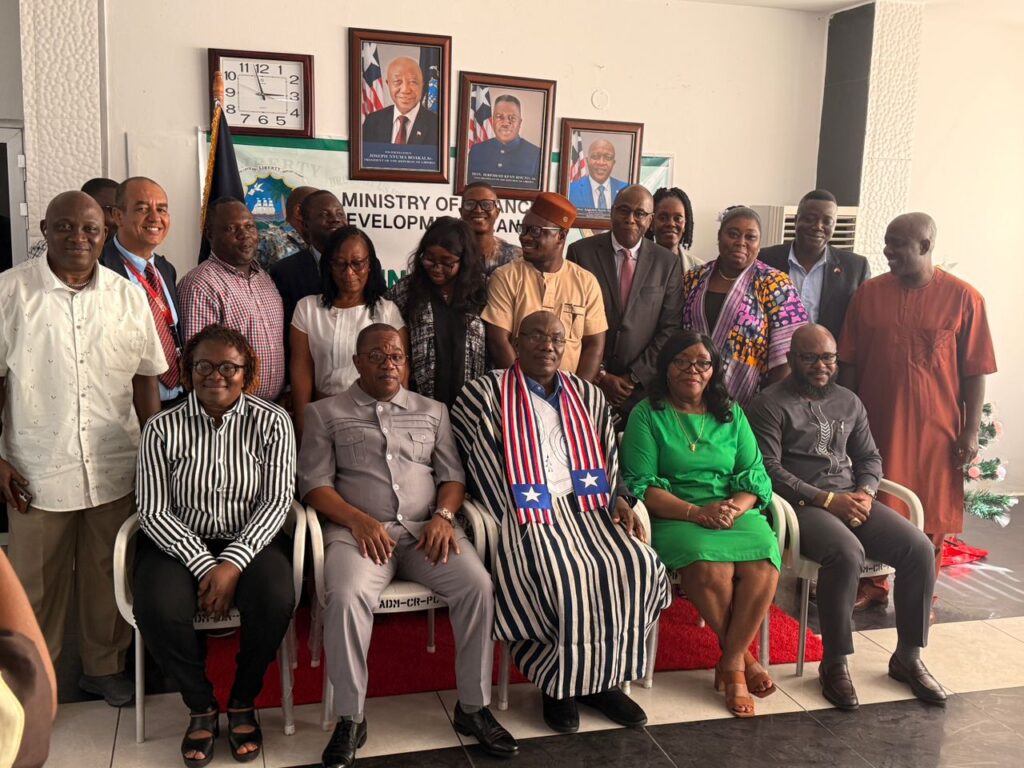
The ceremony brought together senior officials and stakeholders involved in the reform agenda, including Comptroller and Accountant General Elwood T. Nettey, Deputy Minister for Budget, Development and Planning Tenneh Brunson, MFDP Director for Fiscal Decentralization Dr. Romeo D. M. Gbatea, Internal Audit Agency Director-General David A. Kemah, and Liberia Revenue Authority representative James A. Jallah, among others.
Myers: Discussions Point to “Reversing” the Training Model
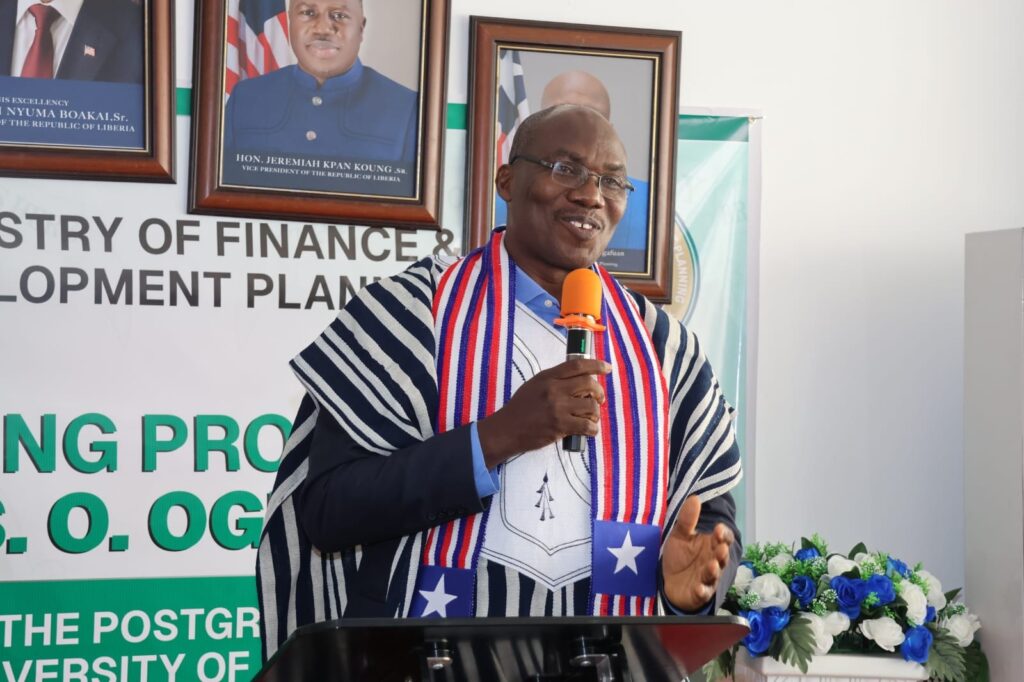
At the heart of Myers’ remarks was a proposal he said emerged in discussions with the Provost and the finance minister: instead of sending small groups of Liberians abroad for training at high cost, the government wants to explore bringing University of Ibadan facilitators to Liberia.
“We intend to expand that cooperation between the government of Liberia represented by MFDP and the University of Ibadan,” Myers said, stressing that detailed arrangements have not yet been finalized. But he said the parties agreed on a guiding principle—“reversing” the direction of training.
“The principle is acknowledge that a number of things can be achieved if the direction of the training is reversed rather than participants going to Ibadan or other universities—rather than bring a team of facilitators on ground,” Myers said. Under such an approach, he said, the government’s direct cost would largely be limited to the facilitators’ accommodation and professional fees, while allowing a larger number of participants to benefit.
“So then the cost is fully limited to their accommodation and other professional fees. But participants normally are increased,” he explained. “The cost of the GOL in getting people to participate will also be almost zero.”
Myers said the vision is not limited to fiscal decentralization. With facilitators on the ground in Liberia, he said MFDP could include staff from multiple departments and even other sectors, including budget and planning personnel.
“You can bring in the budgets and plenty of folks. You can bring in macroeconomic analysis…regional economic analysis, regional development planning, regional accounting and procurement and others,” he said. He also cited technical areas critical to domestic revenue and budgeting—“revenue forecasting on a sectoral basis, real estate mapping and revenue mobilization in the real estate sector, mining, forestry and all the other sources of revenue and resources which the Minister of Finance uses to focus the budget and implement.”
Myers said the idea is now an action point for MFDP’s fiscal decentralization unit. “So in our conversation with the Prof and the FM that idea has set a principle—so Dr. Gbatea, you have a new task,” he said.
Acknowledging Support “Beyond the Professional”
Myers used the honoring ceremony to commend the Provost for support he said went far beyond academic delivery. In unusually personal remarks for a finance-sector program, Myers said Prof. Ogunjuyigbe effectively served as a guarantor for the Liberian team during the training period in Nigeria, helping manage expenses and taking on financial risk while Liberians were in Ibadan.
“The extent to which you were able to more or less be like a guarantor for the Liberian team in terms of the expenditures—accounting—taking that fiscal risk on your own for the expenditures of our team while they were there was remarkable,” Myers said.
He also challenged negative stereotypes sometimes associated with Nigeria, arguing that professional engagement offers a different and more positive experience. “When you have the opportunity to engage with professionals from Nigeria, you leave…very much impressed,” he said.
Myers went further, noting Nigeria’s historic role in Liberia’s peace and political transition. “We found out today we are sitting in a democratic state. We owe it to intervention led by Nigeria on two separate occasions, one in the 90s and one in the early 2000s,” he said, adding that the Provost’s conduct “exemplif[ies] the positive image” of Nigeria as a “big brother” in times of crisis.
How Training Is Shaping Reforms: Manual Review and County Treasury Expansion
Tying the partnership to concrete reform goals, Myers cited steps now underway at MFDP that he said draw directly from knowledge gained through the UI training.
One major initiative, he said, is a review of Liberia’s Fiscal Decentralization Manual, first published in 2014. Myers described the document as outdated because it predates significant reforms, including the Local Government Act, the revenue sharing law, and the establishment of county councils.
“We cannot use documents that were produced 12 years ago in a different context—at a time we didn’t have the Local Government Act. We didn’t have the revenue sharing law. We didn’t have county councils,” he said.
He said the training in Ibadan provided templates and approaches now being applied to update the manual “to reflect current day reality.”
Myers also announced a 2026 operational target designed to bring government financial services closer to the counties: expanding county treasury services so transactions can be processed without officials traveling to Monrovia.
“Beginning this year…we intend to expand our county treasury services,” he said, adding that “by the end of this year, all counties in Liberia will be processing financial transactions without coming to the capital,” and that the scope is expected to cover “more than 20” ministries and agencies.
Gbatea: Training Delivered Quickly; “We Achieved What We Wanted”
Earlier in the program, Dr. Romeo D. M. Gbatea, MFDP’s Director for Fiscal Decentralization, explained how the partnership began and why the Provost was being recognized.
Gbatea said MFDP—working through the Department of Fiscal Affairs and the Office of the Comptroller and Accountant General—sought specialized training so Liberian professionals could better understand “accounting treasury and fiscal decentralization.” He said the ministry contacted the University of Ibadan’s postgraduate college and the program was structured quickly.
“They were able to structure that program in a very short period of time. And Provost Samson was the one who led that process,” Gbatea said. “The program was very wonderful. We achieved what we wanted to achieve.”
He said participants returned with skills now being used to strengthen county-level capacity. “The experts came back home and they are making significant progress in building capacity in the local government,” he said.
Brunson: “Friend of Liberia,” Calls for Deeper Linkages
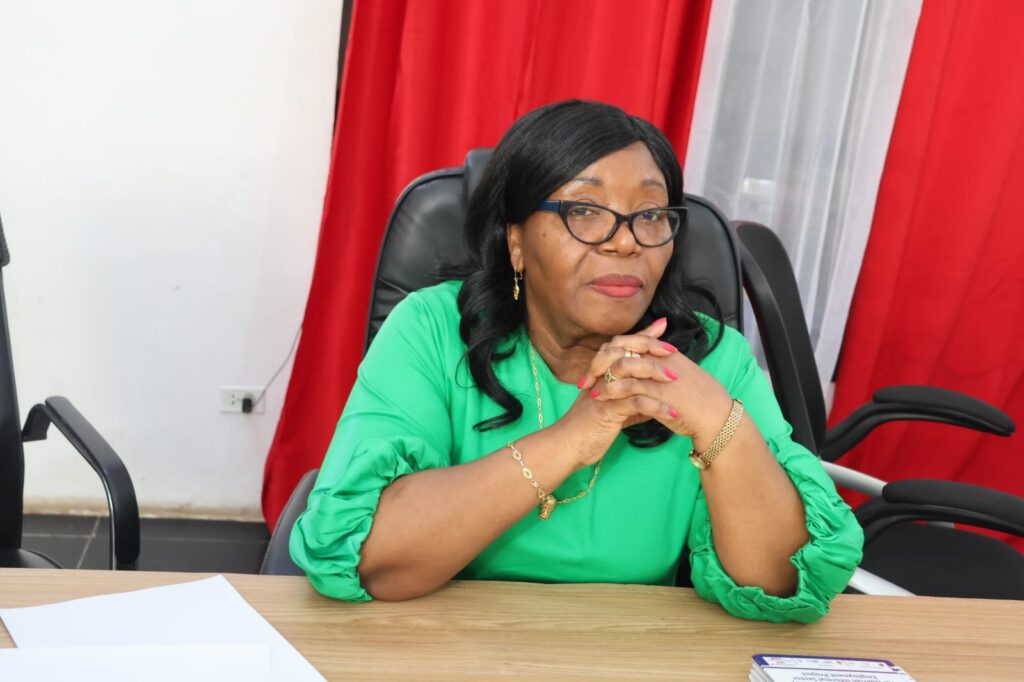
Deputy Minister Tenneh Brunson praised the Provost’s role in strengthening public financial management capacity and framed his visit as an opportunity for broader institutional cooperation.
“It is through your leadership and unwavering support that our professionals return home better equipped, armed with skills, insights, and technical confidence that is required to steer the course of fiscal decentralization and strengthen public financial management,” Brunson said.
She added: “We also see your visit to Liberia not as a courtesy, but as an opportunity to deepen academic and professional linkages, laying the foundation for institutional partnerships between Liberia and the University of Ibadan, and to serve our people in the future.”
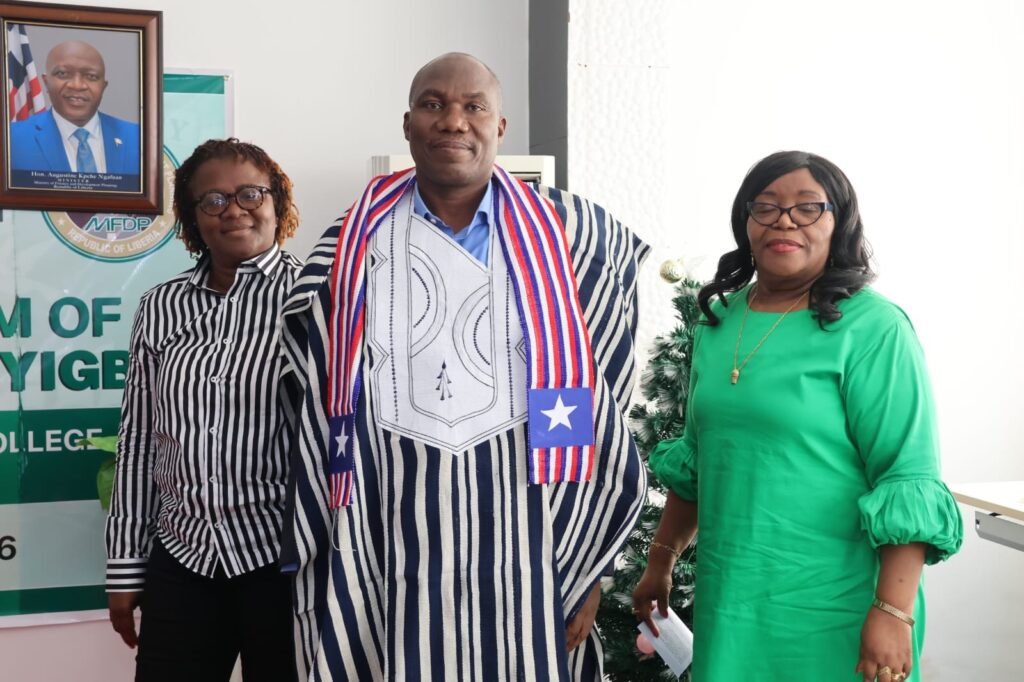
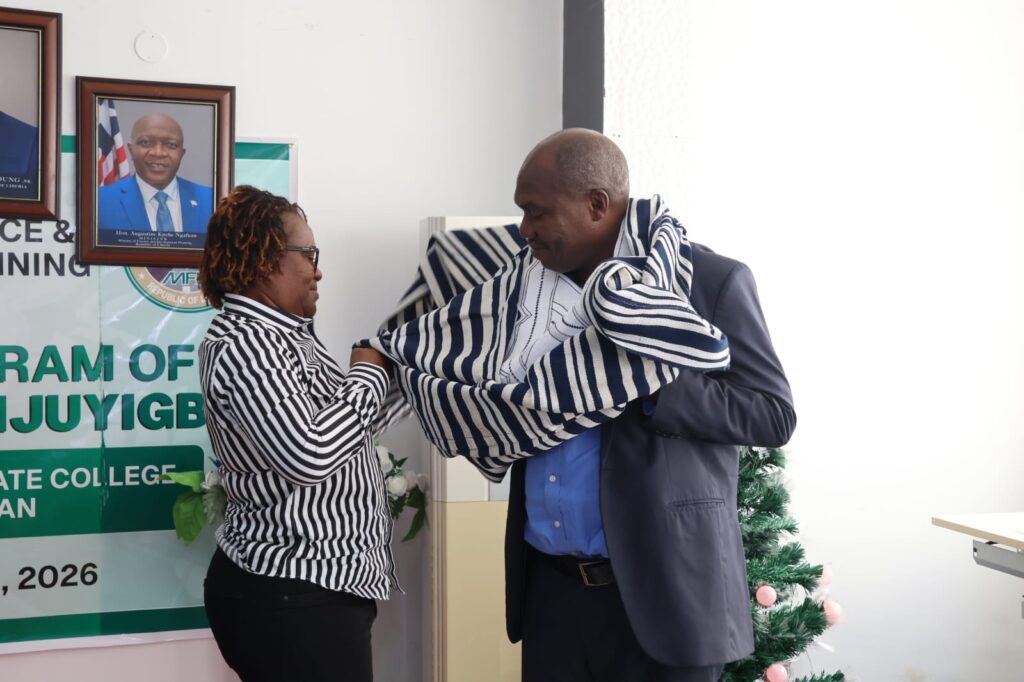
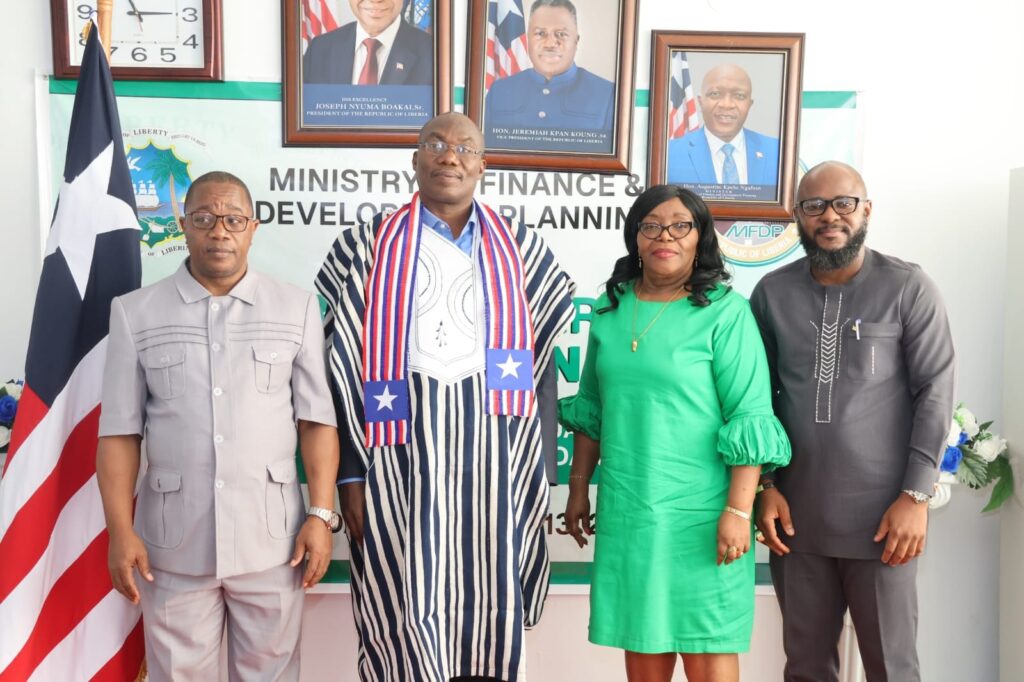
Brunson performed the ceremonial gowning of the Provost in Liberian attire, describing it as a symbol of friendship, partnership, and shared commitment to national development.
Nettey: Plaque Recognizes Training of 19 Liberians
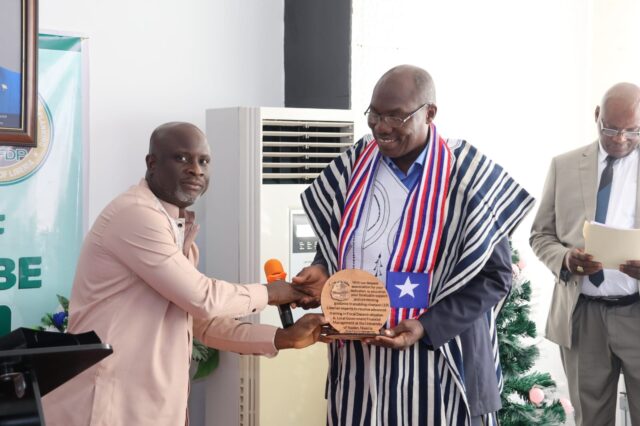
Comptroller and Accountant General Elwood T. Nettey presented a plaque to Prof. Ogunjuyigbe on behalf of the Government of Liberia through MFDP. The inscription, as read during the program, recognized the Provost for enabling 19 Liberian experts to receive advanced training in fiscal decentralization and local government financial management at the University of Ibadan.
“On behalf of the Government of Liberia…we are pleased to present this to you as a deep token of appreciation,” Nettey said, adding that the impact would endure. “We know what you did for us and the knowledge impacted will live with us.”
Kemah and Jallah Underscore Wider Value of the Partnership
Internal Audit Agency Director-General David A. Kemah also lauded the Provost and said staff who attended returned “with renewed vigor and hope.” He suggested the Provost’s academic experience—particularly in renewable energy—could support Liberia’s push for improved efficiency in rural areas.
From the revenue side, James A. Jallah—speaking on behalf of the Liberia Revenue Authority’s Commissioner-General—described the Ibadan training as interactive and relevant, and said participants returned committed to collaboration. “We learned a lot…we were more interactive,” he said, adding that the group came back ready “to work and collaborate…to expand our decentralization process so our country can be better and effective.”
Provost: surprise honor, commitment to expand collaboration
Responding, Prof. Ogunjuyigbe said the honoring ceremony took him by surprise and recounted initially doubting the email invitation to Liberia.
“Every time…when I got the mail to come for the conference, I just left the mail,” he said. “I was thinking all these fraud people were the ones sending the mail.”
He said it was only after follow-up that he recognized the legitimacy of the invitation and contacted Dr. Gbatea. “I said, Dr. Gbatea, which program? I didn’t know you had organized a program with these people like this. I am so surprised,” he said, thanking MFDP for the recognition.
He credited Gbatea’s persistence for making the fiscal decentralization training happen. “It is basically because of the resilience of Dr. Romeo Gbatea. He was so strong…eventually we have to hold it,” he said.
He told Liberian participants their presence had lasting impact at UI. “My people still remember your faces…one by one,” he said, adding that the experience “changed a lot of dynamics” within the university and even helped spur interest in similar training for officials in eastern Nigeria once they learned UI had trained participants from another country.
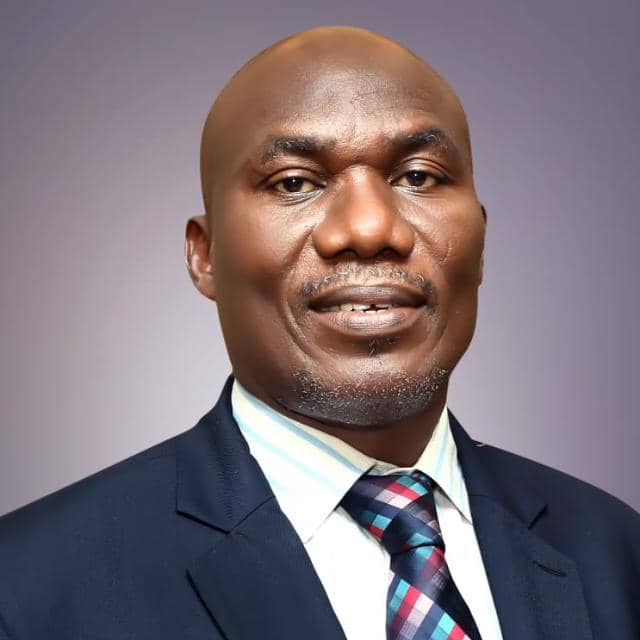
Confirming points mentioned by Myers and Kemah, the Provost said he is an electrical engineering professor specializing in energy, renewable energy, and power systems. He referenced a UI student from Liberia—whom he called “Kofa”—as part of the relationship that helped connect him to Liberia’s ongoing engagements.
Accepting the Liberian gown, he said he would wear it as a symbol of the relationship and share Liberia’s warmth with UI’s leadership. “I receive it gladly…to show that I visited Liberia,” he said. “I’m going to tell Vice-Chancellor. I’m going to tell other people.”
He also voiced readiness to continue cooperating with Liberia, echoing the Africa-centered message Myers attributed to the finance minister. “We are glad and we are willing,” the Provost said, adding: “The solution to Africa’s problems is in Africa…There are certain things that Nigeria can learn from Liberia…eventually we will become a continent that the whole world will be afraid of.”
Next Steps
Myers closed by signaling that MFDP intends to operationalize the new cooperation ideas discussed with the Provost and the finance minister.
“This will not be the end of our engagement. We already had a discussion on it earlier,” he said. “In the coming months, you can expect to hear from us in terms of how we proceed.”