MONROVIA, Liberia — Political leader of the Liberia National Union (LINU), Clarence K. Moniba, has delivered a sweeping critique of Liberia’s governance framework, arguing that the country’s persistent poverty is the result of weak leadership choices, misplaced budget priorities, and a failure to enforce accountability for corruption.
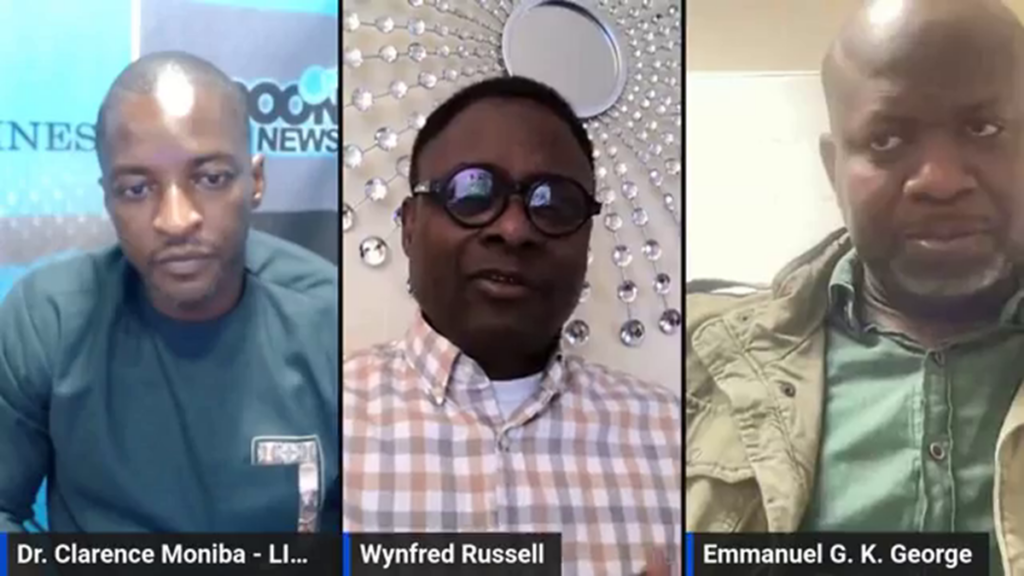
Speaking during his maiden appearance on Spoon FM’s Spoon Talk on New Year’s Day, Dr. Moniba said Liberia’s challenge is not a lack of resources but the absence of “transformational leadership” capable of making disciplined policy decisions in the national interest.
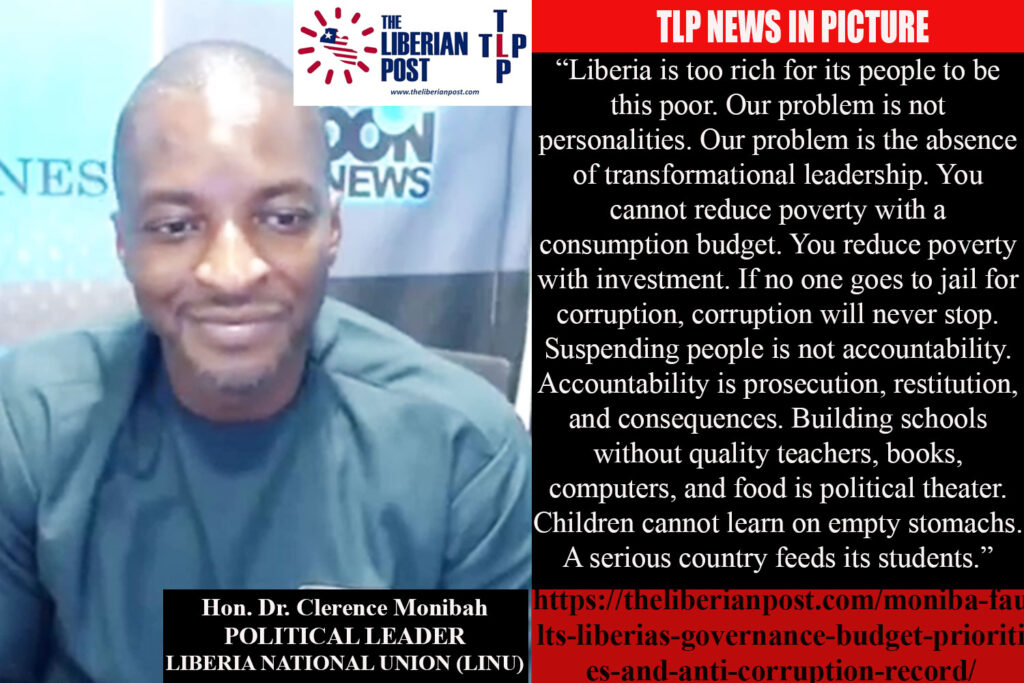
“Liberia is too rich for its people to be this poor,” Moniba said, asserting that successive governments have failed to use the national budget as a tool for economic transformation. He criticized the structure of the national budget, describing it as consumption-driven rather than investment-oriented, with excessive spending on political administration and insufficient allocations for agriculture, infrastructure, education, and health.
Moniba argued that Liberia’s budget consistently falls short of the minimum capital investment threshold needed to stimulate growth. According to him, countries that have successfully reduced poverty devote between 35 and 40 percent of public expenditure to productive sectors, while Liberia continues to prioritize recurrent spending.
National Dependence on Imports
The LINU leader also took aim at Liberia’s economic dependence on imports, particularly rice, noting that billions of dollars have been spent over decades importing food that could be produced locally. He warned that without deliberate investment in agriculture value chains and rural infrastructure, poverty levels would remain stubbornly high regardless of donor support.
Corruption
On corruption, Moniba delivered one of his most stinging assessments, saying Liberia’s anti-graft fight lacks credibility because it rarely results in prosecution or imprisonment.

“People are suspended, but nobody goes to jail,” he said, arguing that corruption will persist as long as wrongdoing carries no meaningful consequences. He called for the establishment of a specialized anti-corruption court and insisted that stolen public funds must be recovered alongside criminal prosecution.
Moniba also questioned the selective enforcement of accountability, warning that anti-corruption efforts perceived as politically motivated risk eroding public trust rather than restoring it. He concluded that unless governance reforms are matched by fiscal discipline and real accountability, Liberia’s poverty crisis will deepen, regardless of changes in leadership.