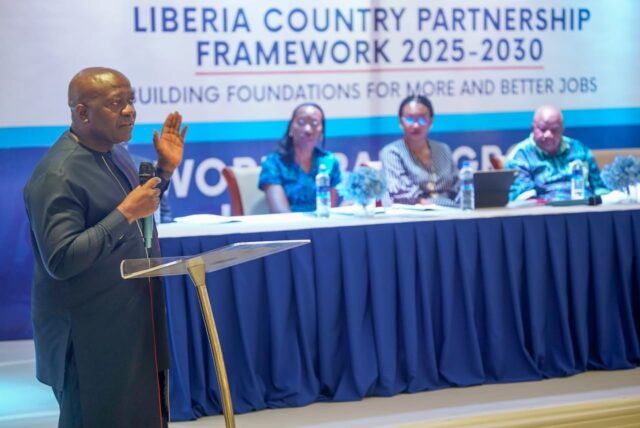
-Says New CPF Puts Liberia’s Jobs and Skills at the Center
MONROVIA, Liberia – Finance and Development Planning Minister Augustine Kpehe Ngafuan has praised the World Bank Group as a “true friend” that stood by Liberia during a year of painful aid shocks, saying the Bank’s new Country Partnership Framework (CPF) 2025–2030 is exactly the kind of support the country needs to turn its ARREST Agenda into real jobs and skills for Liberians.
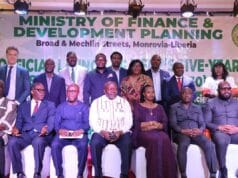
Speaking at the launch of the CPF at the Ellen Johnson Sirleaf Ministerial Complex on Wednesday, December 3rd, Ngafuan said 2025 “started on a rocky road” for the Boakai administration when one of Liberia’s main donors abruptly exited.
“This year has been a difficult year. We started on a rocky road when we got some shocks,” he recalled. “One of our main partners, second largest donor, pulled out. It was abrupt, it was heavy, and it was, to some extent, bruising. We had to adjust. We had to balance out, and there was concern that that would have created a domino effect, that other big partners would have retreated on us.”
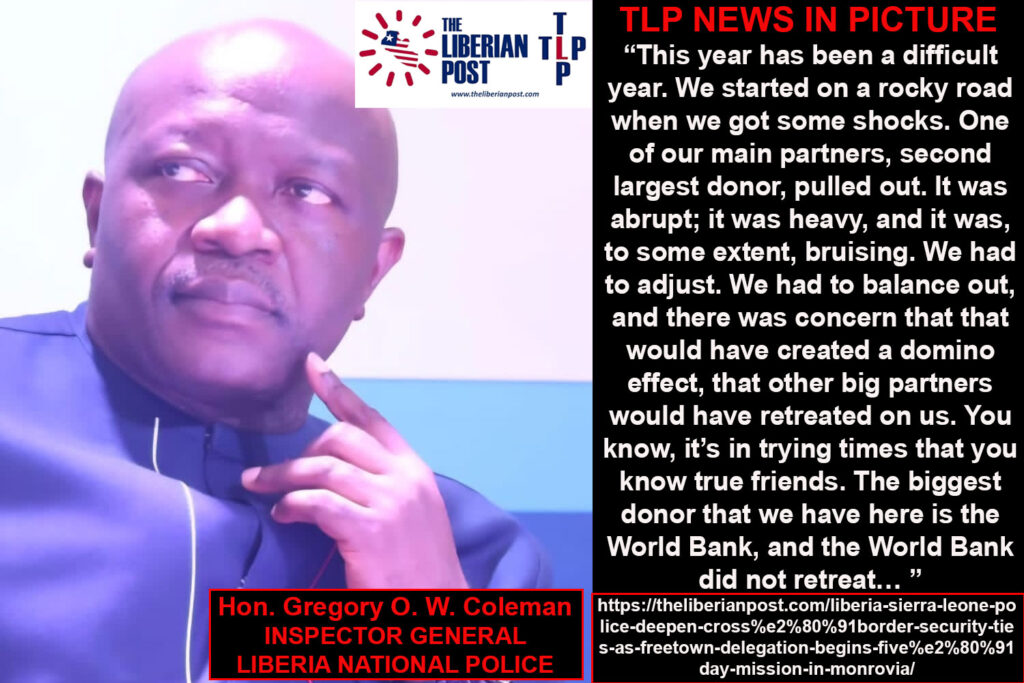
Instead, he said, the Bank—Liberia’s largest development partner—“did not retreat from us at a very critical hour.”
“You know, it’s in trying times that you know true friends,” Ngafuan told an audience of Liberian officials, World Bank and IFC leaders, and development partners. “The biggest donor that we have here is the World Bank, and the World Bank did not retreat… That’s the first big gratitude we have as a people to you, Ms. Country Manager, and to the entire World Bank family.”
“Overarching Goal Is More and Better Jobs”
Ngafuan, who described himself as “to some extent a member of the World Bank family,” said the government is particularly pleased that the CPF’s single overarching objective is to build the foundations for “more and better jobs” for Liberians.
“We are happy that the overarching goal of this partnership framework is to achieve something that is very critical to all of us. It is more and better jobs,” he said. “Ultimately, everything is interlocking. The areas that we’re emphasizing are building blocks to achieve that outcome.”
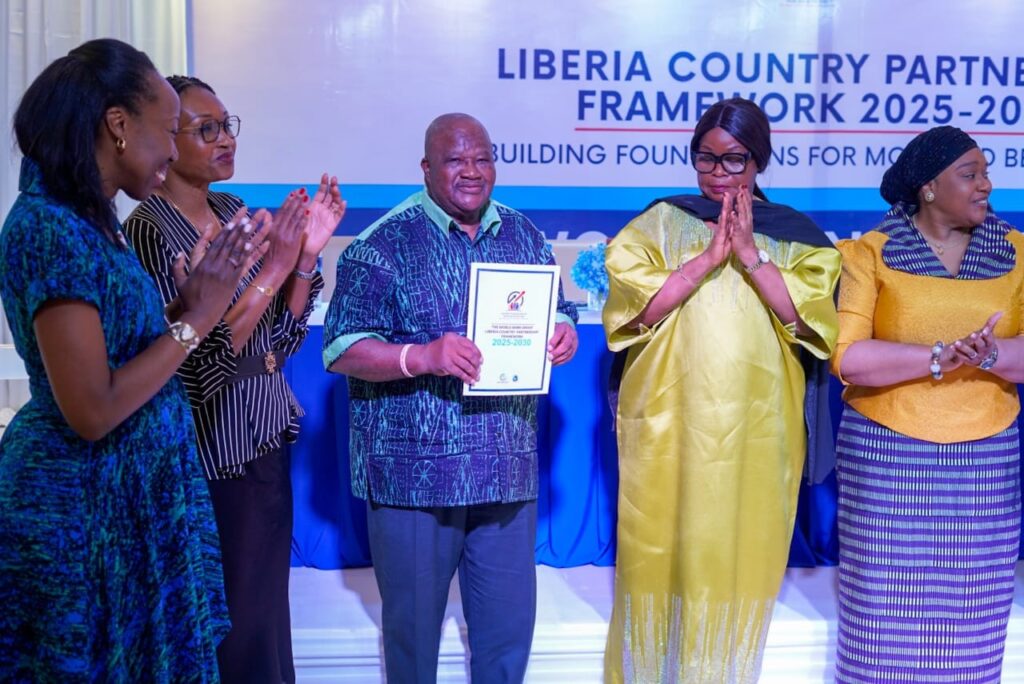
The CPF will concentrate on four core areas: reducing learning poverty, increasing energy access, promoting transparent and accountable governance, and boosting private investment—especially in agro‑industry and sustainable forest economies.
Ngafuan argued that Liberians must see how these “building blocks” connect directly to what many call the “bread and butter” issue.
“Our people sometimes… we have a lively country with lively debates, which is good for us,” he said. “We invest in reducing learning poverty—I like how you call it. But some people do not understand the link between that and jobs, or the ‘bread and butter’, because there could be jobs, but if people don’t have the skills, they don’t have the knowledge, the job will be tantalizing, and they can’t get a job.”
“We Cannot Forget to Build People’s Competences for Jobs”
The minister stressed that focusing on jobs without investing in education and skills would be self‑defeating.
“As we focus on jobs, we cannot forget to build people’s competences for jobs,” he said. “Making sure that the foundation is solid. It is a solid foundation upon which we build a superstructure. Otherwise, you know, the superstructure will collapse like a pack of cards.”
He pointed to his own and others’ experiences as proof.
“All of us are here today because of strong foundations,” he noted. “Most of us here, we compete for jobs… because we have the knowledge and the skills.”
Ngafuan hinted at upcoming joint programs with the Bank in areas like foundational learning and agro‑industry, saying he did not want to “preempt” his colleague ministers but that “working with you, we know what’s going to happen.”
A Family Tone—and a Strategic Warning
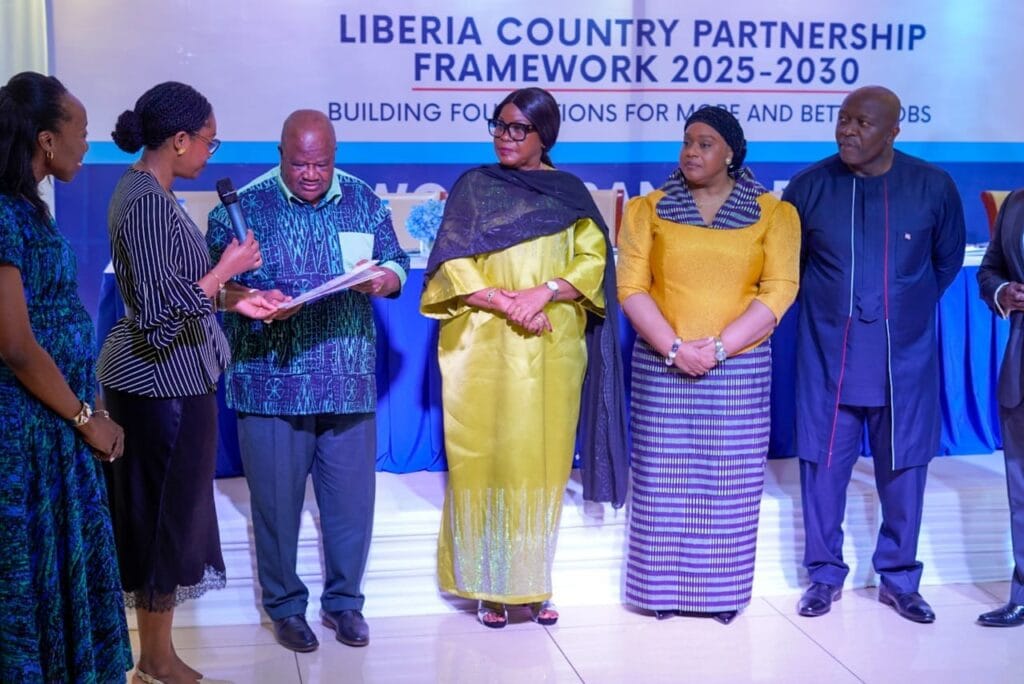
Although protocol dictated that Senior Presidential Adviser Dr. Augustine Konneh deliver the formal government statement on behalf of President Boakai, Ngafuan used his time to speak “like a family member” of the World Bank.
“Actually, I didn’t come to make a statement on behalf of the government,” he said at the start of his remarks. “I, to some extent, am a member of the World Bank family, so I will talk like a family member.”
In “family mode,” he both thanked and challenged the Bank and other partners to stay the course as Liberia seeks to reset its development model in the face of global and domestic shocks.
He underlined that the Boakai government is under pressure but determined to navigate the storm.
“We’re talking about this partnership framework… a five‑year plan for Liberia, and helping us to navigate the storm,” he said. “Thank you very much.”
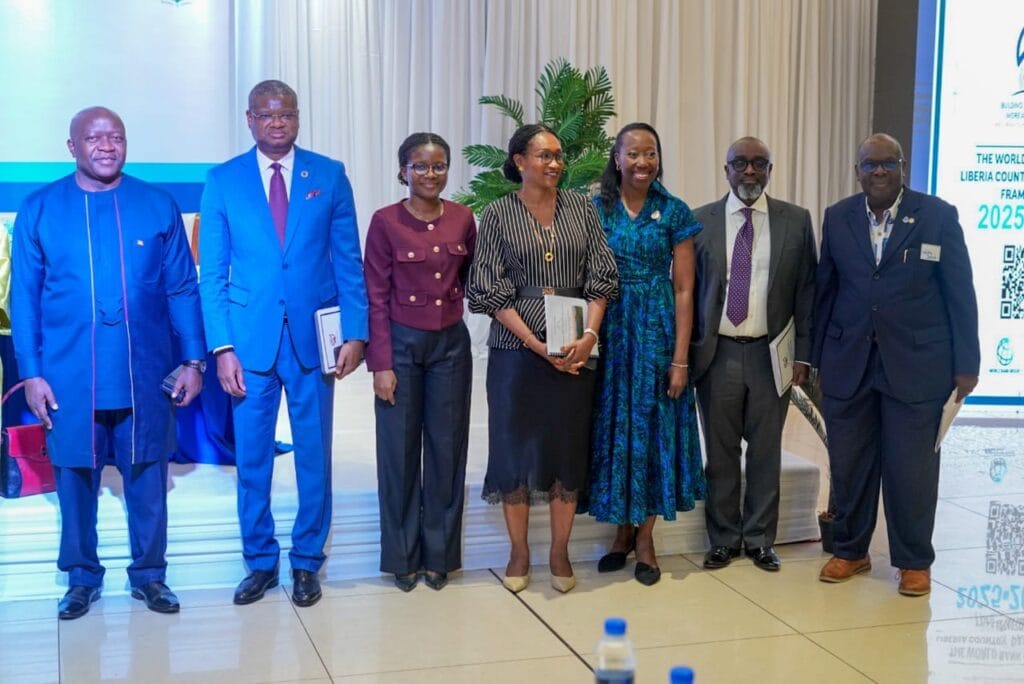
CPF and ARREST: Last Leg of a Long Race
The CPF, which runs from 2025 to 2030, is explicitly aligned with the government’s ARREST Agenda for Inclusive Development (AAID)—Boakai’s flagship plan to drive agriculture, roads, rule of law, education, sanitation and tourism as Liberia’s path to Vision 2030.
World Bank Country Manager Georgia Wallen has described the AAID as the “final leg” of Liberia’s development relay race and said the CPF is designed so that “everything we do… over the next five years will have one core motivation—jobs.”
Ngafuan’s remarks echoed that framing, but with a pointed reminder: without human capital, even the best‑designed jobs agenda will fail. His message, both to Liberians and to partners, was clear: the shock of losing a key donor has made the country more dependent than ever on serious, long‑term partnerships—and more determined to make those partnerships count where it matters most, in the skills and livelihoods of ordinary people.