-Roads and Energy Get US$100 Million Boost
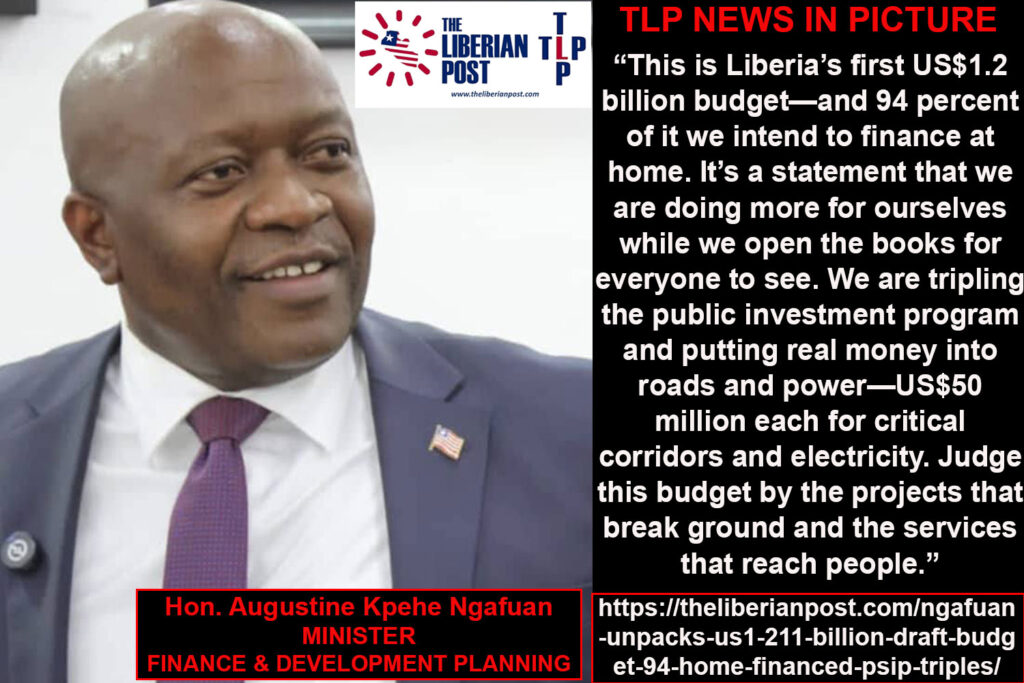
MONROVIA, Liberia — Finance and Development Planning Minister Augustine Kpehe Ngafuan on Monday detailed Liberia’s first-ever US$1.211 billion draft national budget, saying 94% of spending will be financed domestically as the government triples its Public Sector Investment Program (PSIP) and channels a US$100 million boost to roads and energy.
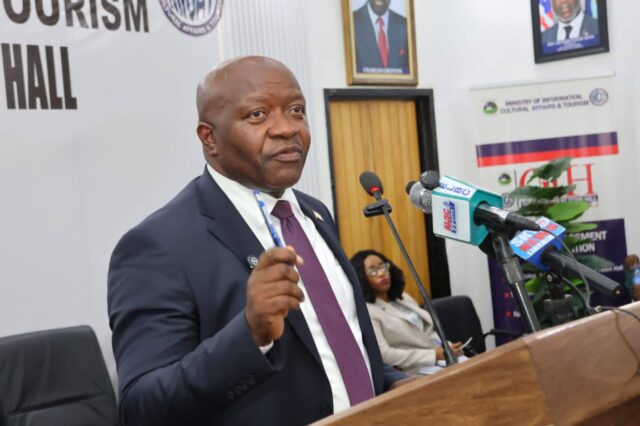
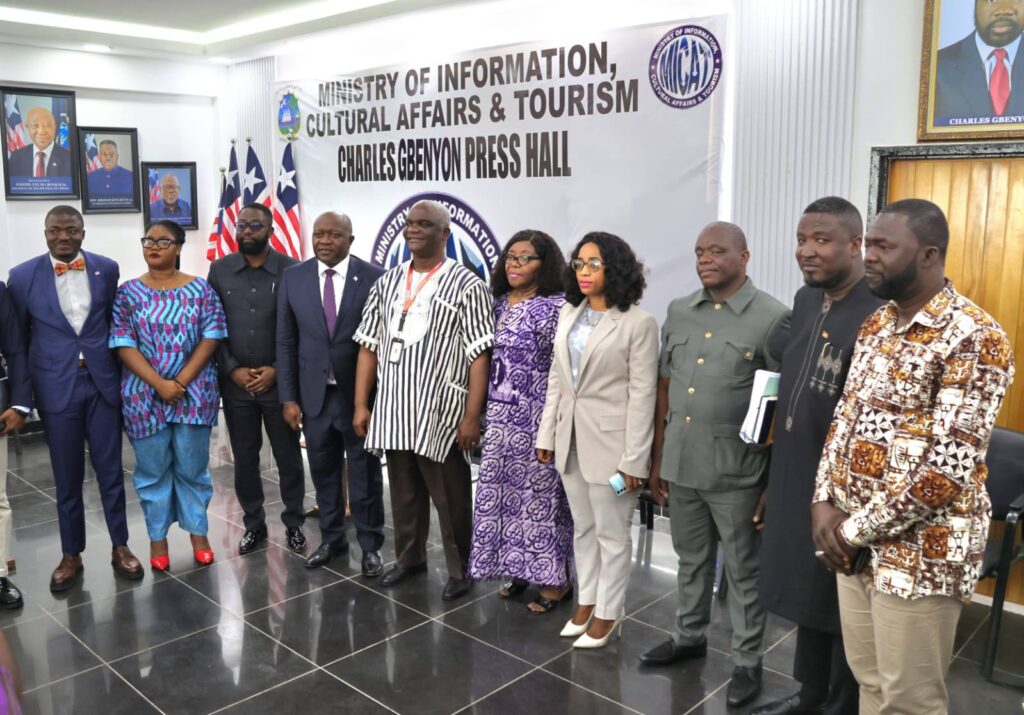
Submitting the draft on Nov. 7 and speaking at a MICAT press briefing, Ngafuan said total revenue is projected at US$1.211 billion, including US$1.13 billion in domestic revenue (94%) and US$72 million in external resources (6%). “Domestic revenue has reached 94% of our projection. This is on account of the country doing more for itself,” he told reporters, adding that the full draft has been published online for public scrutiny in line with open-budget commitments.
Revenue composition and 2025 comparison
- Tax revenue: US$797 million
- Non-tax revenue: US$585 million (includes a conditional US$200 million signature bonus expected if the ArcelorMittal extended concession is ratified by the Legislature)
- Contingent revenue: US$48 million Ngafuan said domestic revenue estimates exceed the FY2025 budget by 47% (US$333 million).
Bigger capital push—PSIP jumps to US$281 million The PSIP rises from US$107 million in FY2025 to US$281 million in FY2026, the minister said, of which US$200 million is the expected ArcelorMittal signature bonus, fully earmarked for “transformative projects.”
Top-ups for roads and power Of the US$200 million, US$100 million is split equally between roads and energy:
- Roads: US$50 million added to the core roads envelope (Ngafuan cited a base of roughly US$59 million), to accelerate critical corridors and maintenance.
- Energy: US$50 million to the Liberia Electricity Corporation (LEC) for expanded access, dry-season stability, and smart metering to reduce commercial losses.
Frontier counties Ngafuan said the government will prioritize Nimba, Grand Bassa, and Bong—frontier counties within ArcelorMittal’s operating corridor—for energy access improvements funded from the bonus.
Education and Judiciary The minister announced an additional US$15 million allocation across education institutions, including the University of Liberia, and support to the Judiciary for court construction/expansion and digitization of records.
Debt service up—responsible borrowing Ngafuan cautioned that rising debt service accompanies the larger envelope. “Liberia’s debt stock is about US$2.7 billion… Last year we budgeted around US$150 million for debt service; this year we’re talking about US$230 million,” he said, adding that debt can finance productive investment, but obligations must be met on time.
Open budget process Ngafuan said the budget is posted online and his team—alongside the Liberia Revenue Authority (LRA)—will appear on radio talk shows and other platforms to elaborate. “See this as just on-the-surface conversation,” he told reporters. “We’ll be available to give you more clarity.”
What’s Next
- Legislature: The House and Senate will open hearings on revenue realism, the PSIP pipeline, the conditional nature of the US$200 million bonus, sector allocations, and oversight safeguards.
- Execution: Project readiness, procurement speed, and LEC’s technical capacity will be central to turning allocations into visible service delivery.
Why it matters for households and businesses
- Roads and power: Lower transport and electricity costs over time, faster farm-to-market access, and improved reliability for SMEs.
- Education and justice: Additional funding for university operations and digitized courts should improve access and efficiency.
- Domestic financing: A 94% home-financed budget signals rising fiscal capacity—if revenues materialize and spending is tightly executed.