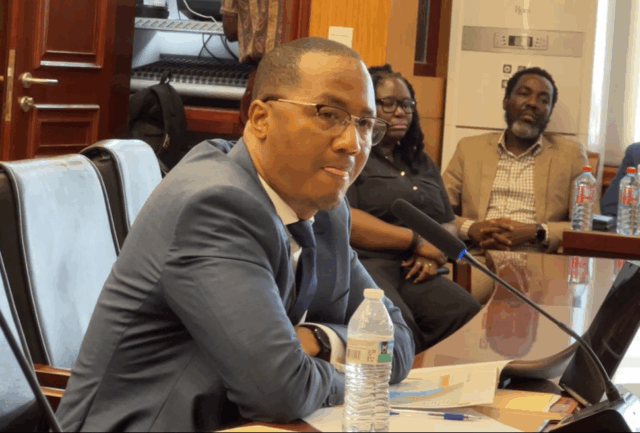
MONROVIA, Liberia — National Oil Company of Liberia (NOCAL) President‑designate and Acting CEO Fabian Michael Lai says Liberia has “learned from past mistakes” and is putting safeguards in place to stop foreign firms from flipping oil blocks for windfall gains without delivering value to Liberians.
Testifying Wednesday, Nov. 5, 2025, before the Senate Committee on Hydrocarbon, Energy and Environment, Lai referenced long‑standing public criticism of earlier transactions—most notably a 2007 award of offshore blocks LB‑11, LB‑12 and LB‑14 to Oranto Petroleum, owned by Nigerian businessman Prince Arthur Eze, and widely reported claims that Oranto later sold interests to Chevron in 2010 at a large profit. “Though we want more companies to invest, the country’s interest and that of its citizens remain paramount,” Lai told senators. “The Oranto/TotalEnergies agreement currently before the Legislature is a reflection of this commitment.”
The proposed petroleum agreement—now under legislative review—has drawn opposition from some lawmakers, including former Speaker Cllr. J. Fonati Koffa and Representative Musa Hassan Bility, who argue the terms favor foreign interests and risk repeating past mistakes. Lai countered that the draft embeds stronger protections on environmental management, community benefits, capacity building, and revenue handling.
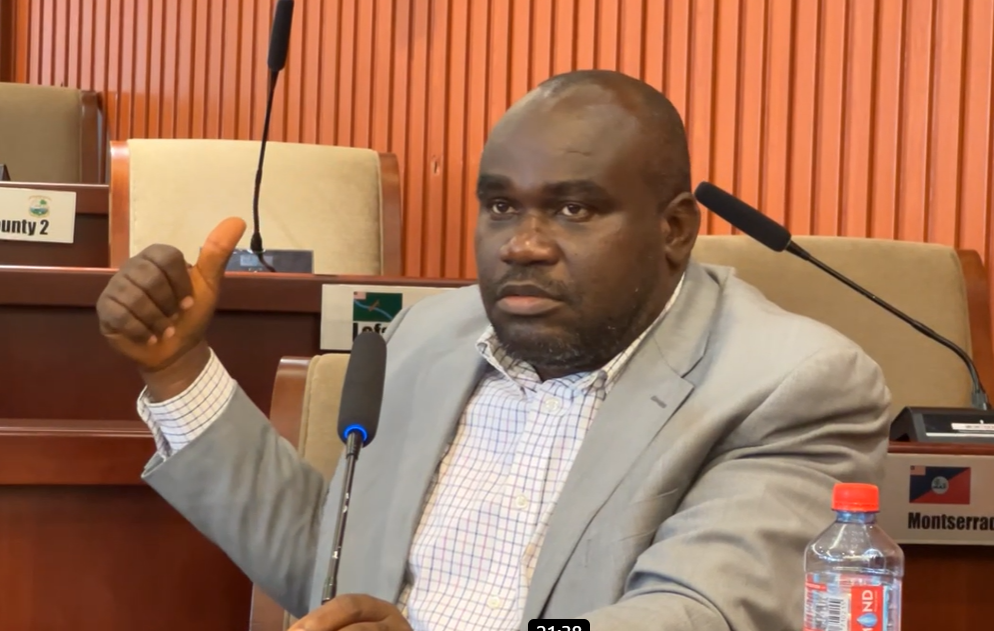
What Lai Told The Senate
- Environmental and Social Commitments: Lai said the agreement “places strong emphasis on environmental protection and community benefits,” with social‑welfare contributions earmarked for projects across all 15 counties.
- Revenue To Consolidated Account: All revenues would flow into the Consolidated Fund, he said, allowing the Legislature to allocate for public benefit.
- Training And Local Content: The deal prioritizes Liberian training through a trust fund jointly managed by NOCAL and the Ministry of Finance and Development Planning. NOCAL is collaborating with the Liberia Business Association (LIBA) to prepare local firms to participate in the value chain.
- Nationwide Benefits: “It’s no longer going to be a Montserrado‑only training program,” Lai said. “Scholarship opportunities will cover all 15 counties.”
Roles And Reality Check
Lai explained that NOCAL oversees marketing of 33 offshore blocks across two basins but lacks the capital to drill wells, requiring partnerships. The Liberia Petroleum Regulatory Authority (LPRA) issues licenses and pre‑qualifies companies on technical and financial capacity, he noted.
On commerciality, Lai was blunt: “For the record, we wouldn’t be able to establish that our reservoir is commercially viable,” he said. “What we’ve confirmed is a working petroleum system and a reservoir. Our ongoing exploration programs will determine the commercial potential.” He pointed to regional finds in Côte d’Ivoire, Ghana and Senegal as positive geological signals. Asked whether Liberia could deliver “the next biggest oil discovery in a frontier country,” Lai answered “a resolute yes,” contingent on disciplined exploration and governance.
Vision For A Modern NOCAL
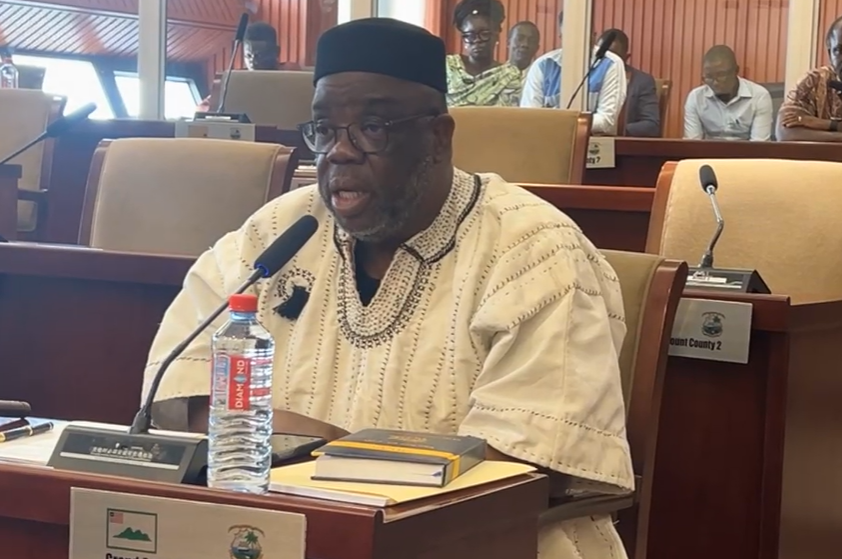
Lai outlined a plan to transform NOCAL into a “modern, transparent, and vertically integrated” company that moves “from a passive holder of assets into a dynamic engine of national development,” anchored on five guiding principles, including:
- Data‑Driven Sovereignty: Treat petroleum data as a strategic national asset—secure it, leverage it.
- Greater Government Take: Increase state ownership and maximize national benefits while attracting a diverse mix of global and local partners.
- Capacity Building: Train Liberians to compete effectively across the value chain.
Ten strategic focus areas, he said, include:
- A comprehensive data library and a centralized geoscience repository consolidating seismic and production data.
- A public data platform for industry stakeholders by his second year in office.
- Aggressive international marketing campaigns for Liberia’s basins.
- Training more than 1,000 Liberian professionals over the next five years.
- Declaring a National “First Oil” Target aligned with realistic production readiness, and modernizing exploration policy within 12–18 months.
Lai added that any company seeking to acquire oil blocks would be required to obtain LPRA approval and pay new transaction fees to the government—measures meant to deter speculative flipping and ensure Liberia captures fair value.
Headwinds In The Legislature The Oranto/TotalEnergies deal—described by Lai as embedding tougher standards on environment, social impact and local capacity—faces a difficult path amid demands for full transparency on equity, fiscal terms, and local‑content delivery. Critics led by Koffa and Bility have urged outright rejection; supporters argue the deal’s safeguards answer the core concerns raised by past contracts.
Who Is Fabian Michael Lai According to his professional profile, Lai is a Certified Public Accountant and petroleum finance specialist with more than 15 years’ experience in audit, accounting, and public‑financial management. He has served as:
- Acting President & CEO, NOCAL (since Feb. 2025)
- Vice President for Operations, NOCAL (Aug. 2024–Jan. 2025)
- CFO, TipMe Liberia (2022–2024)
- CFO, Liberia Petroleum Regulatory Authority (2018–2022)
- Internal Audit Manager, and earlier Finance & Administration roles, including at Catholic Relief Services He holds an M.Sc. in Petroleum Finance from Robert Gordon University (2014), an MBA from Cuttington University, additional MBA‑level work at AMEU, and a BBA in Accounting and Economics.
What To Watch
- Legislative Scrutiny: Expect line‑by‑line review of fiscal terms, local‑content obligations, environmental provisions, and anti‑flipping safeguards.
- LPRA Vetting: Pre‑qualification and license oversight will be central to market confidence.
- Transparency Benchmarks: Publication of data‑room parameters, training‑fund governance, and revenue‑flow auditing will be critical to public trust.
Bottom line: Lai is betting that stricter rules on data, licensing, local content and revenue handling—plus a push to professionalize NOCAL—can attract serious capital while preventing past abuses. Whether the Legislature—and the public—are persuaded will decide the fate of the Oranto/TotalEnergies agreement and the direction of Liberia’s frontier petroleum play.