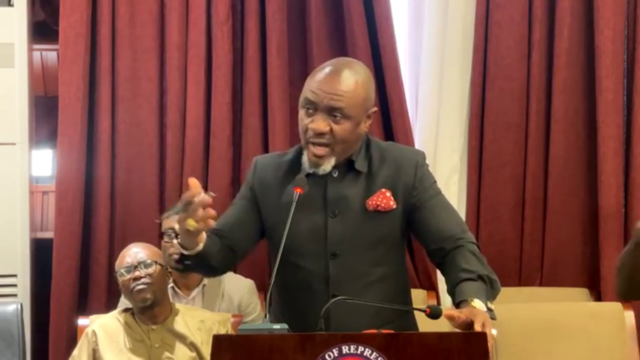
CAPITOL HILL, Monrovia – The Executive Director of the Public Procurement and Concessions Commission (PPCC) has told the House of Representatives that his institution has no record of a reported US$19 million contract allegedly awarded to a Ghanaian company for construction works in Buchanan, Grand Bassa County—raising serious concerns about transparency and procurement oversight within government.
Appearing before lawmakers during a heated session, PPCC Executive Director Bodger Scott Johnson stated unequivocally that the Commission, which by law is mandated to monitor and regulate all public procurement processes, “has no record” of the multi-million-dollar contract in question.
Scott’s disclosure came in response to inquiries from members of the House who referenced reports of a US$19 million contract reportedly tied to works under the African Development Bank (AfDB)-funded Special Agro-Processing Zone project in Grand Bassa County.
“Which entity in government did the procurement for the US$19 million?” Johnson asked lawmakers, emphasizing that the PPCC does not have any record of having received procurement plans or issued a “no objection” for such an award.
He added: “There is no record of us at PPCC having any idea whether it’s 19 million or any company. We have no record of that.”

Lawmakers Express Alarm
Scott’s remarks drew immediate concerns from several legislators, who questioned how a contract of such magnitude could be awarded without the knowledge of the very body created to oversee government procurement.
One lawmaker described the situation as “troubling,” noting that US$19 million is “not a small amount” and warning that such gaps could represent a serious “leakage” in public financial management.
“The Act creating the PPCC gave it oversight responsibility of all government procurement processes,” the lawmaker said. “For US$19 million to be awarded and the PPCC says it has no knowledge, this is a huge concern.”
Another representative questioned whether international partners operating in Liberia are bypassing local procurement regulations altogether.
“I want to know whether there is no coordination from our international partners with the government arm responsible for procurement,” the lawmaker said, adding that the situation leaves the Legislature “a little bit confused.”
Donor Procurement Exception?
In response, Johnson suggested that the issue may stem from donor-specific procurement procedures. He explained that under Liberia’s procurement law, certain international agreements allow development partners to use their own procurement systems for projects they finance.
“In the Act, there is provision for international agreements between the Government of Liberia and other countries or international organizations for separate procurement processes,” Scott said.
He indicated that the African Development Bank may have opted to use its own procurement framework, which could explain why the PPCC was not involved. However, he maintained that the Commission itself did not issue any no-objection nor process any documentation relating to the reported contract.
Johnson recommended that the National Investment Commission (NIC) and the Ministry of Finance and Development Planning be engaged for further clarification, as they are typically involved in coordinating donor-funded projects.
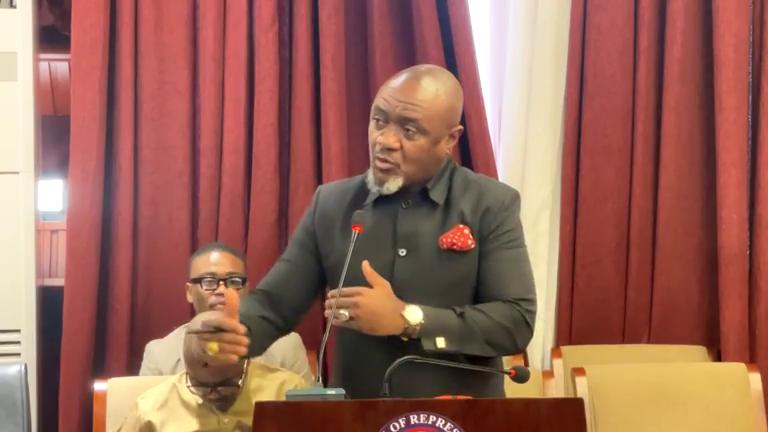
Echoes of the Yellow Machines Controversy
Scott’s latest disclaimer mirrors a similar controversy in October 2025 when he told the public that the PPCC was only an “invited observer” in the procurement process for 285 yellow machines—a deal that also sparked public scrutiny over bidding transparency.
In that case, the PPCC chief distanced the Commission from active participation in the bidding process, raising broader questions about the limits of the institution’s authority in high-profile, multi-million-dollar transactions.
The emerging pattern—where major contracts proceed without full PPCC oversight—has prompted lawmakers to question whether the Commission is being sidelined or whether structural loopholes in the procurement law are allowing significant transactions to occur outside its purview.
E-Procurement Praised as “Game Changer”
During his appearance, Johnson also used the opportunity to defend the Commission’s ongoing reform efforts, particularly the rollout of the electronic procurement (e-procurement) system.
He described the digital platform as a “game changer” that is enhancing transparency, efficiency, and accountability in public procurement.
According to the PPCC ED, 56 government entities are currently onboarded onto the platform, with approximately 25 procurement plans already approved electronically. He said the system has reduced approval timelines from 14–15 days under the manual system to just two to three days.
He disclosed that over US$132 million in contracts were awarded through the platform in 2025 alone, and that more than 700 vendors are registered.
He also revealed that the Commission has begun charging vendors registration fees, with about US$50,000 already deposited into a government account since January 2026.
Despite the technological advances, lawmakers insisted that digital reforms cannot substitute for institutional accountability, especially in high-value contracts involving international financing.
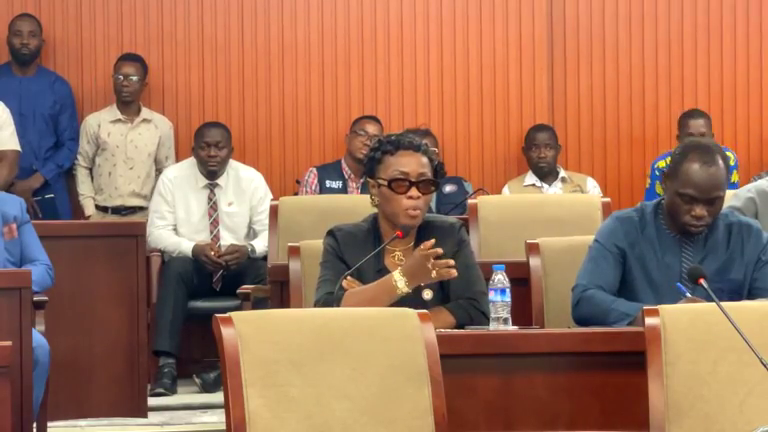
Matter Referred to Committee
Following extensive deliberations, Representative Alfred Flomo moved that the matter be forwarded to the House Committee on Concessions and Good Governance for investigation. The motion was supported, with the Committee given two weeks to report back to plenary.
The referral signals a potentially deeper probe into whether procurement rules were breached, whether the PPCC was bypassed, and whether Liberia’s procurement law adequately governs donor-funded projects.
Broader Governance Implications
The unfolding issue places renewed focus on Liberia’s procurement architecture and the balance between donor autonomy and national regulatory authority.
If international partners are allowed to independently manage procurement without local oversight, critics argue, it could undermine domestic accountability mechanisms. Conversely, if the law explicitly permits such arrangements, lawmakers may need to revisit and strengthen statutory provisions to close oversight gaps.
For now, the key question remains unanswered: How was a US$19 million contract awarded without the knowledge of the very Commission mandated to regulate public procurement?
As the Committee on Concessions and Good Governance begins its inquiry, the outcome could have significant implications not only for the Buchanan project but also for the credibility of Liberia’s procurement system as a whole.
Follow The Liberian Post on Facebook and X (formerly twitter)