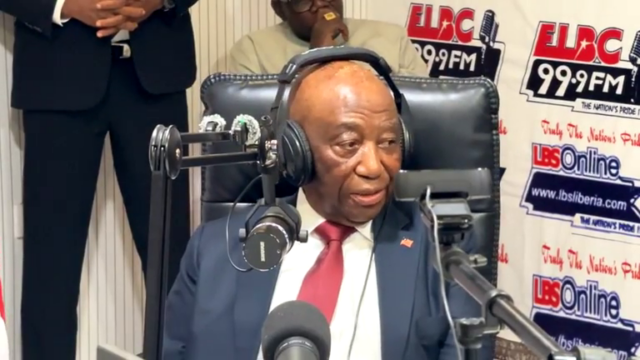
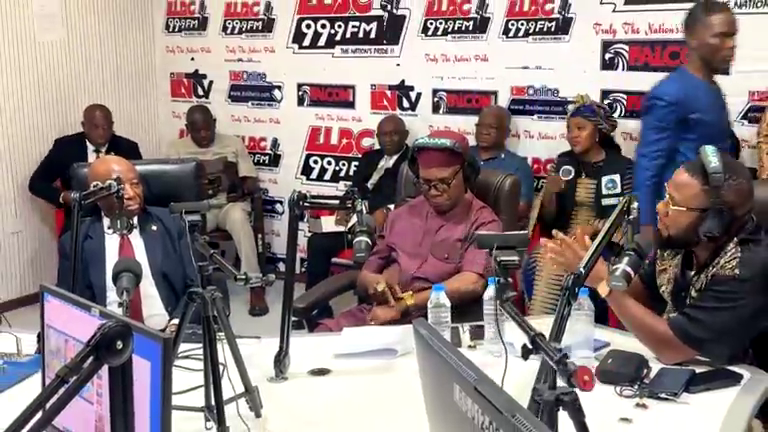
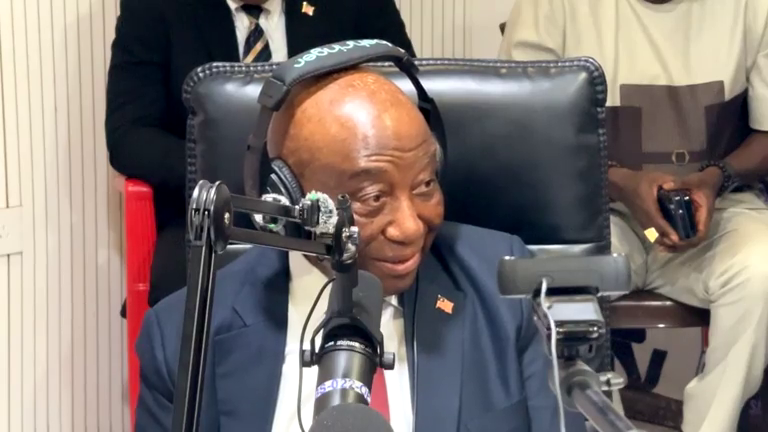
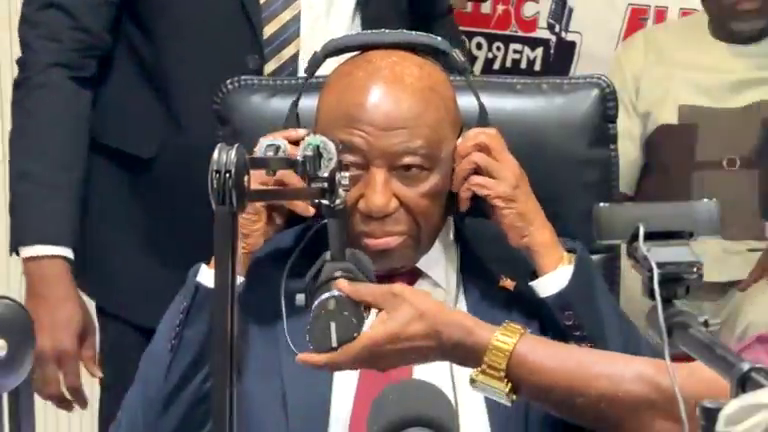
MONROVIA, Liberia — President Joseph Nyuma Boakai, Sr. on Friday, December 19, 2025, made his first national radio appearance since assuming office, using the platform of the Liberia Broadcasting System (ELBC/LBS) to address a wide range of national issues, including corruption, job creation, infrastructure development, regional peacebuilding, and public trust in governance.
Speaking during a live interview on the Super Morning Show, simulcast across multiple radio stations nationwide, President Boakai described his presidency as a mission of national rescue rather than personal ambition, stressing that his leadership is anchored in lived experience and a deep understanding of Liberia’s challenges.
“I didn’t come to become president,” Boakai said. “I came to rescue a country—to give young people hope, to give market people opportunity, and to change the story of Liberia.”
Anti-Corruption: Due Process Over Impulse
A significant portion of the discussion focused on public criticism that the administration has been slow in combating corruption. President Boakai firmly rejected the notion that decisive leadership means impulsive action, emphasizing adherence to the rule of law.
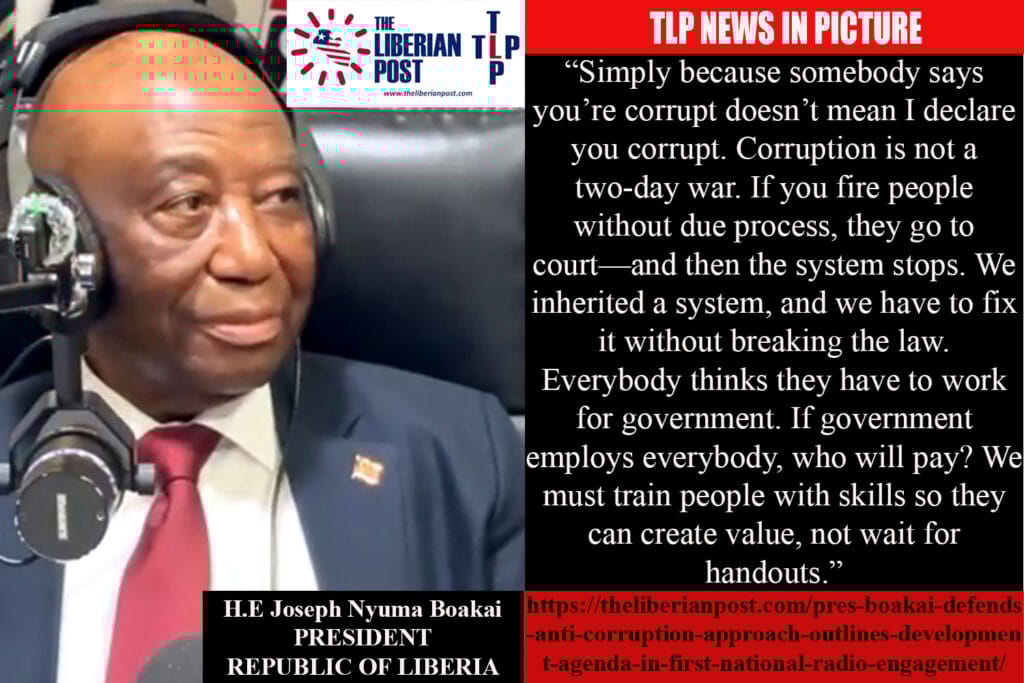
“Simply because somebody says you’re corrupt doesn’t mean I declare you corrupt,” the President said. “You must give people a chance. Corruption is not a two-day war.”
He explained that allegations must be investigated through legally established institutions such as the Liberia Anti-Corruption Commission (LACC), noting that arbitrary dismissals often result in legal challenges that weaken accountability efforts.
“We inherited a system,” he added. “Some people have tenures. If you fire them without due process, they go to court—and the system comes to a halt.”
Jobs, Skills, and Youth Empowerment
Addressing unemployment, especially among young people, President Boakai underscored vocational education and private-sector investment as the cornerstone of job creation, arguing that government alone cannot absorb the labor force.
“Everybody thinks they have to work for government,” he said. “If government employs everybody, who will pay?”
The President disclosed ongoing efforts to strengthen vocational training, including partnerships with institutions such as Tuskegee University to reposition Booker Washington Institute (BWI) as a center of technical excellence.
Infrastructure, Roads, and Investment Patience
Boakai reiterated that infrastructure development—particularly roads, electricity, ports, and tourism—remains a top priority, but cautioned that large-scale projects require careful negotiation and international collaboration.
“Every concession must be scrutinized,” he said. “We are building, but it will take time.”
Foya Project and Regional Peace Role
Responding to questions about the controversial construction project in Foya, Lofa County, the President categorically denied claims that it is a personal retirement facility, describing it instead as a strategic regional peace and diplomacy center.
“It is not a Joseph Boakai project,” he stressed. “It is an international peace-building facility for the Mano River Union.”
He noted Liberia’s increasing role as a regional mediator, citing engagements involving Guinea, Sierra Leone, and Côte d’Ivoire.
Economy, Currency Stability, and Revenue Mobilization
The President highlighted economic stabilization gains, including improved exchange rates and salary regularity, while calling for stronger domestic revenue collection.
“There are hidden monies around that we are uncovering,” Boakai said, pointing to leakages in ports and customs operations.
A Leadership Grounded in Experience
Throughout the interview, President Boakai repeatedly referenced his humble background, asserting that it informs his empathy for ordinary Liberians.
“I know what people go through,” he said. “Even when I ride in tinted cars, I know people are suffering.”
He concluded by affirming his commitment to regular public engagement, while calling for civility in national discourse.
“I work for the Liberian people,” Boakai said. “But our conversations must be decent, respectful, and focused on building the country.”
The interview marked a rare, wide-reaching engagement between the President and the public, offering insight into the administration’s governing philosophy as it approaches its third year in office.