MONROVIA – In a poignant address at the EJS Ministerial Complex in Congo Town, President Joseph Nyuma Boakai openly apologized to fellow Liberians as it relates to the Liberian Government not being able to adequately protect them during the civil war.
The Liberian Government’s apology comes nearly 24 years later following the end of the civil war on August 3rd, 2003 and after four successive administrations, including that of former Presidents Ellen Johnson Sirleaf and George Weah.
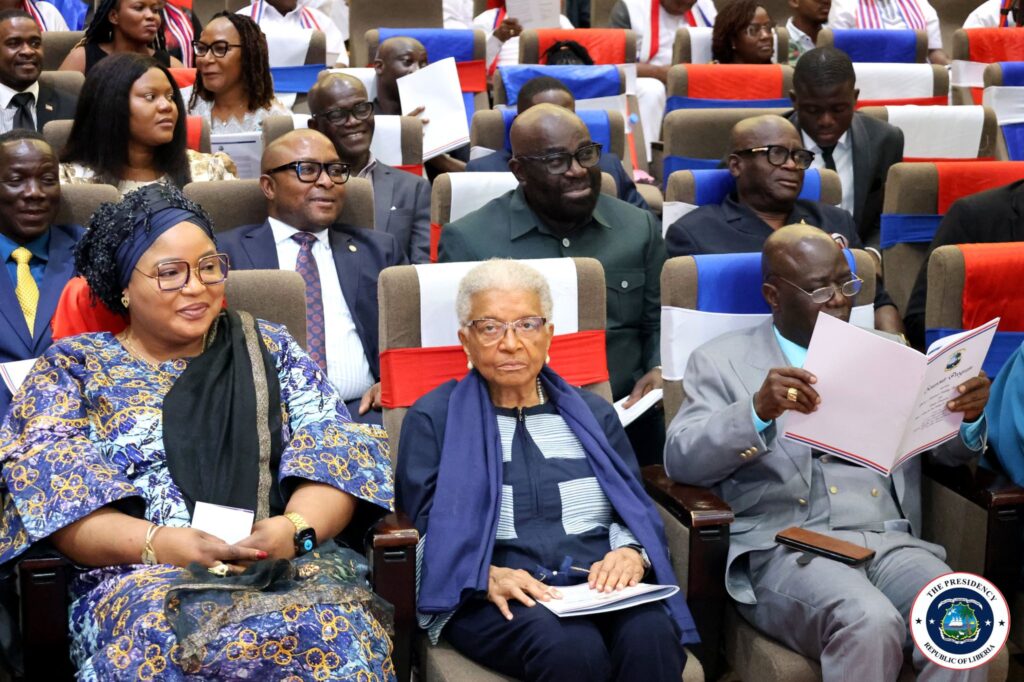
During the President’s speech at the National Healing, Reconciliation and Unity Program, he outlined a comprehensive vision for national reconciliation and healing, urging all Liberians to reflect on the country’s painful past while committing to a united and just future.
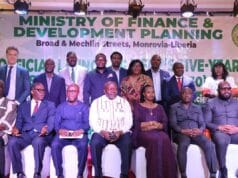
The event, part of Liberia’s National Reconciliation, Healing, and Unity Program, drew a diverse audience including government officials, civil society representatives, women’s and youth groups, as well as members of the diplomatic corps.
President Boakai’s speech resonated with a deep sense of collective sorrow and hope, as he acknowledged the enduring scars left by the country’s civil conflict.
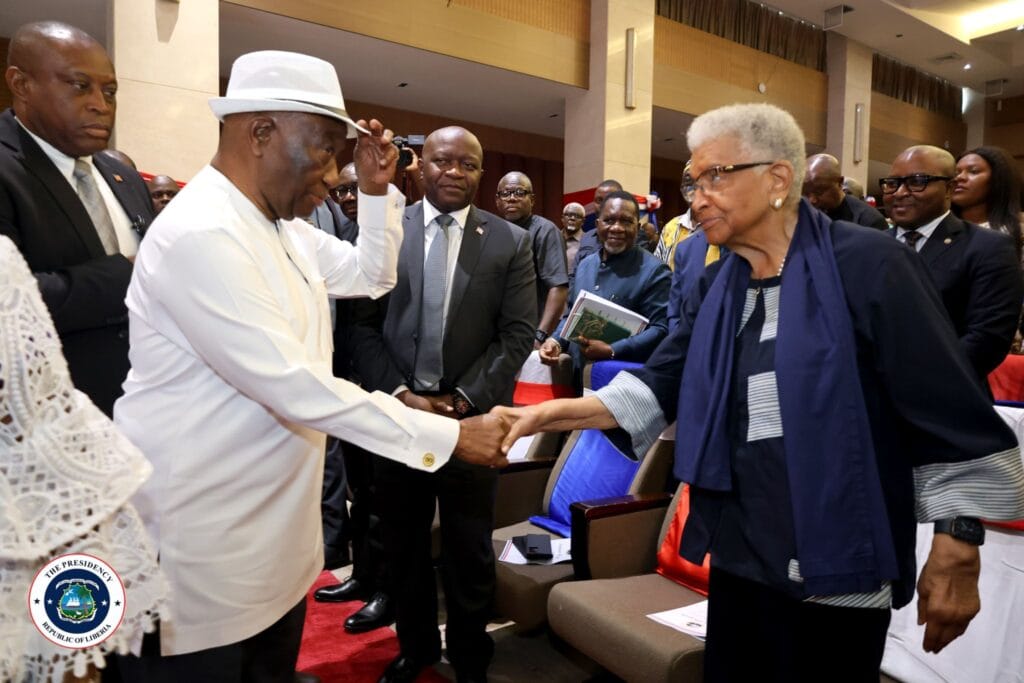
“We gather here to reflect deeply on the soul of our country; not only to remember but to recommit to reconciliation,” said Boakai. He emphasized the necessity for a shared space for dialogue, allowing citizens from all backgrounds to confront Liberia’s past and embark on a journey toward truth, justice, and compassion.
The President formally apologized on behalf of the state for the suffering endured by victims of the civil war, stating, “To every victim of our civil conflict, to every family broken, to every dream shattered, we say: WE ARE SORRY.” He stressed the importance of turning this apology into actionable commitments, reaffirming the government’s dedication to implementing key recommendations from the Truth and Reconciliation Commission (TRC).
Boakai also highlighted the need for a comprehensive historical narrative through the revival of the National History Project. This initiative aims to honor the memory of those lost during the conflict and preserve the truth of Liberia’s shared experiences. “Reconciliation is not an event. It is a mindset, a journey, a shared responsibility,” he stated, calling for collaboration across all sectors of society to enhance national healing.
The President urged the public and private sectors to align their efforts with Liberia’s Strategic Roadmap for National Healing, Peacebuilding, and Reconciliation, which outlines a framework through 2030 to transform mindsets, rebuild relationships, and revitalize national institutions. Boakai’s call to action marks a pivotal moment as the nation approaches the end of this strategic plan.
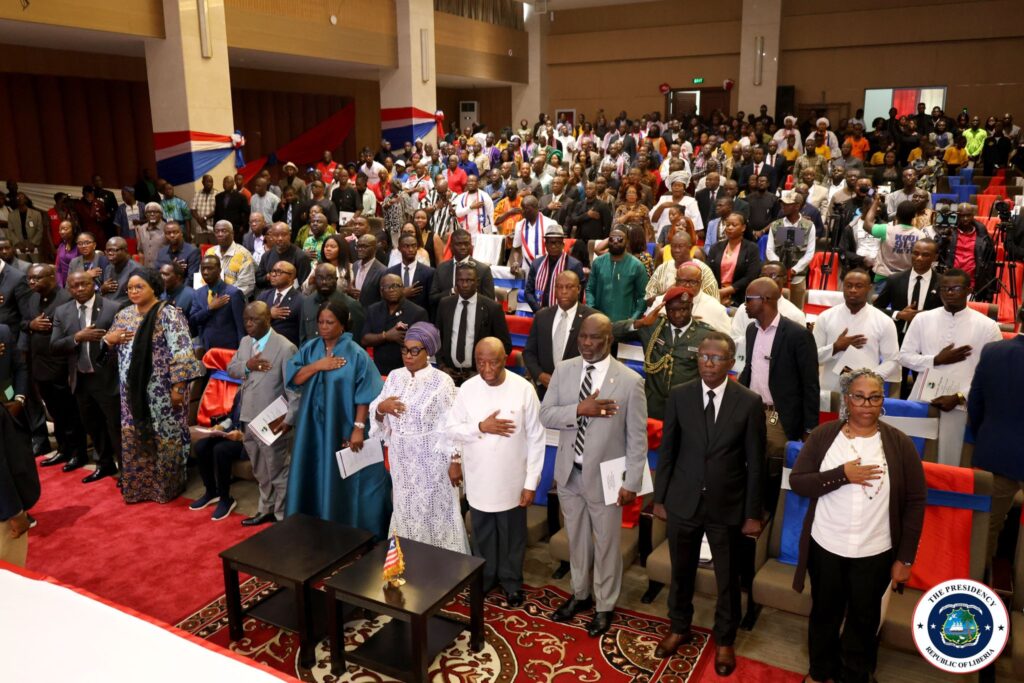
Drawing inspiration from civil rights leader Martin Luther King, Jr., President Boakai spoke passionately about the intertwined nature of peace and justice, emphasizing that true peace is built on shared opportunity and inclusivity.
As he closed his remarks, he expressed hope that Liberia could reclaim its rightful place on the global stage, encouraging citizens to think, love, and build together. “We owe it to those we lost. We owe it to those who survived. We owe it to our children,” said Boakai, as attendees reflected on their collective journey toward healing.
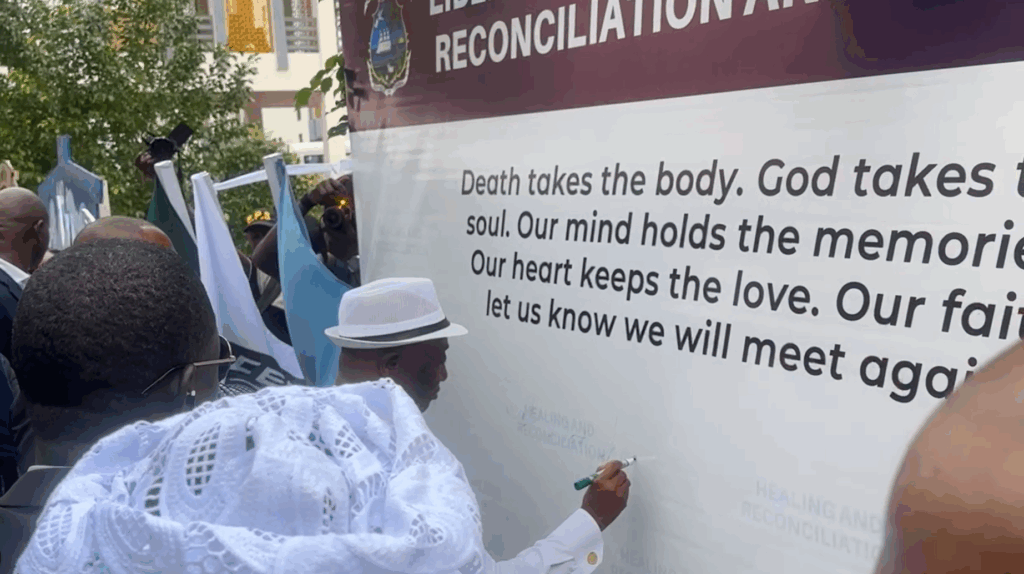
The ceremony concluded with a spirit of renewed commitment to unity and reconciliation, underscoring a collective resolve to confront the past and forge a brighter future for Liberia.
He led the audience to outside where he lit the National Healing, Reconciliation and Unity Candles.
Read the President’s full speech here.