MONROVIA, Liberia — The Supreme Court of Liberia is expected to hear the Sarpo Community’s appeal of a ruling of the Civil Law Court that dismissed its Petition for Declaratory Judgment against the Central Bank of Liberia (CBL), the City of Monrovia, and the Executive Branch.
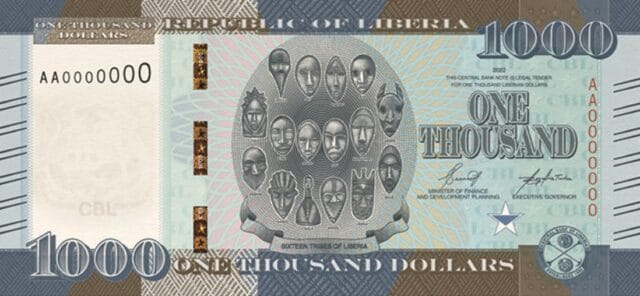
The five-member Supreme Court bench, headed by Chief Justice Yamie Quiqui Gbeisay Sr., is expected to hear arguments surrounding allegations that the Central Bank violated constitutional guarantees by excluding the Sarpo tribe from a redesigned L$1000 banknote featuring cultural masks representing sixteen ethnic groups.
The Sarpo people, recognized in government census data and national cultural institutions, were the only tribe omitted from the design.
Background of the Dispute
In 2021, the Central Bank introduced new banknotes as part of a national currency reform program. The L$1000 note included imagery intended to honor Liberia’s ethnic diversity.
However, the Sarpo Community says its cultural identity was not represented, amounting to exclusion from a national symbol.
After writing the Central Bank to request a correction and receiving no response, the community filed a Petition for Declaratory Judgment. The Civil Law Court dismissed the petition, ruling that the Sarpo people lacked standing and had suffered “no injury.”
Sarpo Community Appeals
In its amended brief to the Supreme Court, the Sarpo Community argued that the lower court’s dismissal ignored the Constitution, violated procedural rules, and disregarded Liberia’s international human rights obligations.
The appeal centers on four key issues:

1. Whether the Civil Law Court Had Jurisdiction
The Sarpo Community argues yes, citing Section 43.1 of the Civil Procedure Law, which grants courts authority to declare legal rights in cases of actual controversy. The appeal also references the Supreme Court’s decision in Gbartoe v. Washington (2002), affirming the use of declaratory judgment in constitutional disputes.
2 Whether the Sarpo Community Has Standing
The appeal asserts that the tribe is a recognized ethnic group, listing both the 2008 National Census and the naming of Sapo National Park as evidence of that recognition. The exclusion from the banknote, it says, constitutes cultural, symbolic, and constitutional injury.
3. Whether the Trial Judge Erred by Making Factual Findings
The Sarpo Community contends the trial judge improperly ruled that the tribe suffered “no injury” and that the CBL had “no duty” toward them—decisions that require evidence, and therefore cannot be made at the motion-to-dismiss stage.
4. Whether the Exclusion Violates Constitutional and International Law
The appellants argue that the exclusion violates:
Article 5(a) – duty of the state to promote national unity
Article 11(c) – equal protection
Article 20(a) – due process
ICCPR Articles 16 & 26 – recognition before the law and nondiscrimination
African Charter Article 19 – equal respect for all peoples
They maintain that no national institution has the authority to recognize 16 tribes on national currency while omitting only one.
What the Appeal Seeks
The Sarpo Community is asking the Supreme Court to:
Reverse the Civil Law Court’s dismissal
Remand the case for a full hearing
Declare the exclusion unconstitutional
Order corrective measures to ensure the tribe’s inclusion in future currency Provide any further relief “as justice and national unity may require”