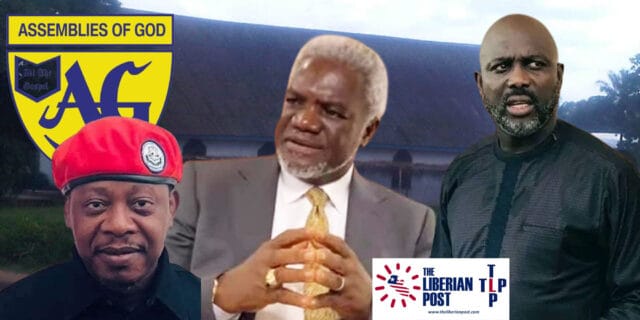
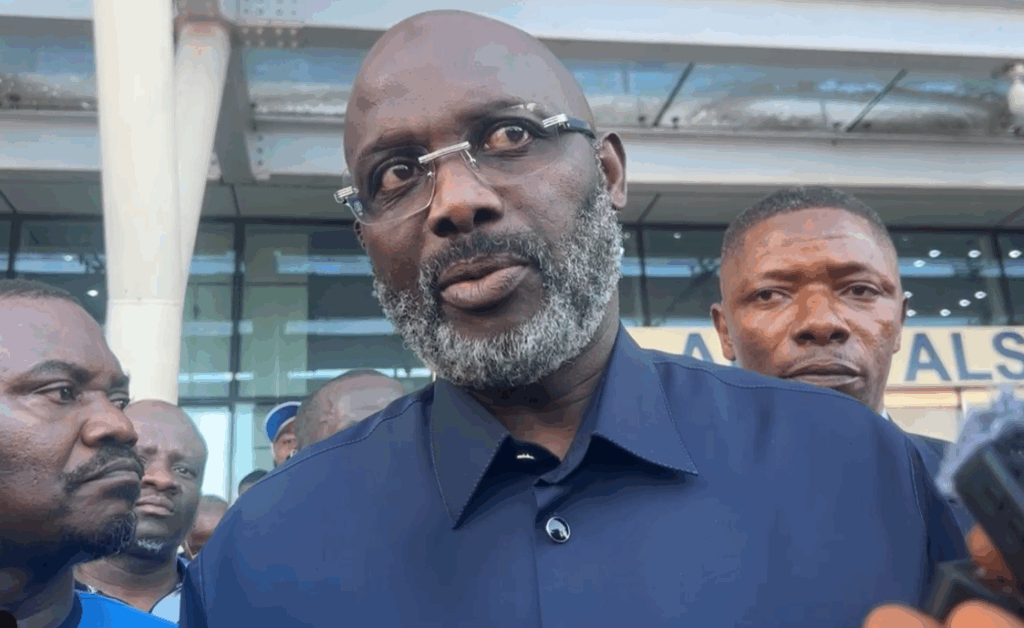
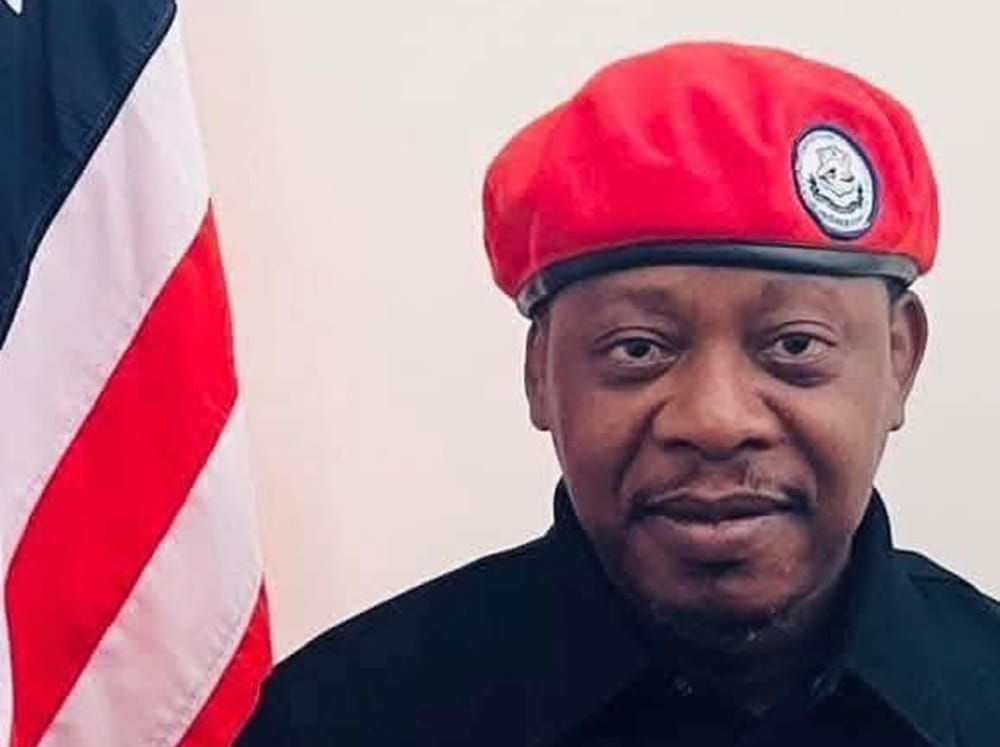
ZWEDRU, Grand Gedeh County — Grand Gedeh County Senator Zoe Emmanuel Pennue has intensified his long-running public feud with former President George Manneh Weah and former Montserrado County Representative Moses Acarous Gray, delivering an unusually blunt and personal broadside during a radio appearance Saturday night in Zwedru.
Appearing on the popular local FM, Teach Our People (TOP FM), Senator Pennue accused both men of dishonesty, political opportunism, and exploiting Grand Gedeh County for political gain, while forcefully rejecting claims that he received personal financial benefits from the Weah administration. His remarks mark a continuation—and escalation—of tensions that first became public in September 2025, when Pennue openly praised President Joseph Nyuma Boakai and criticized Weah’s unfulfilled development promises.
Dispute Over US$25,000 Church Donation
Central to Pennue’s remarks was a renewed dispute over a reported US$25,000 donation allegedly made by former President Weah to Elim Chapel Assemblies of God Church in Zwedru. Pennue rejected assertions by Acarous Gray that the funds were handed to him and misused.
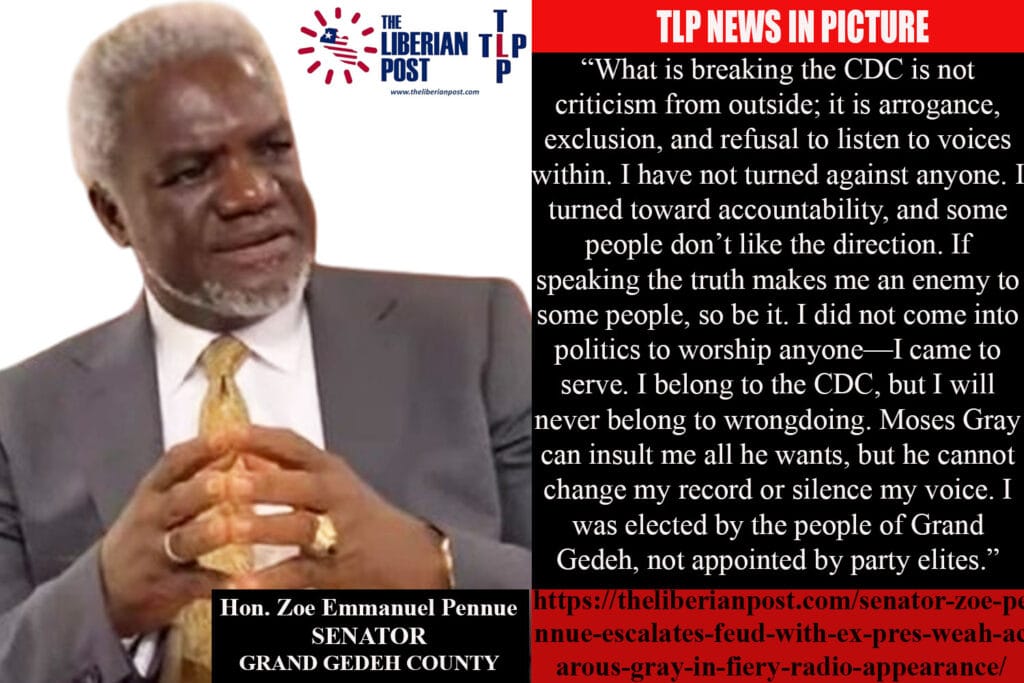
“I will never pocket money meant for God’s house,” Pennue said, insisting that no such funds ever passed through his hands and challenging Gray to provide dates, documentation, or witnesses to substantiate the claim. He accused Gray of fabricating narratives to score political points, describing him as “habitually dishonest” and politically reckless.
Pennue further claimed that church leaders had followed up directly with officials in Monrovia when promised funds failed to materialize, contradicting Gray’s version of events.
Sharp Personal Attacks and Political Hierarchy
In one of the most controversial segments of the broadcast, Pennue delivered a series of personal insults directed at Gray, portraying him as politically inferior and historically dependent on patronage.
“When I became a lawmaker, you were cleaning cars at the Capitol,” Pennue said, arguing that Gray’s political rise was manufactured through Weah’s endorsement rather than grassroots support. He mocked Weah’s public endorsement of Gray during a campaign rally, recalling that the former president described Gray as his “birthday gift” to voters—language Pennue said reduced Gray to a political object.
Fallout With CDC Leadership
Although Pennue remains a member of the Coalition for Democratic Change (CDC), his remarks underscore a widening rift between him and the party’s national leadership. He disclosed that senior CDC figures had privately confronted him ahead of previous elections, accusing him of insufficient loyalty and attempting to pressure him into political alignment.
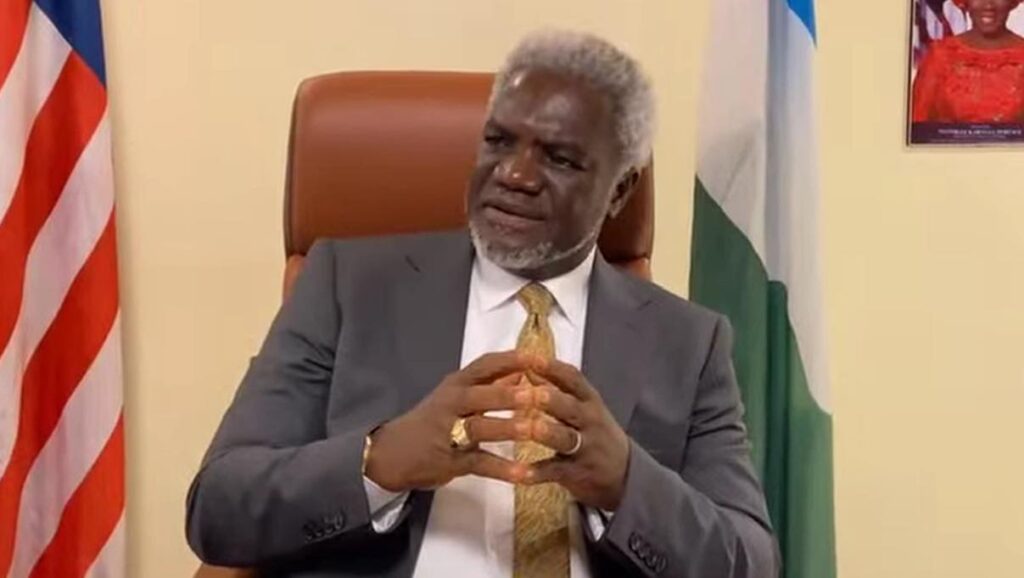
Pennue said he resisted those efforts, maintaining that his political allegiance is first to Grand Gedeh County, not party elites. He rejected accusations that he “betrayed” the CDC, arguing instead that the party failed to honor development commitments made to the county under Weah’s presidency.
Critique of Weah’s Governance Record
Beyond personal grievances, Pennue delivered a broader critique of the Weah administration’s development record, particularly in southeastern Liberia. He contrasted conditions under former President Ellen Johnson Sirleaf—whom he credited with expanding community colleges and emergency health access—with what he described as infrastructural decline under Weah.
“Motorbikes became ambulances in our county,” Pennue said, lamenting deteriorating roads and stalled public projects. He accused the former administration of recycling promises without delivering tangible results, particularly on road construction, public buildings, and sports infrastructure.
Political Future and 2029 Question
When asked whether he would support Weah in a future presidential bid, Pennue stopped short of a definitive answer but stressed that his politics are issue-based, not personality-driven. “Politics is dynamic,” he said, adding that loyalty must be earned through performance, not friendship or party label.
The senator’s remarks are already fueling debate within Grand Gedeh and the wider political establishment, highlighting growing fractures inside the CDC and signaling a more confrontational posture from Pennue as Liberia moves toward the next electoral cycle.
A Party Under Strain
Political observers say Pennue’s sustained public criticism of Weah and Gray—despite remaining within the CDC—reflects deeper instability within the party’s post-presidency identity. As internal dissent becomes more vocal, Pennue’s comments may resonate with a segment of CDC supporters disillusioned by unmet expectations.
For now, what is clear is that Senator Zoe Pennue has chosen confrontation over caution, placing himself at the center of a widening debate about accountability, loyalty, and the future direction of Liberia’s opposition politics.