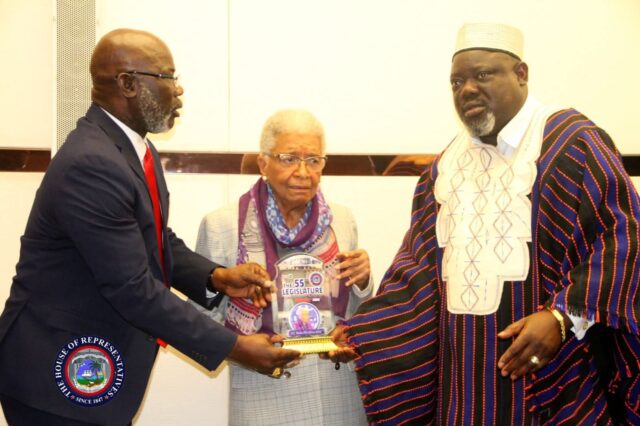
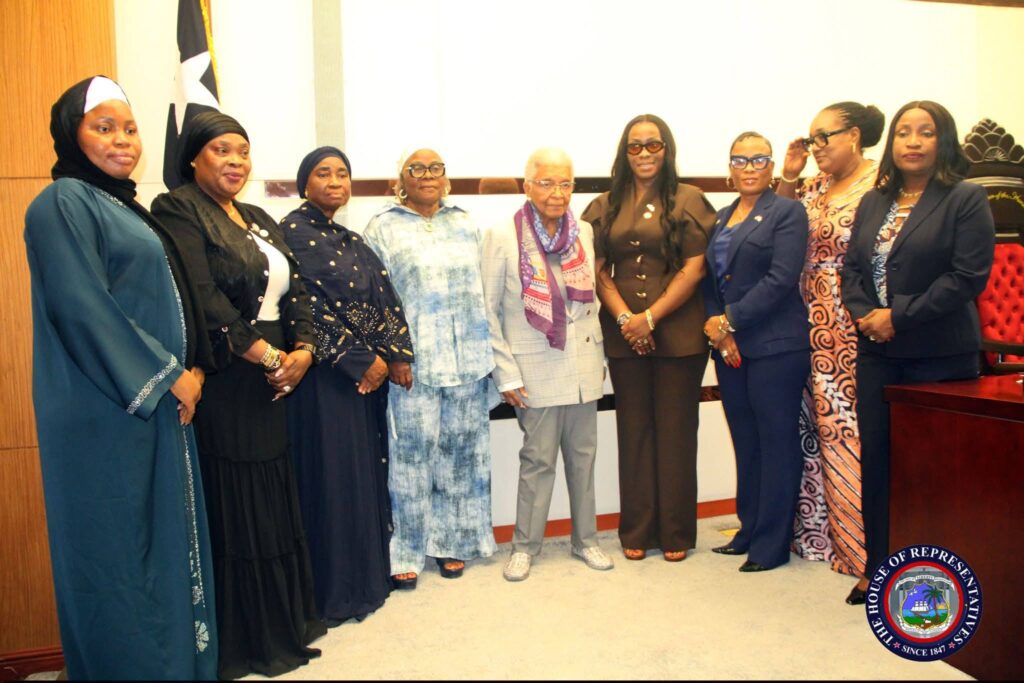
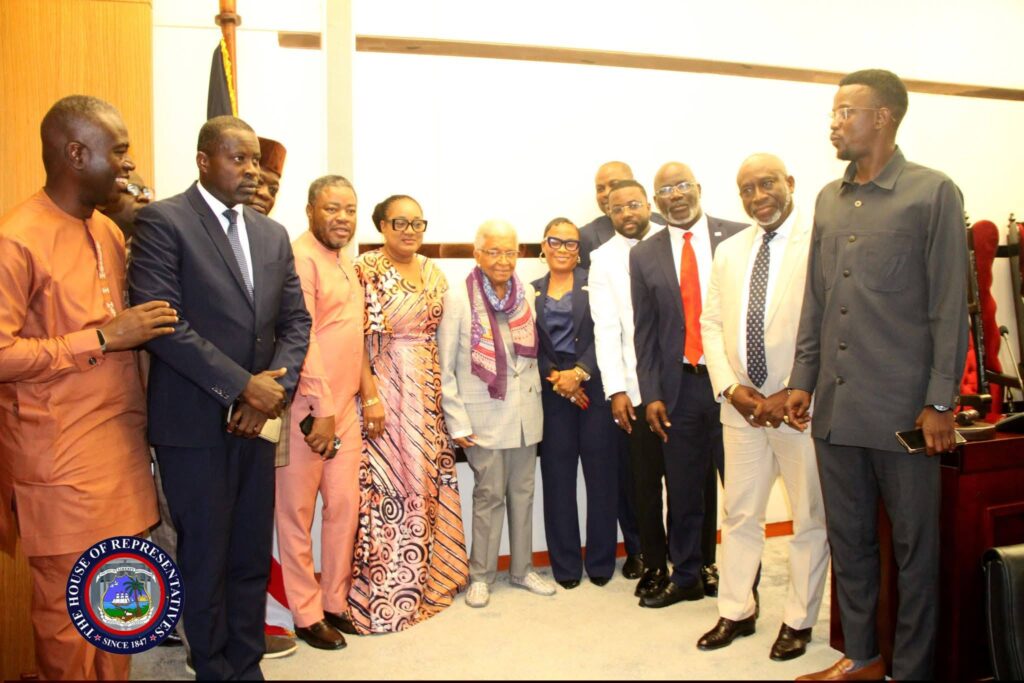
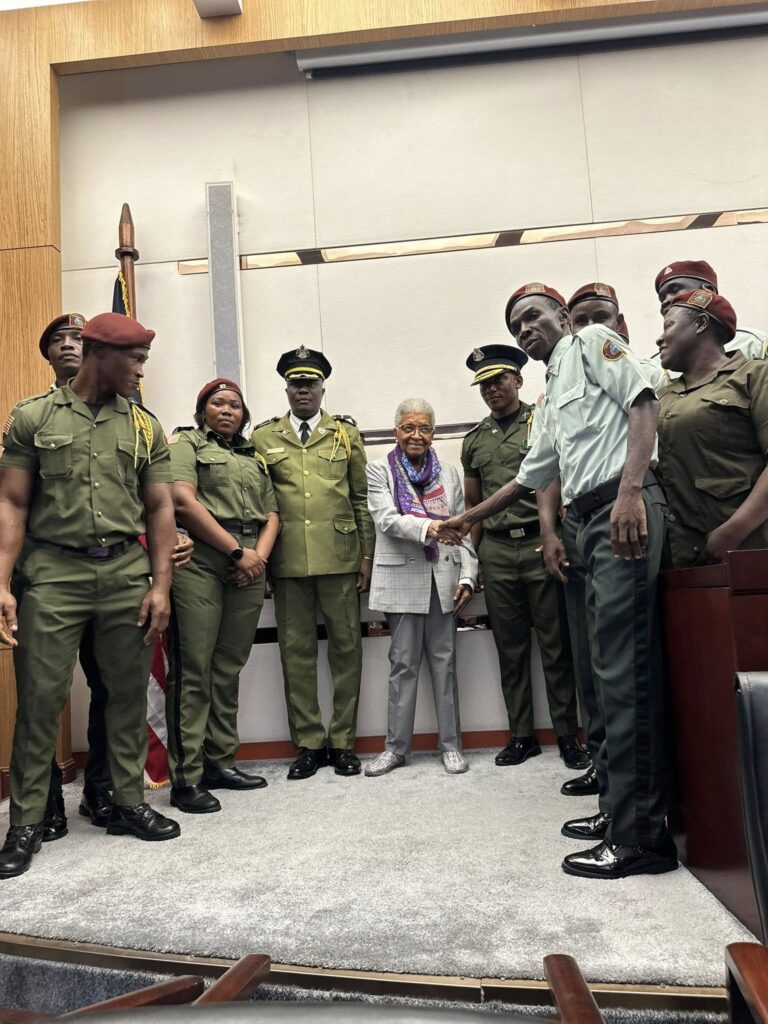
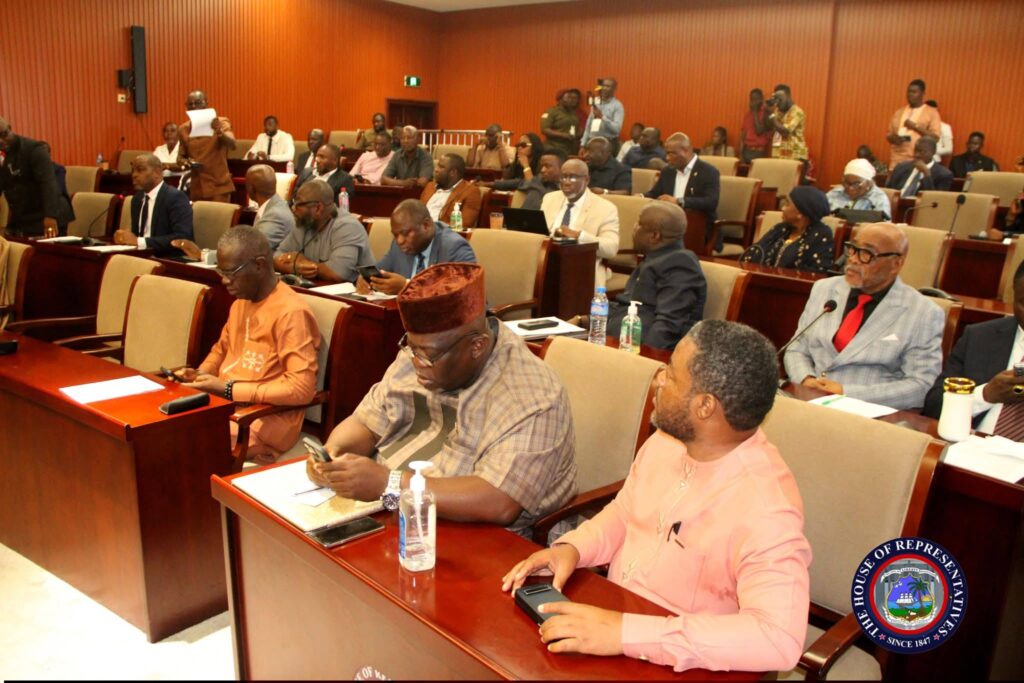
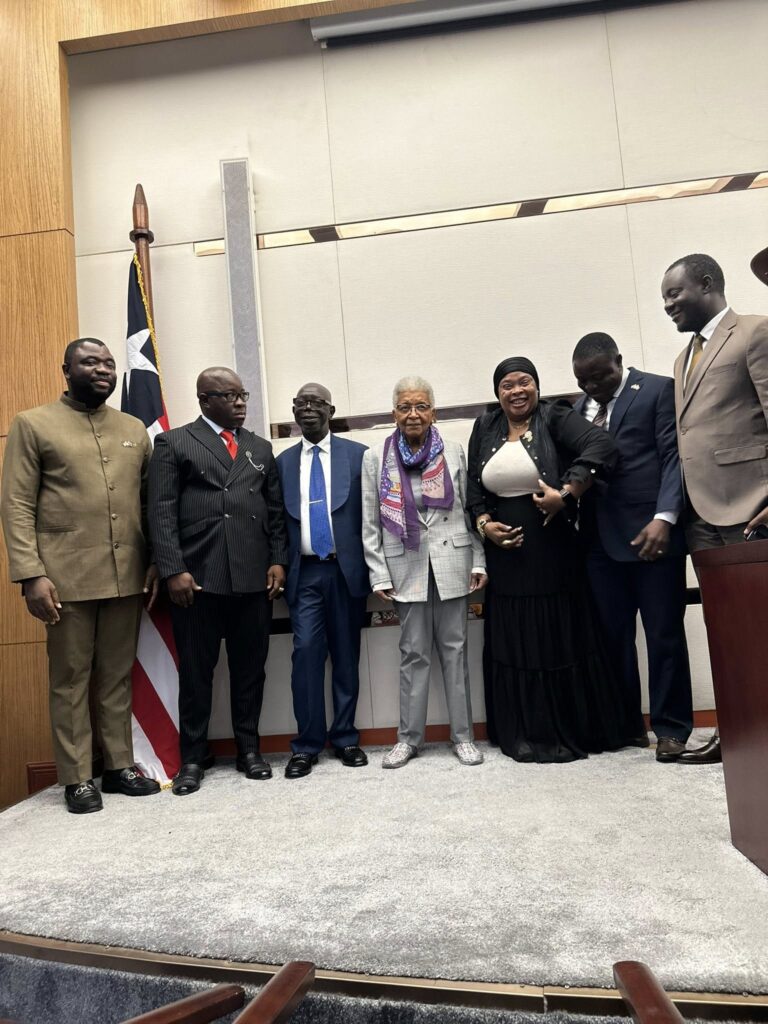
MONROVIA, Liberia — Former Liberian President Ellen Johnson Sirleaf on Thursday, March 5th, delivered a rare and pointed address to the House of Representatives of Liberia, urging lawmakers to undertake major constitutional and policy reforms aimed at advancing national development, strengthening governance, and expanding women’s political participation.
Speaking during a special session at the Capitol Building following an invitation from the House leadership, Sirleaf described the opportunity to address the lawmakers as “an unprecedented historical decision.” Rather than deliver a ceremonial speech, she said her remarks were intended to provoke deeper reflection among legislators on the responsibilities entrusted to them by the Liberian people.
Call to Amend Citizenship Clause
One of the central issues raised by the former president was Article 27(b) of the Liberian Constitution, which restricts citizenship to persons of Negro descent. Sirleaf argued that Liberia must now confront structural provisions that no longer reflect the country’s modern aspirations.
“Liberia today is above where we were at independence in 1847,” she said, urging lawmakers to consider amending the provision as part of broader constitutional reform efforts.
Sirleaf recalled previous attempts at constitutional reform led by former interim president Amos C. Sawyer, noting that despite progress made by that committee, the citizenship clause remained unchanged.
Her comments reopen a long-running national debate over whether the constitutional provision—originally intended to preserve the identity of the African republic—should be revised in the context of globalization and Liberia’s evolving democratic framework.
Land Crisis and Development
Sirleaf also highlighted Liberia’s growing land disputes, describing them as a major obstacle to national development.
According to the former president, many institutions and individuals are holding large tracts of land that remain unused, while others occupy property that legally belongs to someone else—creating legal conflicts that state institutions have struggled to resolve.
She criticized weak zoning enforcement and informal settlements that have proliferated in urban areas, calling for stronger policies and decisive legal action to address the problem.
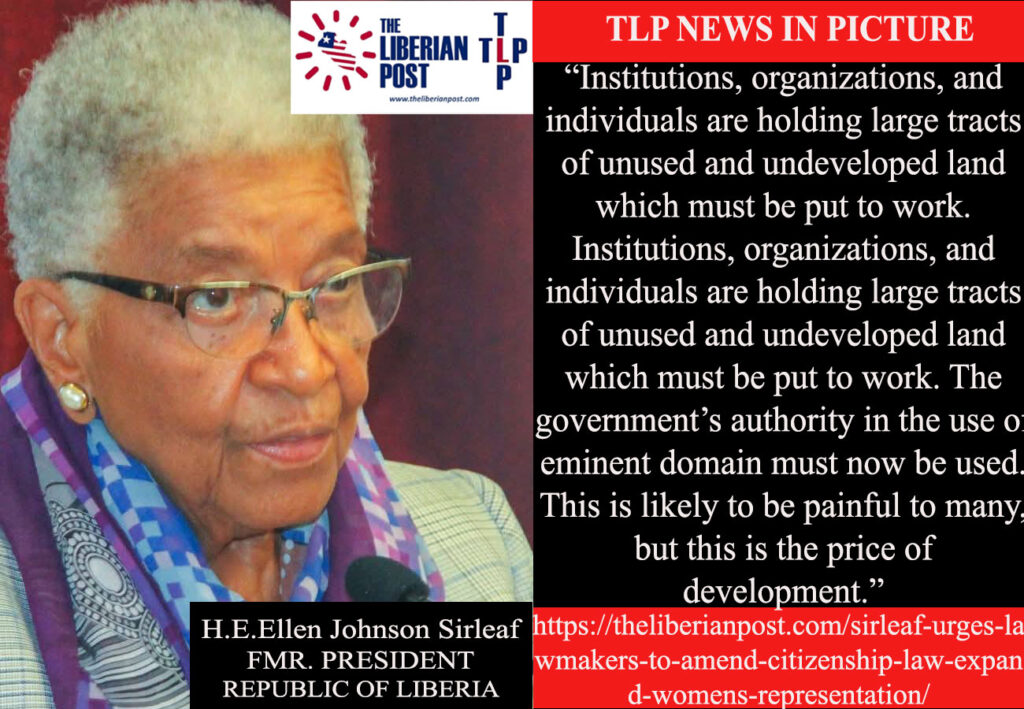
Sirleaf further suggested that the government may need to apply the legal principle of eminent domain to reclaim land for development purposes, acknowledging that such actions could be controversial but necessary for progress.
“This is likely to be painful to many, but this is the price of development that we would all like to see,” she said.
Concern Over Women’s Representation
Perhaps the most forceful portion of Sirleaf’s remarks centered on the underrepresentation of women in Liberia’s legislature.
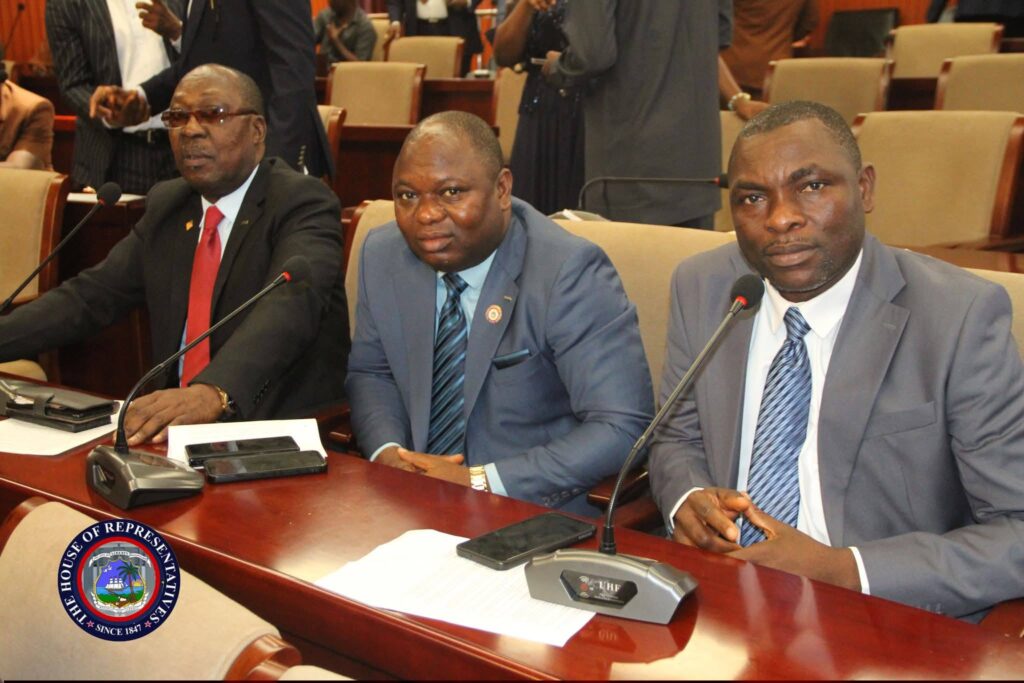
She pointed out that only nine of the 73 members of the House of Representatives are women, while the Senate has only two female senators out of 30 members.
“This embarrasses me. It embarrasses women in Liberia. It embarrasses women in Africa. And it embarrasses women worldwide,” Sirleaf told lawmakers.
The former president urged legislators to consider mechanisms such as quota systems or other legal reforms that would help ensure more equitable representation of women in Liberia’s political system.
She cited Rwanda as an example, noting that the East African nation has the highest proportion of women parliamentarians in the world due to deliberate policy measures.
Economic and Environmental Concerns
Sirleaf also raised concerns about economic policies intended to protect Liberian businesses, warning that regulations reserving certain sectors for Liberian citizens may not be effectively enforced.
She further criticized the increasing presence of foreign actors operating along Liberia’s beaches and waterways to extract minerals, warning that such activities are causing environmental damage.
“No country would allow this to happen, and neither should we,” she said.
Call for Mindset Change
Concluding her remarks, Sirleaf emphasized that national development ultimately requires a shift in both policy and mindset.
“We need changing minds and changing attitudes,” she told lawmakers.
Her address comes at a time when Liberia continues to debate constitutional reform, land governance, and gender equality in political leadership—issues that remain central to the country’s democratic and economic transformation.
Follow The Liberian Post on Facebook and X (formerly twitter)