-As He Unveils Major Defense Investments as AFL Commissions 56 New Officers
MONROVIA, Liberia — Finance and Development Planning Minister Augustine Kpehe Ngafuan has drawn a direct link between Liberia’s national development agenda and the reform and resourcing of its security institutions, declaring that a professional, well-supported military is essential to building a stable and prosperous state.
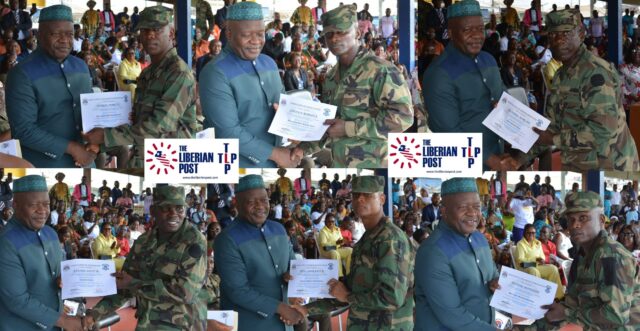
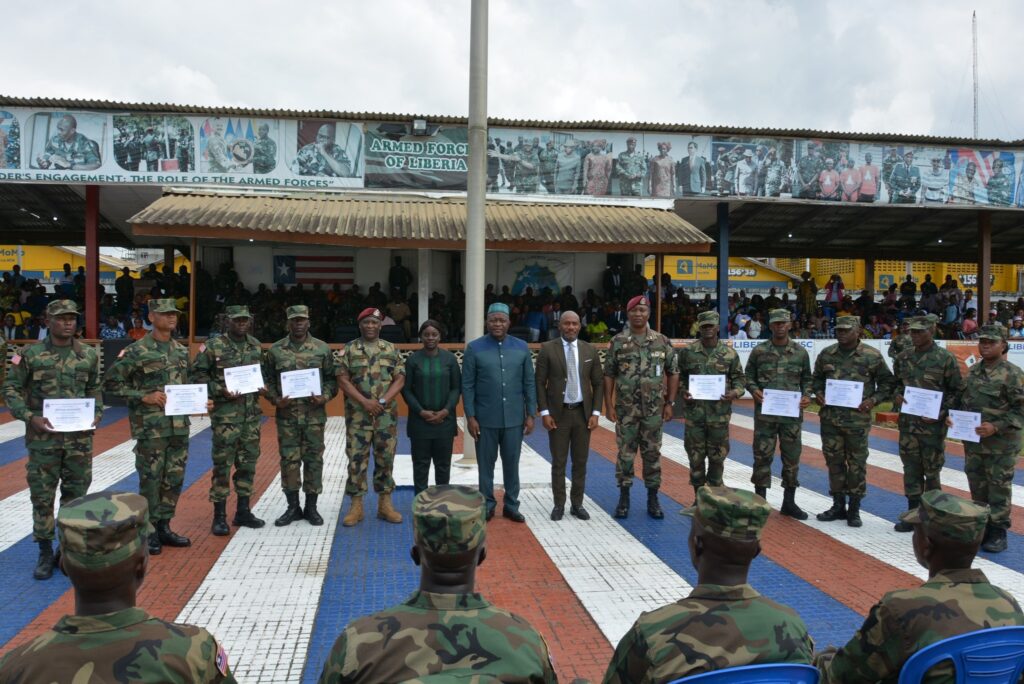
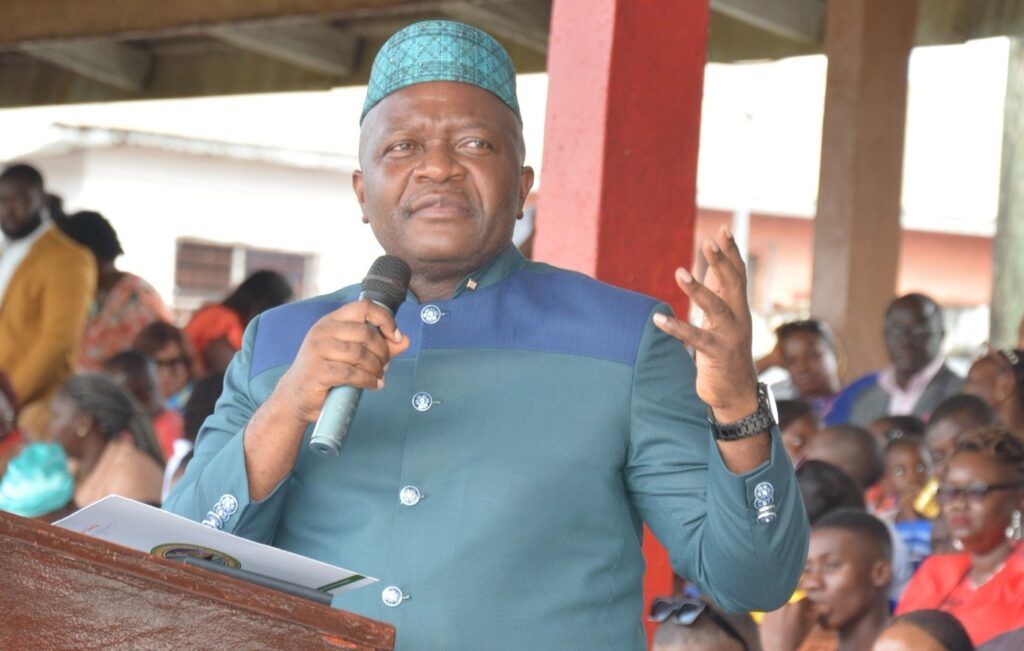
Ngafuan made the assertion on Monday, December 29, at the graduation ceremony of 56 officers of the Armed Forces of Liberia (AFL) Officer Candidate School (OCS) Class 12-2025 at the Barclay Training Center. Serving as Guest Speaker, the Finance Minister used the occasion to outline what he described as concrete, budget-backed commitments by the Government of Liberia to strengthen the country’s defense architecture.
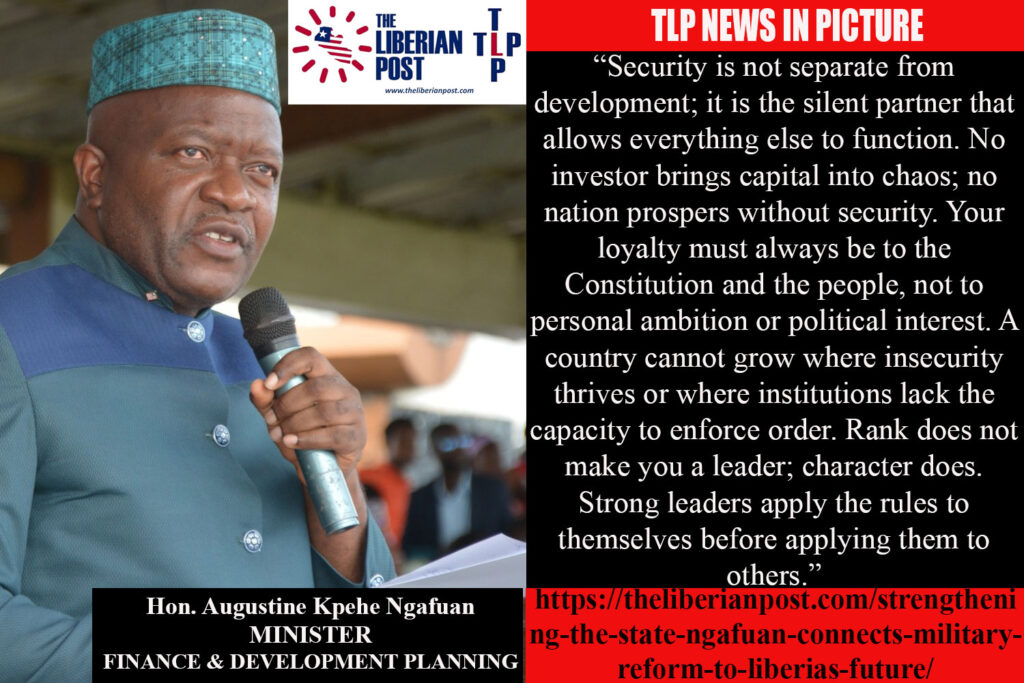
“A nation cannot grow where insecurity thrives, where borders are weak, or where institutions lack the capacity to enforce order,” Ngafuan told the newly commissioned officers. “Security is not separate from development; it is the silent partner that allows everything else to function.”
From Policy Statements to Budgeted Action
Ngafuan revealed that the FY2026 National Budget allocates US$20.7 million to the Ministry of National Defense, with US$18.3 million directed to the Armed Forces of Liberia. Of that amount, US$12.7 million has been set aside specifically for salaries and benefits, a move he said reflects the administration’s determination to stabilize morale and professionalism within the ranks.
Beyond personnel costs, the Finance Minister detailed ongoing and planned investments in barracks rehabilitation and infrastructure upgrades at Camp Jones, Camp Whisnant, Camp Grant, and other barracks. He also highlighted sustained government support for the 14th Military Hospital, border security operations, and the expansion of Coast Guard patrols, noting Liberia’s strategic coastline and exposure to transnational threats.
“These are not campaign promises or vision statements,” Ngafuan emphasized. “They are line items in a national budget that has already been approved. That is how reform becomes real.”
Leadership, Discipline, and Accountability
While much of Ngafuan’s address focused on policy and financing, he devoted significant attention to leadership ethics, reminding the graduates that commissions are not rewards but responsibilities.
“Rank does not make you a leader,” he said. “Character does. Strong leaders apply the rules to themselves before applying them to others.”
He urged the officers to internalize the lessons of Liberia’s history, warning that abuse of authority by those in uniform undermines public trust and national cohesion. “Your loyalty must always be to the Constitution and the people—not to personal ambition or political interest,” he added.
Unified Message from Security Leadership
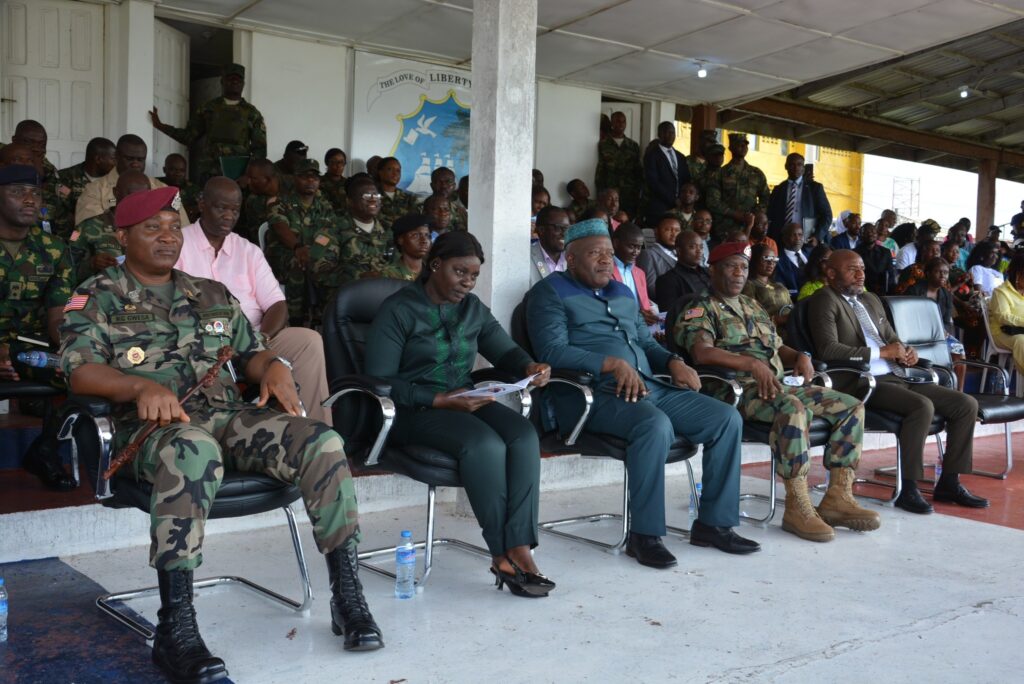
Ngafuan’s remarks were reinforced by senior defense officials present at the ceremony. Chief of Staff of the Armed Forces of Liberia Davidson Fayiah Forleh told the graduates that leadership in the military carries both moral and legal obligations.
Forleh disclosed that the expansion of the officer corps is part of a direct mandate from President Joseph Nyuma Boakai to strengthen troop capacity and professionalism across the force. He cautioned that misconduct at the leadership level has far-reaching consequences, not only for the institution but for national stability.
“You are entrusted with lives, with authority, and with the reputation of this institution,” Forleh said. “How you lead will determine how the public sees the Armed Forces of Liberia.”
Minister of National Defense Geraldine George-Johnson described the commissioning as a solemn covenant between the Republic and the officers. “A commission is not a badge of privilege,” she said. “It is a burden of responsibility that demands discipline, integrity, and sacrifice.”
A Diverse and Evolving Officer Corps
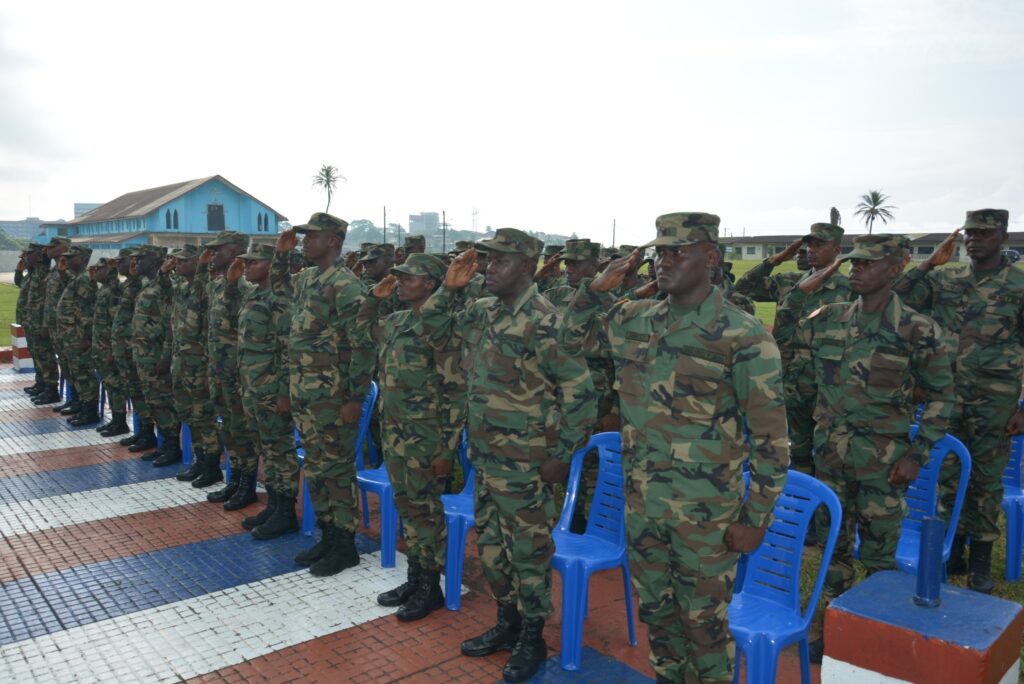
OCS Class 12-2025 comprises 30 combat officers, 26 professional officers—including medical officers—and one band officer, reflecting the evolving operational needs of the AFL. Defense officials noted that the inclusion of medical professionals underscores the importance of health services to operational readiness and troop welfare.
The officers completed 13 weeks of intensive training beginning in September 2025, covering leadership theory, military law, physical conditioning, land navigation, live-fire exercises, and ethical decision-making. Several candidates did not complete the program, a fact instructors cited as evidence of the institution’s commitment to standards over numbers.
Awards were presented for academic excellence, physical fitness, leadership, and marksmanship, reinforcing the AFL’s emphasis on merit-based advancement.
Security as a Foundation for Growth
Throughout his address, Ngafuan returned to a central theme: that Liberia’s aspirations for economic growth, investment, and social development depend on sustained peace and institutional strength.
“No investor brings capital into chaos,” he said. “No farmer thrives without security. No school or hospital functions well in an unsafe environment.”
As the new officers took their oath, the ceremony underscored the government’s broader message that strengthening the Armed Forces is not an isolated military objective, but a cornerstone of state-building.
For Ngafuan, the graduation symbolized a convergence of policy, finance, and national purpose. “When we strengthen our military responsibly,” he concluded, “we are strengthening the state itself—and securing Liberia’s future.”