Book Review
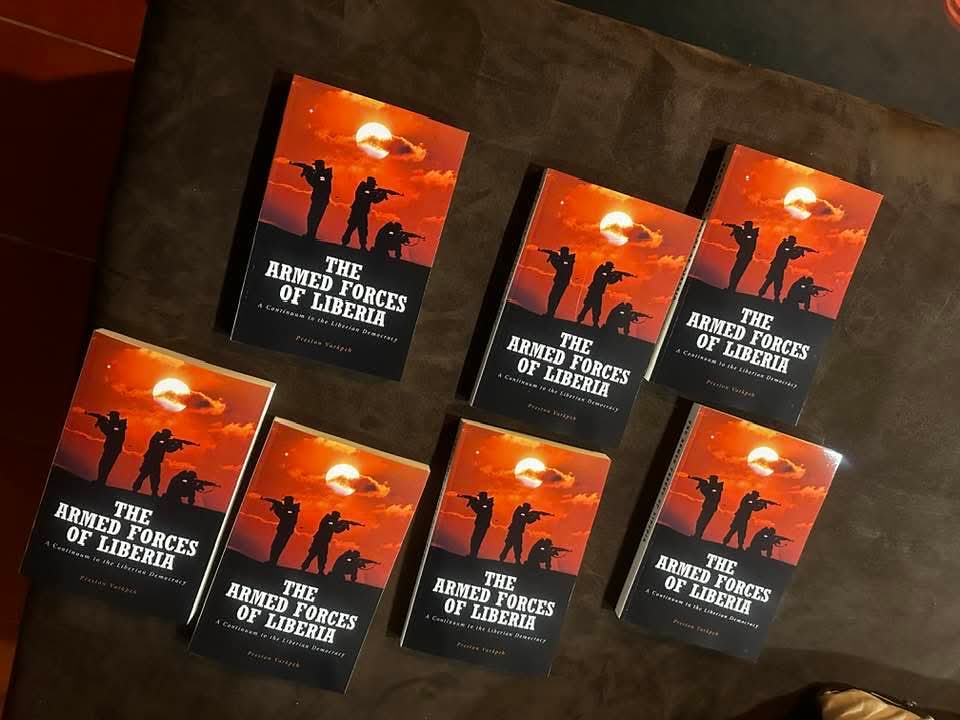
Title: The Armed Forces of Liberia: A Continuum to the Liberian Democracy
Author: Preston Varkpeh
Published by: Fulton Books (2023)
Pages: 316
Reviewed by: D. Othniel Forte
The Armed Forces of Liberia A Continuum to the Liberian Democracy — A Review
Summary
The Armed Forces of Liberia (AFL) has had a colorful history. Its predecessor, the Liberia Frontier Force (LFF) was painted on an even more colorful canvas. Overtime, circumstances have painted different strokes of gallantry, brutality, valor, and death. At other times, situations made lighter hues of pain, joy, disappointment, and honor. Consistently, through whatever time, political leaders, failed systems, and general conditions have dictated the direction of the AFL.

What Capt. Preston Varkpeh (retired) does in The Armed Forces of Liberia A Continuum to the Liberian Democracy is a dissection of the Liberian security sector. He deconstructs the examines Liberia’s security architecture and traces a long line of fractures (politically, socially, and historically). He exposes longstanding social divisions and shows how failed policies damaged the AFL. Varkpeh explores the hegemonic dichotomous native–settler divide, and boldly claims it as a key source underlying many of the AFL’s problems. He suggests that the Americo-Liberian rule, and mismatches in military doctrine are critically liable for the recurrent negative utilization of force and its consequences for Liberia.
Analysis
Of the many claims made in the book, few are worth mentioning:
A particularly encouraging aspect of the book is how the author makes a deliberate effort to employ an interdisciplinary approach. This is the old mat upon which he sits to plat the new. By merging several tenets across disciplines, he makes the text more relevant. By providing different lenses through which the text connects to its audiences, the author does himself a huge favor. Thus, public administrators, policy analysts, diplomats, IR practitioners, etc. can all take away something.
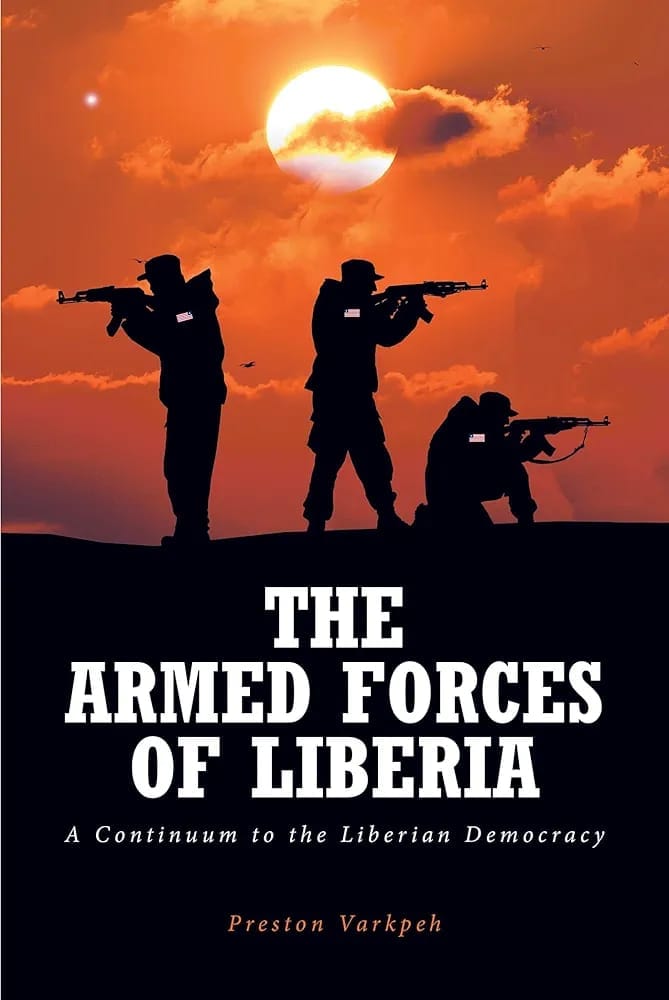
Varkpeh, also brilliantly situates the AFL at a critical juncture of Liberia’s democratic trajectory. “The military, therefore, is critical to defining and maintaining the national power of states.” This is bold, to say the least. It forces everyone to elevate the new AFL and reconsider its role in the current and future Liberia.
The author attempts shows how over time, a series bad decisions and indecisions by policymakers have led the AFL down the abyss, despite the predictability of these choices and how they would harm the entity and damage the national security. This he termed as ‘episodic’. With the advantage of hindsight and history, Varkpeh connects long-term social and political patterns to military outcomes, making the case that Liberia’s security issues are rooted in structural, not merely episodic, causes. The key word being ‘structural’.
While the book diagnoses many root causes, let’s be real, some of its recommendations are on levels far beyond the realities in Liberia. This isn’t about good nor bad. It is just simply out of range of the Liberian context. They’d need to be broken redesigned, if they must work. This can be accredited to the US Military trainings and orientations he has received. Yet, Liberia isn’t needing those. This is where policymakers will have to be wise not to follow every recommendation. They’d have to customize.
Additionally, the book tends to favor academia and sector specific experts. Let’s just say, it won’t be an easy read for the average audience (there’s a lot of waddling to find clarity). The tone is designed for practitioners, sector related professionals and enlistees.
As if that wasn’t enough, the author scoops in a large swap. He covers many critical issues. It is a mouthful at times. This, in itself, is a good thing. But it sacrifices depth. It is a tradeoff between having too much (quantity) food (information) and or having a meaty, seasoned meal (quality). The project is ambitious and laudable but in certain areas, readers will miss out on detailed, relevant background information, thus limiting their ability to fully grasp the situation.
Verdict
The Armed Forces of Liberia: A Continuum to the Liberian Democracy is a thoughtful, policy-relevant contribution that maps the structural roots of Liberia’s security challenges and offers a useful platform for discussion about sustainable reform.
When Varkpeh reframes our understanding of the episodic problems of the AFL, he forces the system to consider, long-term policy choices and sustainable institutional fixes. This is reasonable, realistic, and actionable. This approach works in line with the new, remodeled AFL.
The book is available on amazon and will be in Liberia by December. However, as a security personnel, section practitioner, policymaker, or student, you must be reading and closely familiar with The Armed Forces of Liberia: A Continuum to the Liberian Democracy if you wish to be considered seriously in the sector.