


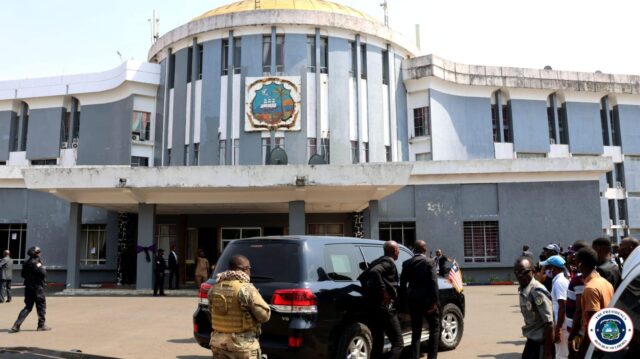
The 1986 Constitution of Liberia grants the Legislature the authority to ratify concession agreements.
Since the Boakai administration announced a proposed Production Sharing Contract (PSC) with Atlas-Oranto Petroleum, the deal has sparked political, legal, and economic debate across Liberia. The controversy has rekindled old fears of corruption, weak governance, and the exploitation of Liberia’s natural wealth.
For supporters of the government, the Oranto Oil deal represents a pathway to investment and job creation. But critics argue it merely enriches a political elite and foreign partners — repeating the mistakes of the past.
Diverse Debates
The Atlas-Oranto agreement, now before the Legislature for ratification, proposes the development of four offshore oil blocks. Its timing is crucial: the World Bank’s October 2025 Liberia Economic Update shows growth slowing despite improved macroeconomic indicators — underscoring the urgency of job-rich investments.
For the Unity Party-led Boakai government, the deal fits within its ARREST Agenda, which prioritizes roads, recovery, and private-sector investment. But for critics, Oranto’s performance record across Africa — combined with Liberia’s history of poor contract enforcement — raises serious red flags.
Koffa Calls the Deal “Illegal and Exploitative”
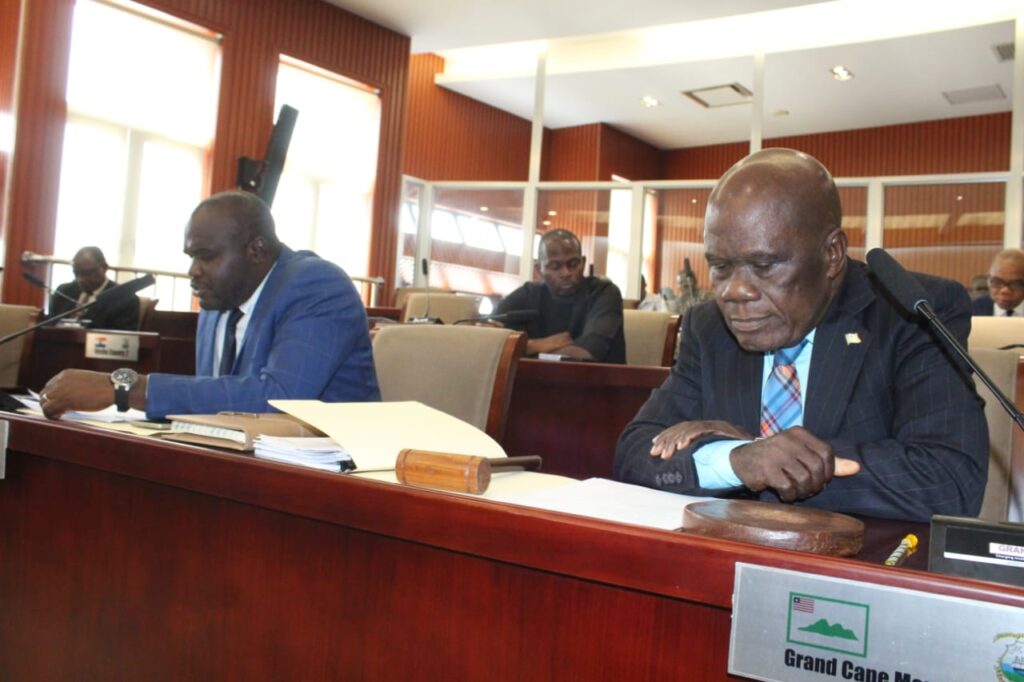
Former House Speaker Cllr. Jonathan Fonati Koffa has taken one of the strongest positions against the deal, calling it “illegal and exploitative.” He argues that it violates key provisions of the 2019 Petroleum Law, particularly those guaranteeing 5 percent ownership for Liberians and 10 percent for the National Oil Company of Liberia (NOCAL).
According to Koffa, the proposed contract merges both shares into a single 15 percent stake controlled by NOCAL — effectively erasing the citizens’ ownership. He also condemned the US$1.2 million signature bonus, comparing it to Ghana’s US$20 million for similar deep-water blocks.
“Either this is weakness in negotiation or wickedness,” Koffa said bluntly. “Ghana used its bonus to build an entire airport city, while ours can’t buy a presidential limo.”
The Grand Kru County lawmaker has threatened legal action if the deal is ratified without amendment. He is calling for full publication of the agreement and a review of clauses that allow Oranto to seize NOCAL’s shares if the company fails to meet its obligations within 180 days of oil discovery.
Gbala Dismisses Koffa’s Claims as ‘Politically Motivated’
Responding to Koffa’s assertions, Cllr. Kanio Bai Gbala, Assistant Professor of Law at the Louis Arthur Grimes School of Law, dismissed the criticisms as politically motivated and legally flawed.
“The interest assigned to NOCAL is a national share that belongs to all Liberians,” Gbala wrote in a rejoinder. “Claiming that citizens are excluded because NOCAL manages the share is misleading. The petroleum laws provide flexibility for negotiation based on project risk.”
Gbala — who also served as a campaign spokesperson for the CDC in the 2023 elections — argued that Liberia’s oil blocks remain high-risk and unexplored, making Koffa’s comparison to Ghana “economically unfair.” He accused the former Speaker of political bitterness and hypocrisy, citing his prior support for opaque deals while serving as Deputy Speaker under the CDC government.
“When a senior lawmaker attacks legal agreements that he could improve through legislative review, investors begin to lose confidence,” Gbala wrote. “That’s not patriotism — it’s recklessness.”
CDC’s Chesson Hits Back: ‘This Is Legislated Theft’
Gbala’s defense drew a fiery response from Jefferson Chesson, former Assistant Minister of Public Works and a strong CDC partisan, who branded the lawyer’s position as a “treasonous sell-out.”
“Defending a US$1.2 million signature bonus by saying ‘we are poor’ shows a slave mentality,” Chesson fired back. “Our unexplored resources are our leverage, not our weakness. This deal is legislated theft masquerading as investment.”
Chesson accused the Unity Party government of attempting to “auction Liberia’s future,” insisting that the 5 percent Liberian ownership clause must remain separate from NOCAL’s share and that all predatory provisions be removed.
“This is not a debate; it’s a fight for our sovereignty,” he declared. “We will not let anyone steal Liberia under the pretext of investment.”
Will Oranto’s Troubled Legacy Haunt Its New Liberia Bid?
Oranto’s past in Liberia appears to be resurfacing as the company seeks to re-enter the sector.
In 2007, under the Ellen Johnson Sirleaf administration, Oranto was awarded oil blocks but failed to drill a single well. Instead, it reportedly flipped the blocks to Chevron, reaping millions in profits while Liberia gained almost nothing.
Former Finance Minister and current Gbarpolu Senator Amara Konneh has cautioned that history could repeat itself.
“Oranto has a history of sitting on licenses across Africa — in Uganda, Senegal, and Equatorial Guinea,” Konneh warned in a social-media post. “They secure licenses, do nothing for years, and when governments get impatient, the contracts are revoked. Liberia must not fall for this again.”
Konneh, echoing Koffa, supports investment by reputable global firms such as TotalEnergies, which is reportedly engaged in separate negotiations. But he insists that the Government of Liberia, not Oranto, must fund the due-diligence process to ensure independence and integrity.
“Our future depends on informed, decisive action — not complacency or repetition of past mistakes,” he wrote.
Liberia Must Be the Bigger Picture
Beyond politics and personalities, Liberia itself must be the focal point in the Oranto debate. The Legislature must rise above partisan bickering and focus on systemic issues — the chronic mismanagement of natural resources, weak negotiating capacity, and fragile institutional oversight.
For decades, successive governments have failed to translate Liberia’s vast natural wealth into public benefit. From rubber and iron ore in the 1960s to forestry and gold in the 2000s, the narrative has remained unchanged: big deals, little development.
Now, lawmakers have a chance to reverse that history.
If managed well, Liberia’s extractive industries can deliver jobs, stability, and sustained economic growth. That requires transparency, fairness, and enforceable contracts — not political shortcuts.
The Oranto debate is therefore not just about one agreement; it is about the kind of economic future Liberia wants to build. The deal has become a mirror reflecting the nation’s enduring dilemma — the tension between attracting investment and protecting sovereignty.
If the government proceeds without addressing transparency and fairness concerns, it risks undermining public trust and reinforcing Liberia’s image as a country that sells its future cheaply.
Due Diligence — or Repetition of History
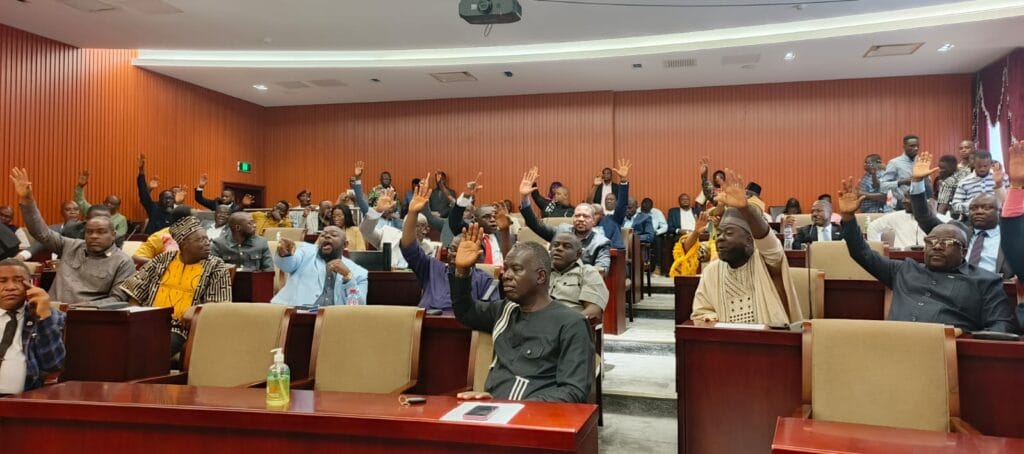
The ball is now squarely in the court of the Legislature, which holds the ultimate authority to ratify, amend, or reject the Oranto deal. Its decision will test not only the country’s legal framework but also its political maturity and commitment to accountability.
At 179 years old, Liberia can no longer afford another lost opportunity. The Legislature must ensure that past mistakes — which robbed the nation of millions in extractive-industry revenues — are not repeated.
If handled with courage and care, the Oranto Oil deal could set a new benchmark for transparency and fairness, enabling Liberians to finally reap the dividends of their natural wealth. Due diligence is not optional — it is the nation’s last line of defense.


I have not understood, what you mean?
——
https://flokii.com/users/view/193490
Nice idea
——
https://hosting.estate/tags/%D1%80%D0%BE%D1%81%D1%82%20%D1%81%D1%82%D0%B0%D1%80%D1%82%D0%B0%D0%BF%D0%B0/
this website is my intake, rattling wonderful style and design and perfect written content.
Comments are closed.