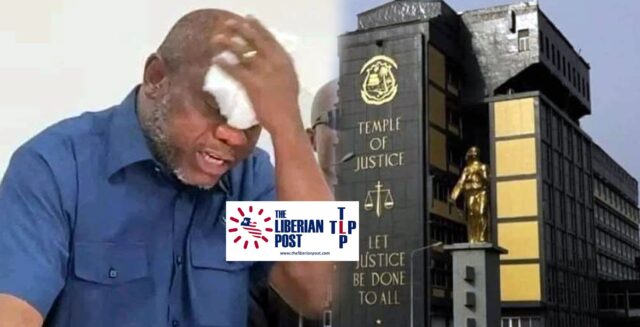
MONROVIA, Liberia — A high-profile corruption case involving former Finance and Development Planning Minister Samuel D. Tweah Jr. and several ex-senior officials was delayed again on Tuesday after the Supreme Court postponed arguments. The court cited the recent return from medical leave of Associate Justice Boakai Kanneh and the passing of another justice’s mother, Ceaneh Clinton. A new hearing date has not been announced.
At issue is a writ of prohibition filed by Tweah and co-defendants after a lower court denied their motion to dismiss. On March 20, 2025, the Supreme Court issued a stay of the trial to review constitutional and legal questions raised by the defense.
Allegations and Defenses
- Charges: The Liberia Anti-Corruption Commission (LACC) and the Ministry of Justice allege that Tweah, former Acting Justice Minister Cllr. Nyenati Tuan, ex-Financial Intelligence Agency (FIA) Director General Stanley S. Ford, former FIA Comptroller Moses Cooper, and former National Security Advisor Jefferson Karmoh orchestrated unauthorized transfers totaling L$1,055,152,540 and US$500,000 from the Central Bank of Liberia to FIA accounts. Prosecutors say the funds remain unaccounted for and characterize the moves as financial misconduct at the highest levels of government.
- Defense: The defendants argue the transfers were part of classified national-security operations authorized by the National Security Council (NSC) under former President George M. Weah, citing the National Security Reform and Intelligence Act of 2011.
- Prosecution’s reply: Prosecutors contend the transfers lacked required approvals from the NSC, Joint Security Council, or the FIA, and argue that constitutional immunity under Article 61 applies only to the sitting President—not to ministers, advisors, or council members.
What’s at Stake
The Supreme Court’s ruling will determine whether the defendants must stand trial or are shielded by claims of national-security authorization and immunity. The decision is expected to have far-reaching implications for accountability standards applied to senior government officials. All defendants are presumed innocent unless proven guilty in a court of law.