-Urges Data‑Driven Reporting That Puts People First
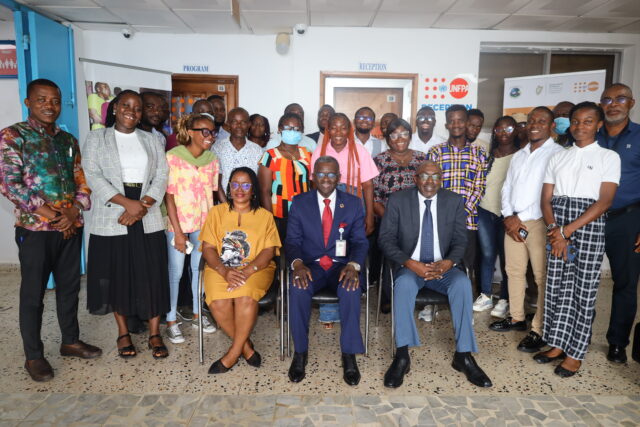
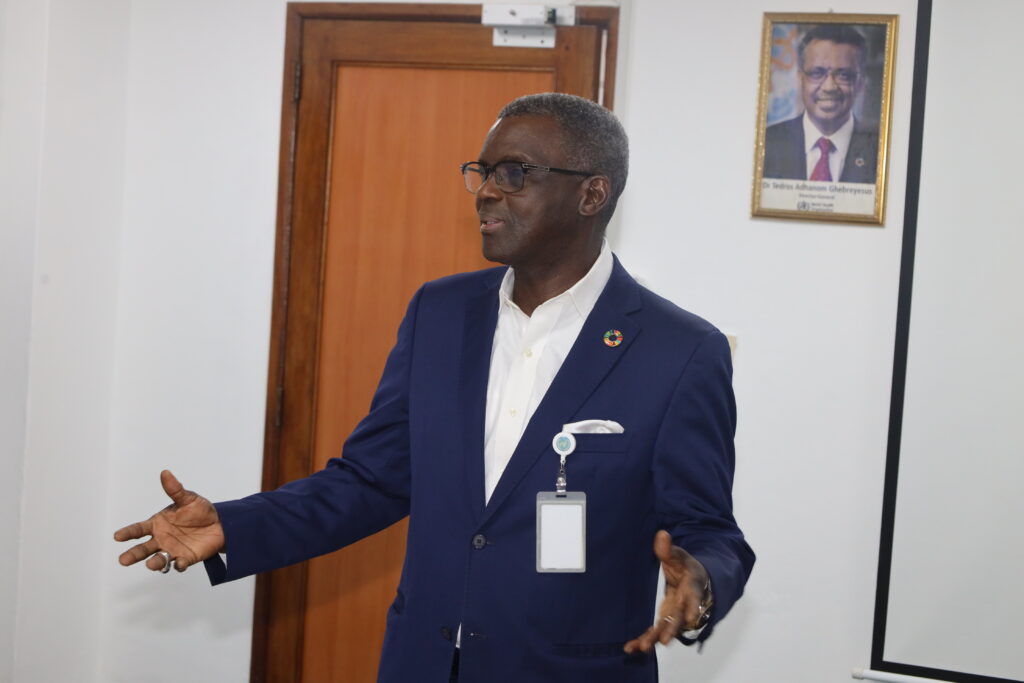
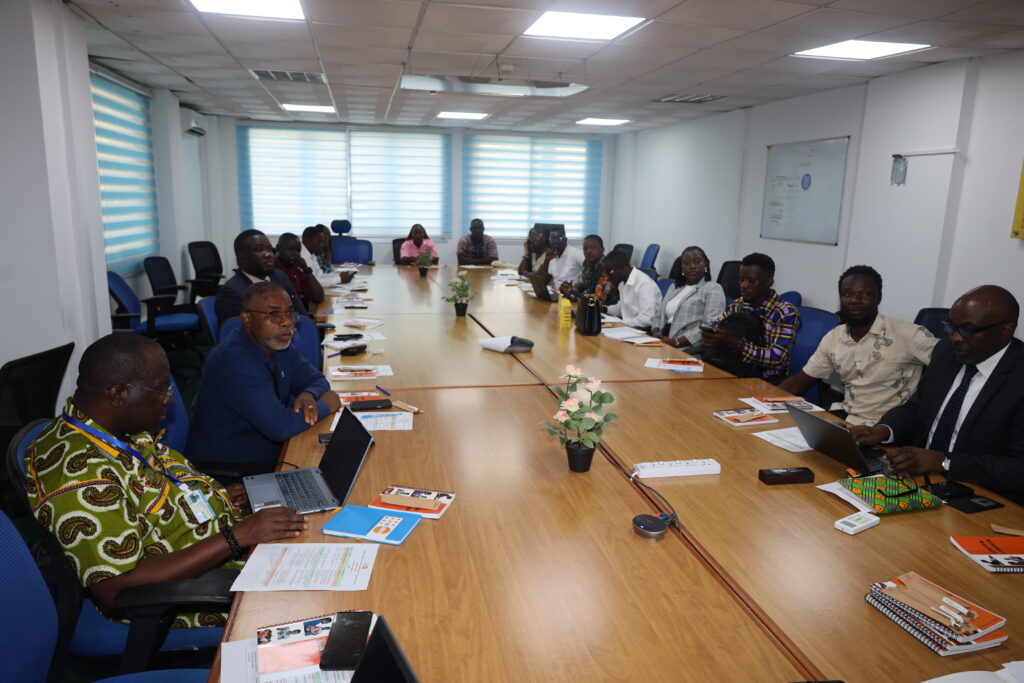
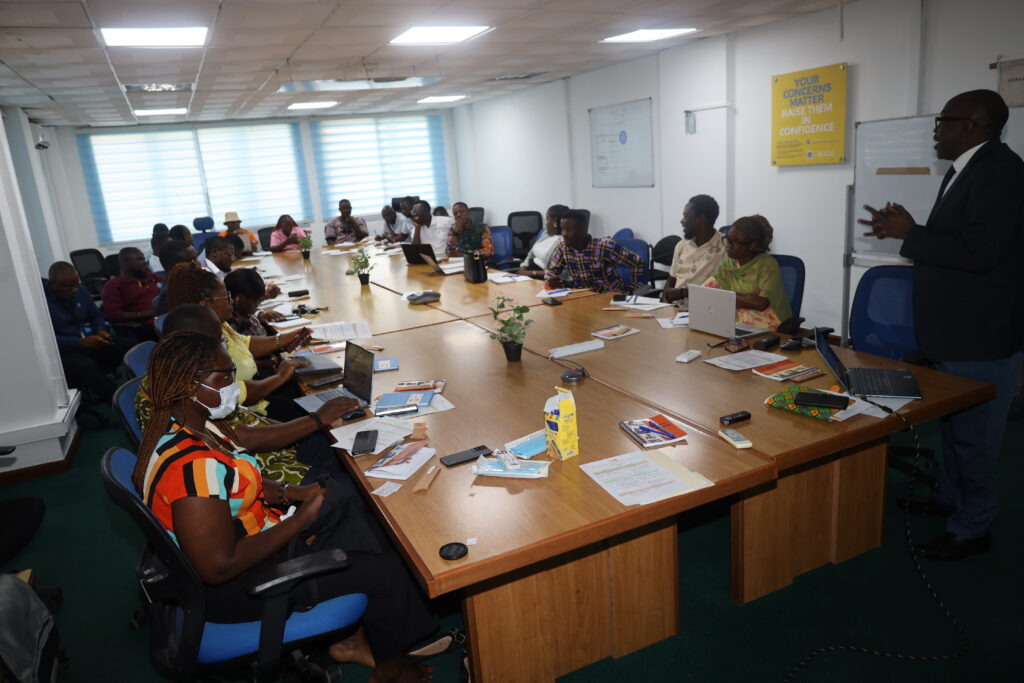
MONROVIA, Liberia — When Dr. Mady Biaye walked into a room of Liberian editors, reporters, and bloggers on Wednesday, November 12, the new UNFPA Resident Representative did not talk first about frameworks or targets. He talked about people—the mother who wants a safe delivery, the teenager who needs accurate information, the survivor who deserves justice, and the policymaker who needs good data to serve them all.
“It is my honor and pleasure to speak to you at the opening of this one‑day workshop on understanding the International Conference on Population and Development (ICPD) Programme of Action and the UNFPA Work in Liberia,” he began. “Your presence here signifies the meaningful partnership we share in advancing sexual and reproductive health and rights to ensure a sustainable future for all.”

The one‑day orientation, organized by UNFPA for the Liberia Media Network for Championing the ICPD Agenda, set a people‑first tone for how the press can elevate stories that move policy and save lives. Dr. Biaye reminded journalists that the ICPD Programme of Action, first adopted in 1994, is not a slogan—it is a promise to center human rights, health, and gender equality in development.
“When we talk about population and development and SRHR, we are not talking about abstract concepts,” he said. “We are talking about the concrete steps we can take to ensure social and economic progress as a society. As the reproductive health and rights agency of the United Nations, this is the core of UNFPA’s global mandate.”
Why Journalists Matter
Calling journalists “champions,” Dr. Biaye stressed that media has a unique power to amplify voices often left out of policy rooms and budget tables. “The media has the platform to amplify advocacy and key messages for achieving our mission of achieving a world where every pregnancy is wanted, every childbirth is safe, and every young person’s potential is realized,” he said.
He pledged to work with reporters who are committed to “advocacy, investigative reporting, storytelling and social media posting and blogging on UNFPA’s mandate,” and asked that all content uphold the “do no harm” principle—protecting the dignity and safety of communities being covered.
The three big goals—told through people’s lives Dr. Biaye framed UNFPA’s work around three transformative results:
- Ending preventable maternal deaths
- Ending the unmet need for family planning
- Ending gender‑based violence and harmful practices
Each one, he suggested, connects directly with the kinds of stories Liberian journalists already know how to tell: the clinic that ran out of oxytocin; the girl who stayed in school because she could plan her future; the survivor who finally found the courage—and services—to heal. “Let’s leverage this opportunity to forge a constructive partnership for realizing sustainable and inclusive development in Liberia,” he urged.
Data That Finds the People Behind the Numbers
“UNFPA is a data‑driven agency,” Dr. Biaye said, describing how reliable, disaggregated population data is the foundation for smart policy. He noted UNFPA supports government censuses, surveys, and research “to ensure that every policy and investment is informed by accurate, up‑to‑date evidence of where the needs are greatest.” For journalists, he said, that is an invitation to pair human‑interest storytelling with hard numbers—so the country can see where progress is happening and where gaps still leave people behind.
A ‘whole‑of‑society’ coalition—and the press at the table Achieving the ICPD promise requires “a whole‑of‑society approach,” Dr. Biaye emphasized. That means government, civil society, faith leaders, youth, and development partners moving in step—and the media tracking that promise to results. “We value and cherish fruitful partnerships with the government, civil society organizations, faith‑based leaders, and, crucially, the media,” he said.
The Man Behind the Mandate
If Dr. Biaye’s words carried a practical edge, it is because he has spent more than 30 years at the intersection of population data, public policy, and rights. Before arriving in Liberia in September 2025, he served as UNFPA Representative in the Democratic Republic of Congo, Angola, and Equatorial Guinea—where he also acted as UN Resident Coordinator and Designated Official for security—and as a Regional Technical Advisor on Population Data in Southern and Eastern Africa. Earlier, he lectured and researched in demography and statistics at the Catholic University of Louvain in Belgium and at Cheikh Anta Diop University and ENEA in Senegal, where he was also Deputy Head of the Department of Statistics and Demography.
Multilingual and deeply steeped in the technical and human sides of development, Dr. Biaye holds an Engineer‑Statistician diploma (ENEA, Senegal), postgraduate and Master’s degrees, and a Higher Doctorate in Demography (UCL, Belgium), and is pursuing a Master II in Defense, Security, and Peace (CHEDS, Senegal). Born in Senegal and also a citizen of Cabo Verde, he brings a reputation for collaboration, social justice, and team‑building that colleagues say motivates partners to deliver.
A National Commitment, not a Donor Project
“The success of this project will depend on coordination, transparency, accountability, and national ownership,” Dr. Biaye said of UNFPA’s work with Liberia. He urged participants and institutions alike to “ensure that the Liberia Health Security Project becomes a living example of partnership and purpose—one that saves lives, strengthens systems, and protects the future of our nation.” And he pressed for sustainable health financing and evidence‑based planning so gains last beyond individual projects or funding cycles.
The Ask of the Room
In the end, Dr. Biaye’s ask was as simple as it was ambitious: tell the stories that help Liberia keep its promises. Lift up the facts that get budgets right. Shine a light on what works—and what still fails the people behind the numbers.
“We are bringing you together because of your track record and interest in advancing advocacy and messages around UNFPA’s mandate,” he said. “Let’s leverage this opportunity to forge a constructive partnership for realizing sustainable and inclusive development in Liberia.” Then, with a nod to the power of a story well told and a number well used, he sent the room off to work. “Thank you for coming,” he said, “and I wish you a wonderful workshop.”