MONROVIA – In 2003, residents of Monrovia experienced one of the worst nightmares of the 14-year civil war that began in December 1989 and took a break in 1997 when former rebel warlord Charles McArthur Ghankay Taylor was elected President through a final ECOWAS-brokered peace initiative in 1996 in Abuga, Nigeria.
During the heated and prolonged first phase of the Liberian civil war — 1989-1996 — ECOWAS facilitated 13 peace agreements in the below chronological order:
a. The Bamako Accord of 27th-28th November 1990
b. The Lomé Summit of the ECOWAS Standing Mediation Committee of 12th-13th February 1991
c. All-Liberia Conference of 15th March 1991
d. Consultative Meeting of Heads of State in Yamoussoukro – Yamoussoukro I of 29th-30th June 1991
e. The 14th Summit of ECOWAS Heads of State and Government, Abuja, 4th-6th July 1991
f. First Yamoussoukro Summit of the Committee of Five -Yamoussoukro II, 29th July 1991
g. Second Meeting of the Committee of Five, Yamoussoukro III, 16th-17th September 1991
h. Third Meeting of the Committee of Five, Yamoussoukro IV, 29th-30th October 1991
i. Informal Consultative Group Meeting, Geneva Switzerland, 6th-7th April 1992
j. 15th Summit of ECOWAS, 27th-29th July 1992
k. The Cotonou Agreement, 25th-26th July 1993
l. The Akosombo Agreement, Ghana, 21st December 1994
m. Abuja Accord, Nigeria, 20th August 1995
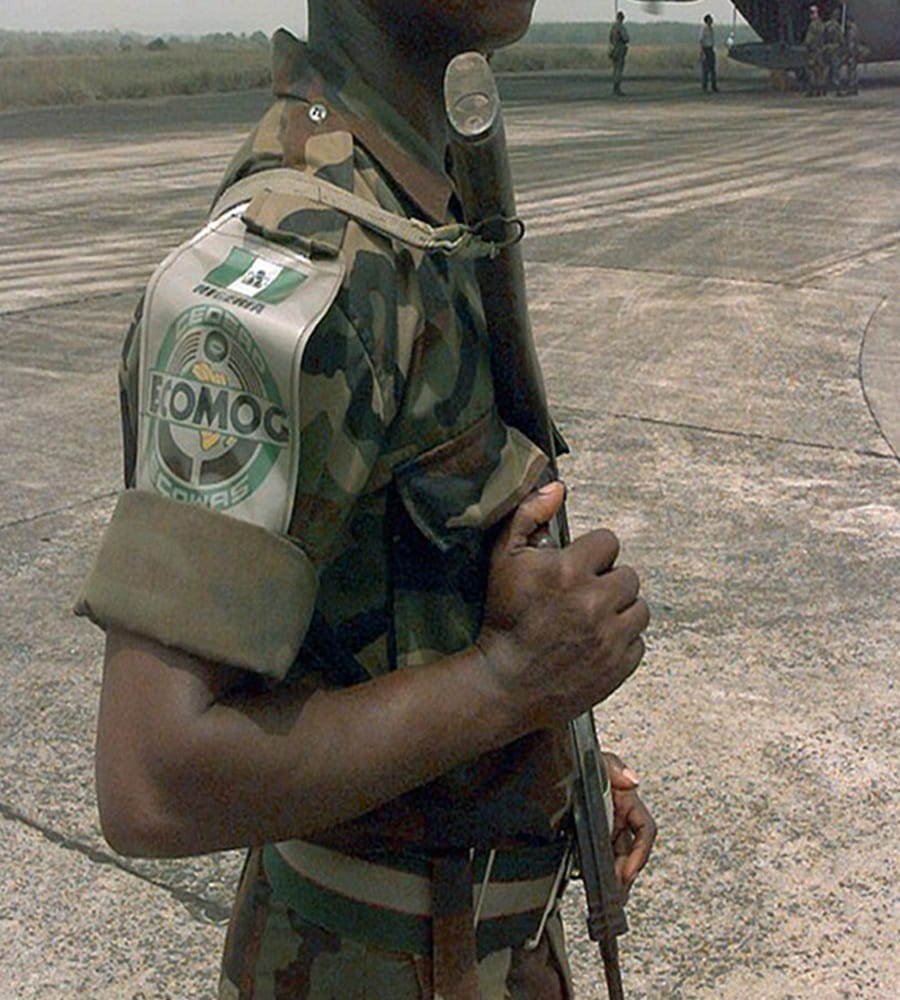
These peace agreements took place within a time frame of six years and if not for the dedication of the ECOWAS members, these agreements would have had no avail. This type of cooperation demonstrated a very unified block.
In July 1997, ECOMOG successfully established a final cease-fire and assisted in presidential elections of which Charles Taylor became president. After these events, ECOMOG troops returned home.
Fast Forward to 2025
Quite recently, President Joseph Nyuma Boakai during Liberia’s 178th Independence celebration bestowed honor on ECOWAS-ECOMOG for their role played to restore peace and civility to Liberia after years of civil war.
The Charles Taylor Gov’t – LURD Civil War
Barely two years into his leadership as President of Liberia, Charles Taylor government came under external attack by a rebel-group of Liberians who styled themselves “Liberians United for Reconciliation and Democracy (LURD),” which was headed by a former Ministry of Finance employee Sekou Damante Konneh, and supported by several other exiled Liberians, who had previously served in the Samuel Doe government.
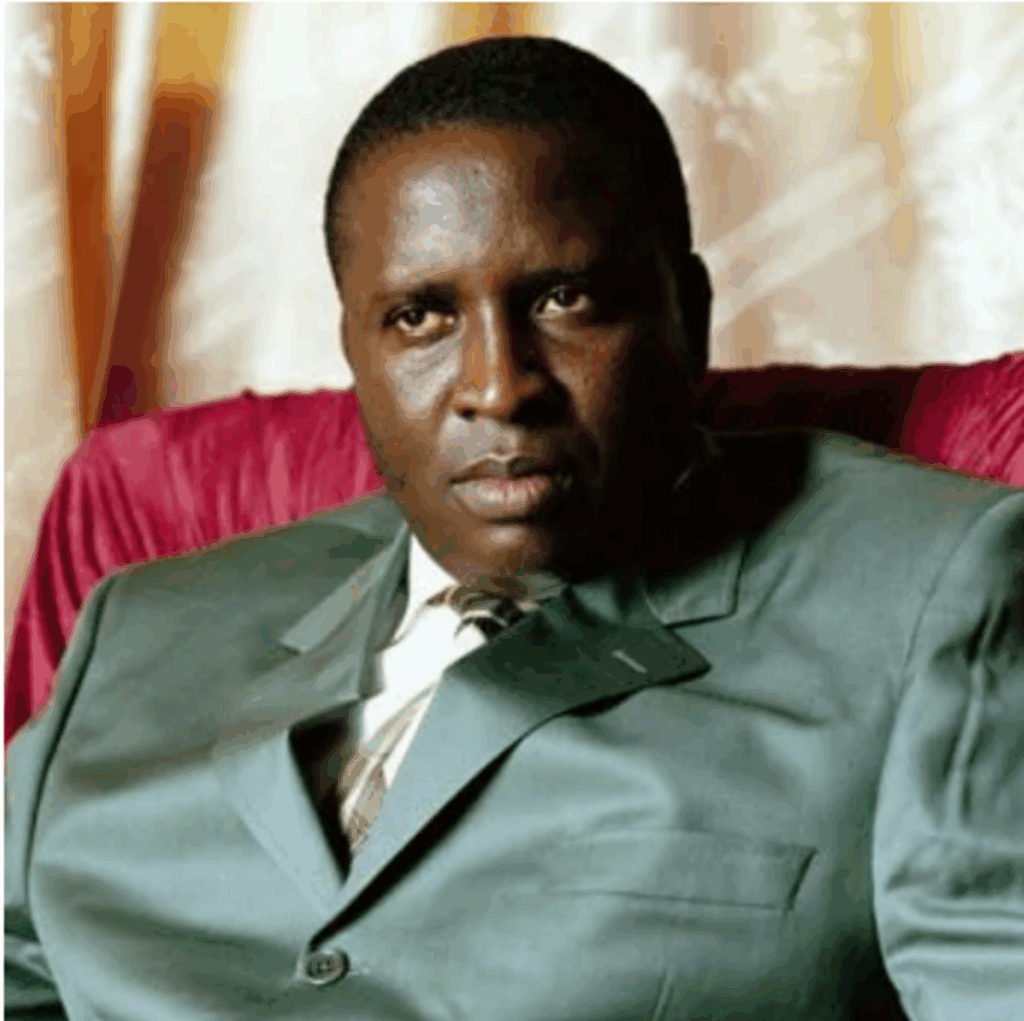
It was rumored that LURD had the military backing of the Guinean government at the time headed by Gen. Lansanah Conté (deceased) and also former President Charles Taylor accused the US government of providing military hardware to LURD, an accusation the US Government has ever since denied.
From 1999 to 2003 the intensity of the civil war grew and at the same time, another group of Liberians under the rebel banner: Movement for Democracy in Liberia (MODEL). It was led by Thomas Yaya Nimely (now Senator of Grand Gedeh). They invaded Liberia from the east and made inroads into most of the southeastern counties – Maryland, River Gee, Sinoe, Grand Gedeh, Grand Bassa, etc.
Taylor government had two separate fronts to fight and with Liberians dying in the thousands, international intervention was sought again from ECOWAS, the US Government, United Nations and the international community.
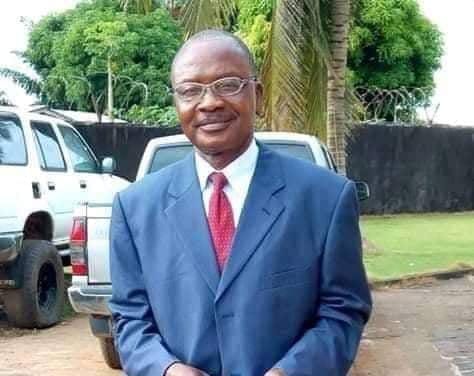
The United States government at the time was entangled in two wars – Afghanistan and Iraq – thus could not commit troops in Liberia to separate the belligerent warring factions in Liberia. However, the US government asked regional body ECOWAS to intervene and that it would provide logistics and financial support to the initiative. ECOWAS again initiated the Ghana Peace Accord with the backing of the US government and other international partners.
US Amb. John William Blaney and Others’ Roles in Ending the Monrovia Madness
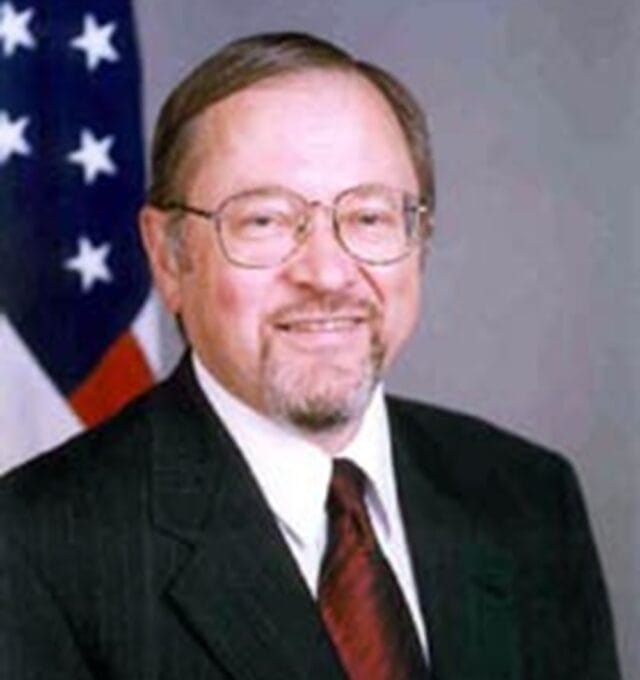
John William Blaney (born 1948) was a United States State Department official and former U.S. ambassador to Liberia. Ambassador Blaney led successfully U.S. efforts to end Liberia’s long civil war, including crossing no man’s land in 2003 to negotiate an end to the fighting, which enabled the formal peace process in Ghana to conclude successfully the Comprehensive Peace Agreement.
For his achievements in Liberia, Ambassador Blaney was awarded the Secretary of State’s Distinguished Service Award, the highest diplomatic honor of his nation.
Previous diplomatic assignments included chief of mission at the U.S. Embassy in South Africa, director for Southern African affairs at the State Department, presidential designation as the U.S. deputy representative to the ECOSOC of the United Nations, minister-counselor at U.S. Embassy Moscow (as the Soviet Union was disintegrating), and positions working on several nuclear arms control negotiations (including principal drafter and a negotiator of the U.S.-USSR Nuclear Risk Reduction Centers Agreement).
Blaney graduated from Syracuse University, and he holds a Master’s of Science in Foreign Service from Georgetown University.
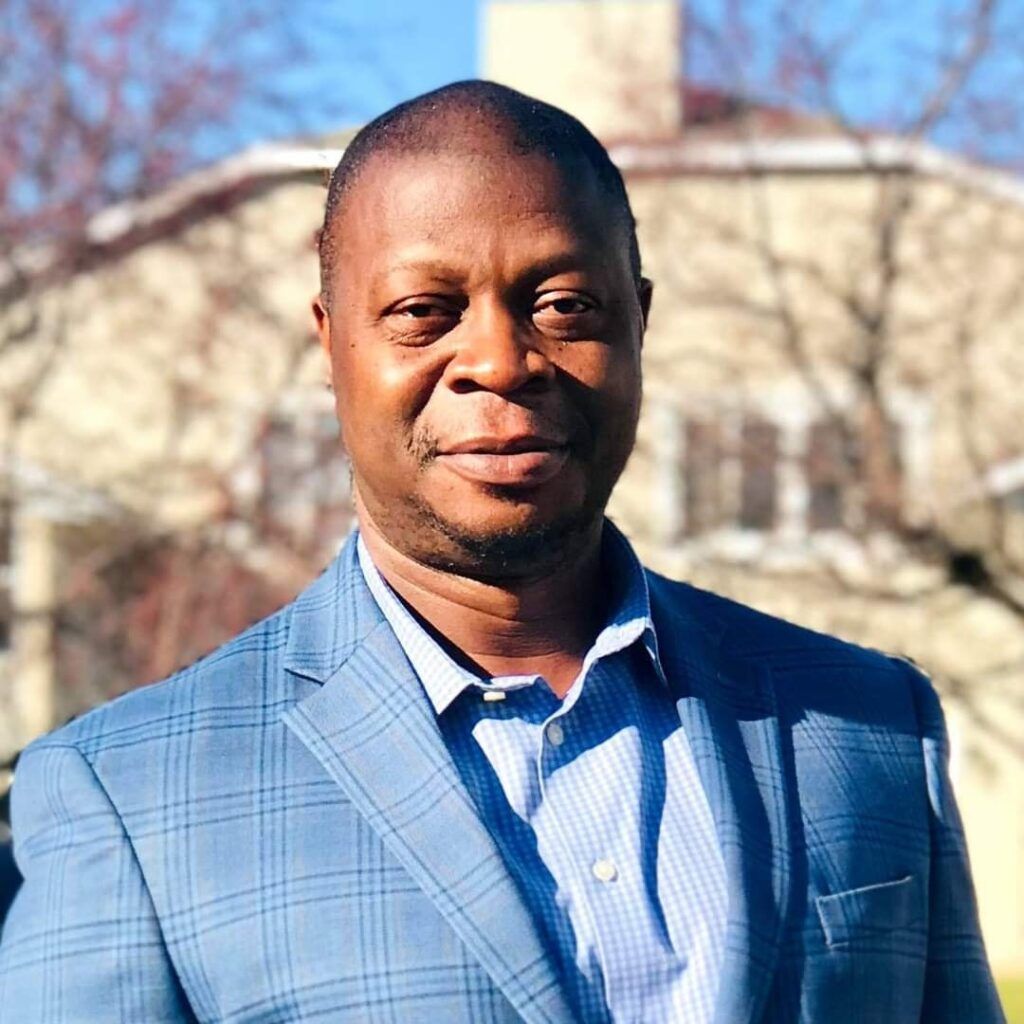
US Embassy Former Staff Jay Jenkins’ Account of Blaney’s Role
Mr. Jay Jenkins, a distinguished Liberian, who worked for over two decades with the United States embassy near Monrovia in its Political Affairs Section was conferred a prestigious Department of State award, Heroes of Diplomacy Award, for his work at the US Embassy during his service. He was employed with the Embassy during the three rounds of the 2003 war that was dubbed “World War I, II & III” in Liberia between Taylor’s forces and LURD rebels.
In his account posted on his Facebook, he urged the Government of Liberia headed by President Joseph Nyuma Boakai to honor former Amb. Blaney and others for their signification role played to end the Monrovia madness.
He writes: “It has now been more than 22 years since we made the ultimate sacrifice and helped save Liberia from the brink of annihilation. When I say ‘we,’ I am referring to Ambassador John Blaney, Dante Paradiso, Sue Ann Sandusky and myself.
“At the time, Washington was on the verge of shutting down the U.S. Embassy in Monrovia. The United States was embroiled in two major wars—Afghanistan and Iraq—and was very reluctant to get involved in another conflict, especially after its costly and catastrophic intervention in Somalia just over a decade earlier. Then Secretary of Defense Donald Henry Rumsfeld ordered three warships—USS Iwo Jima, USS Carter Hill and USS Nashville—to move off the Liberian coast to facilitate the evacuation and closure of the embassy in Monrovia.
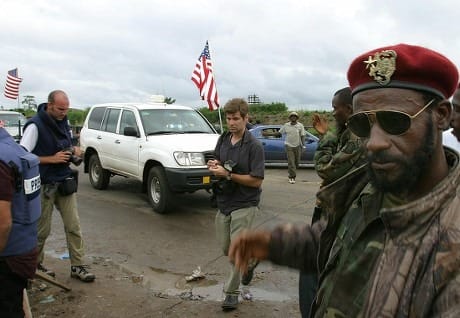
Over one million people were at the mercy of three heavily armed warring factions: pro-government militias loyal to former President Charles Taylor, Liberians United for Reconciliation and Democracy (LURD), and the Movement for Democracy in Liberia (MODEL). The fate of these civilians—mostly unarmed, hung in the balance, in close proximity to ruthless, marauding gunmen.
We could have followed Washington’s orders, shut down the Embassy and left. I was very young at the time. I did not have a wife and kids. I did not have much to think about. But we chose the noble option and made the case for Liberia and helped turn the tide. President George W. Bush listened to us and made the ultimate policy reversal, allowing us at the embassy in Monrovia the chance to use diplomacy to avert what would have incontrovertibly been worse than the Rwandan genocide. Ambassador Blaney was able to persuade Secretary of State Colin Luther Powell to give diplomacy a chance.
We worked on a ceasefire agreement that was eventually accepted by the warring factions, and Liberia, as we know it today, was spared.
I sit and wonder, after all these years, whether successive Liberian governments since 2003 have willfully forgotten our heroics—or simply choose not to give recognition where national recognition is due. Former American President John F. Kennedy famously said during his inauguration on January 20, 1961, ‘Ask not what your country can do for you—ask what you can do for your country.’ I am one of the very few Liberians who can now proudly ask, ‘What can my country do for me?’
I have seen individuals honored with our country’s highest national distinction during Independence Day ceremonies. I am not saying those individuals do not deserve to be honored—that is not my point. Even if my country chooses not to honor me, I have already been honored by the United States at the highest level.
However, I appeal to the Government of Liberia to honor Ambassador John Blaney, Mr. Dante Paradiso, and Colonel Sue Ann Sandusky (posthumously) at some point in the near future. They helped save Liberia from the brink of self-destruction. They deserve our highest national honor.”
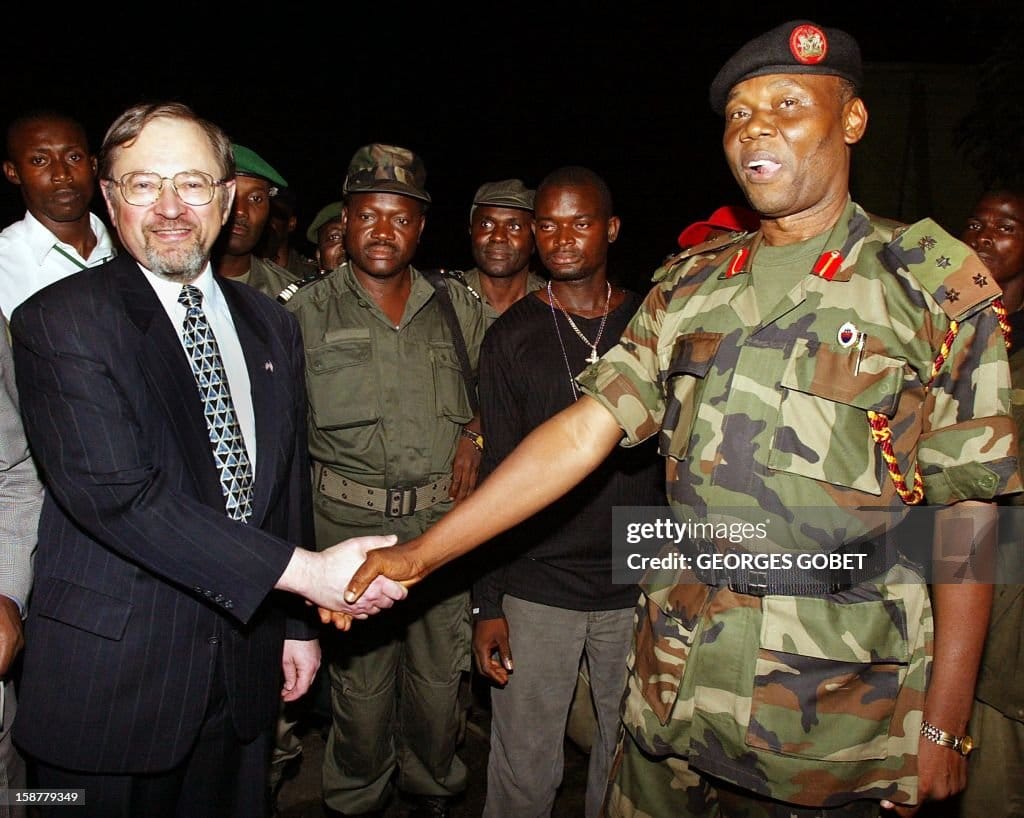
Ambassador John Blaney is regarded as one of the toughest United States Ambassador to ever serve in Liberia. He is remembered as playing a key role in stabilizing the country’s post-war transition. He initiated cease-fire between former President Taylor’s forces and those of LURD and MODEL rebels.
While peace negotiations were ongoing in Accra, Ghana, in 2003 Amb. Blaney led US marines who had come to lay the ground works for humanitarian operations for war-stricken Liberians, to different parts of the city of Monrovia and beyond to do assessment of the humanitarian needs.
And when war eventually ended and a ceasefire signed in Accra, the work spearheaded by Amb. Blaney and his team, including the US Marines paved the way for the influx of humanitarian aids to Liberia for victims of the war.
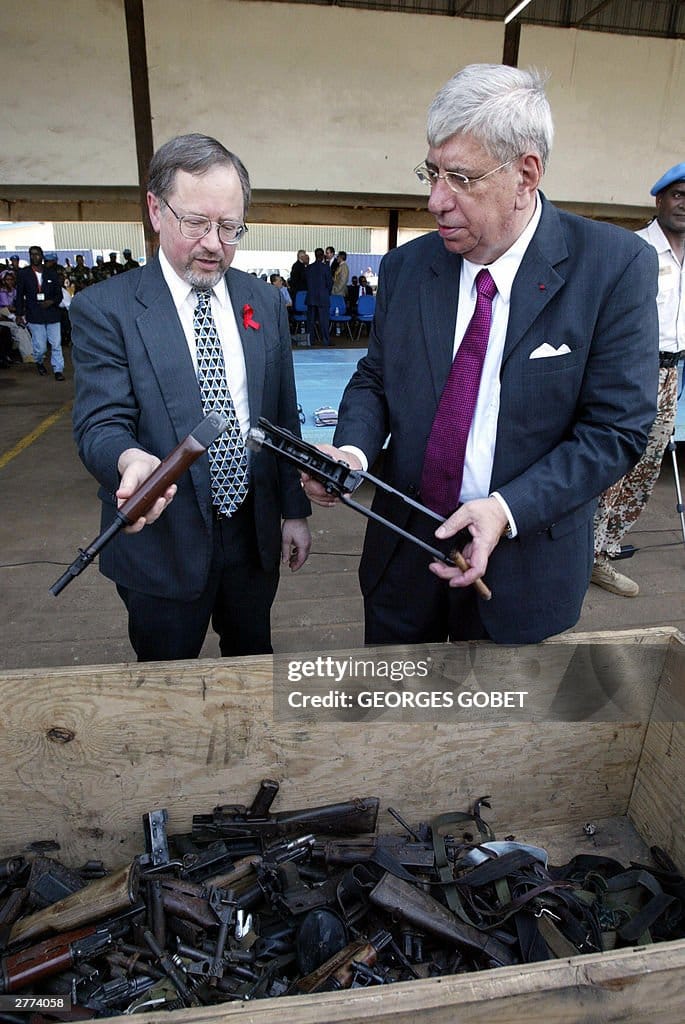
Amb. Blaney welcomed the first vanguard forces dispatched by ECOWAS from neighboring Sierra Leone, known as ECOMIL to set up buffer zones between the belligerent forces of former President Taylor and the LURD rebels. That initiative paved the way for the delivery of humanitarian aid to entrapped Liberians in the city of Monrovia who had no access to food, safe drinking water, among others.
Amb. Blaney was also on hand to receive the first Special Representative of the UN Secretary General (SRSG), Jacques Paul Klein in Monrovia, and also present during the transition of ECOMIL to United Nations Mission in Liberia (UNMIL) forces, eventually leading to the end of the Monrovia madness and subsequent elections that saw Madam Ellen Johnson Sirleaf being elected president in 2005.