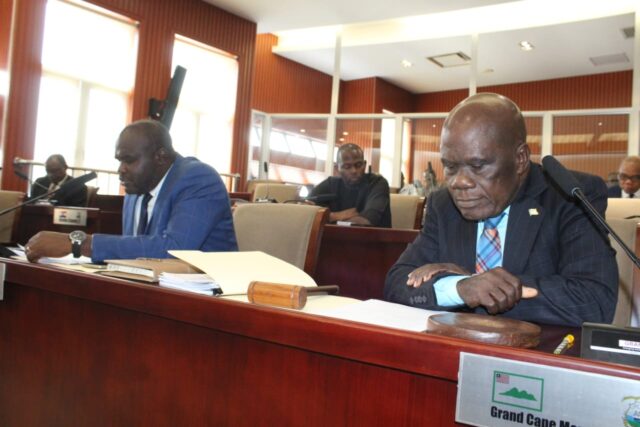
MONROVIA, Liberia — The Senate on Monday, Nov. 3, opened public hearings on a proposed US$364.8 million concession with PAVIPORT AL Associates, Inc. to finance, build, and operate five priority road corridors under a Build‑Operate‑Transfer model—an early test of the Boakai administration’s pledge to make “roads, roads, roads” a national priority.
Submitted by the Executive in July 2025, the agreement covers approximately 255 kilometers over five years: St. Paul Bridge–Klay (Bomi), Klay–Bo Waterside (Grand Cape Mount), Klay–Tubmanburg (Bomi), Madina–Robertsport (Grand Cape Mount), and Voinjama–Mendikorma (Lofa). Under the BOT model, the private consortium would finance, construct and operate the roads for a set period before transferring them to the state.
A Senate Joint Committee—Public Works; Concessions and Investment; Transport; Ways, Means, Finance and Budget; Public Accounts and Audits; and Judiciary, Human Rights, Claims and Petitions—has cited key officials to justify and clarify the deal, including the ministers of Public Works, Finance, Justice and Transport, the National Investment Commission chair, and the PPCC executive director. Lawmakers said they will probe financial feasibility, procurement compliance, legal authority, and public‑interest protections. “We must ensure that due diligence is done and that the country gets value for money,” a Senate source said.
The hearings come as Liberia maintains one of West Africa’s weakest road networks: fewer than 10% of roughly 12,000 kilometers are paved, according to the World Bank’s 2024 Infrastructure Diagnostic, leaving many rural communities cut off in the rainy season and constraining access to markets, schools and healthcare. While the BOT model could unlock private capital, analysts warn that weak oversight could raise costs and risks; civil society groups are calling for the full publication of the agreement and impact assessments before ratification.
Public interest is especially high for the Voinjama–Mendikorma corridor, which links Liberia to Guinea and supports agricultural exports, and for the coastal links from St. Paul Bridge to Bo Waterside. Questions persist around funding transparency, maintenance and potential tolls.
Infrastructure is central to President Joseph N. Boakai’s ARREST development agenda, but with public debt nearing US$2 billion and fiscal space tight, lawmakers face a balancing act: mobilize private financing without compromising the public interest. If robustly structured and supervised, the PAVIPORT package could become a template for sustainable infrastructure financing; mismanaged, it risks adding to fiscal burdens and eroding public trust. The Senate’s handling of the PAVIPORT deal is widely seen as a litmus test for transparency and accountability in a sector that “binds the nation together,” as one analyst put it, and where progress has long lagged ambition.