MONROVIA – The fight against illicit drug trafficking, smuggling and dealing have always been a herculean task for governments the world over, least to mention the unsophisticated Liberian security forces in the tracking of illicit substances and contraband intended to flood the Liberian market as well as being used as a transit point.
There have been instances in Liberia where through the tip of international covert agencies in collaboration with their Liberian counterpart, hundreds of millions worth of illicit drugs intended for trafficking and dealing in Europe via transit in Liberia were seized. Court proceedings were conducted in some instances the alleged culprits were found not guilty after months of trial.
Also, the Liberia Drug Enforcement Agency (LDEA) in collaboration with other joint security actors have seized illicit drugs either through the Roberts International Airport (RIA) and other points of entry like borders with neighboring Sierra Leone and Guinea though their operations to crack down on illicit drug trafficking and smuggling and subsequent sale on the Liberian market. The LDEA have forwarded several suspects to court for prosecution.
But despite these measures to curtail the menace in the Liberian society, suspected drug traffickers and smugglers who bring these illicit substances and contrabands into the country can manage to evade the security dragnet most times and end up to distribute these illicit drugs to their local dealers for onward sale on the Liberian market to the detriment of the mostly the young people.
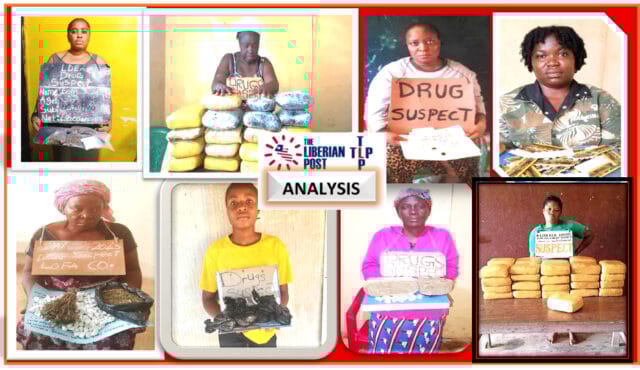
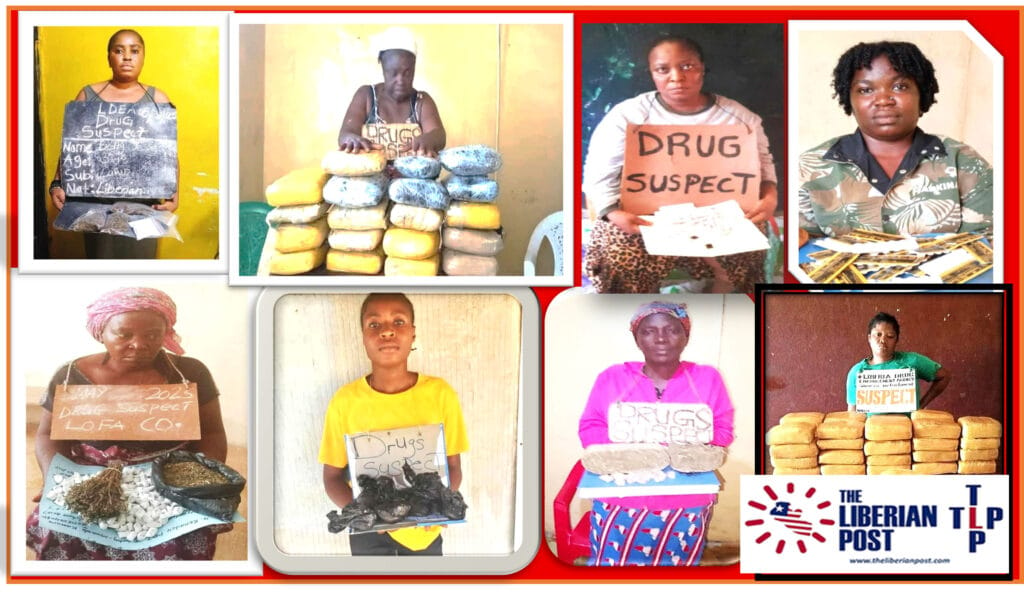
Of late most of the arrests and seizure of illicit drugs by the LDEA have reveal more female suspects who have been charged and forwarded to court. But ironically, these females are mothers of most the young people of Liberia and while some of the good mothers have joined the ‘Say No to Drug’ campaign in the crackdown and minimizing the proliferation of illicit drugs on the Liberian markets, there are other women are engaged in this illegal act for financial gains to the disadvantage of the youth of Liberian, including their own children.
The fight against illicit drug is a huge task for the Government and every Liberian. Some advocates say the national anti-drug fight that was recently launched in Monrovia with street march and presentation of to the National Legislature and say saying no to drugs on the surface is not enough, but to truly address substance abuse among Liberian youth, especially from the leadership context, every leader of the society must join the Government of Liberia to build a system of transition, empowerment and responsibility across every level of society. They have urged that a structured and wise approach be suggested in the fight against illicit drugs.
According to these anti-drug campaigners and advocates, “Saying No Is Not Enough: Rebuilding Minds, Systems, and Futures” is the way forward in the crackdown against this menace that is gradually destroying the young people of Liberia.
(THE TRANSITION PROCESS (A Roadmap from Curiosity to Clarity)
- Awareness (Realization)
Expose the realities of drug abuse—through community campaigns, survivor stories, and school engagements. We need to help youth realize that drugs are not “just a hobby,” but a trap that steals destiny. - Realization (Responsibility)
The society must engage the youth in leadership programs that tie identity to purpose. To replace idleness with responsibility—train them to lead, create, and serve. - Responsibility (Resistance)
Equip them with tools to say “No” with confidence, not fear. Every responsible Leadership (like our current leadership) must build support systems around peer accountability, mentorship, and opportunities.
WHY LIBERIAN YOUTH MUST SAY NO (AND STAY NO)
It is because their future depends on it;
It is because drug abuse fuels poverty, violence, and wasted dreams;
It is because the high lasts minutes, but the damage can last a lifetime…
ROLES & RESPONSIBILITIES
- The Government
a. Policy: Enforce strict but compassionate drug laws (focus on rehabilitation, not just imprisonment).
b. Education: Integrate drug-awareness and leadership development in schools.
c. Opportunity: Invest in vocational centers and youth empowerment programs.
d. Partnership: Collaborate with churches, NGOs, and private sector to reach youth where government can’t.
- The Youth/User
a. Responsibility: Know that your life is yours, but your choices affect many.
b. Courage: Speak out, seek help, and stand up for peers under pressure.
c. Vision: Dream bigger than temporary pleasure—focus on long-term impact.
- The Imputer (Supplier/Influencer)
a. Awareness: Understand the deadly ripple effect of supplying substances.
b. Accountability: Be held legally responsible for poisoning communities.
c. Redirection: Offer a path out—provide economic alternatives to drug trade.
- The Dealer/Distributor
a. Face the Law: Must be confronted with firm justice.
b. Reformation: But also offered rehabilitation and redirection to economic empowerment.
STRATEGIC WAYS FORWARD
- Community Watch Cells: Youth-led and elder-supported teams to monitor hotspots and support vulnerable peers.
- Faith-Based Interventions: Churches and mosques become hubs of healing, identity restoration, and skill building.
- Rehabilitation & Re-entry Programs: For recovering users and even dealers ready to rebuild, not reoffend.
- National Anti-Drug Week: Use national platforms for concerts, testimonies, marches, and open dialogues.
- Empowerment Hubs: Launch youth centers focused on purpose discovery: business, art, music, agriculture, coding, leadership.
LEADERS please SPEAK:
Telling the youth to say no to drugs without giving them a reason to say yes to life is injustice in leadership. We must not only warn, we must also walk with them—until they are strong enough to lead others out too. And this is what our Father is doing.
Therefore, it is time to rise as pastors, parents, teachers, leaders, fathers, Mothers, and youth to say “No” to drugs, and stay “No” to Substance and be clear that Drugs are children’s Destiny”.
It’s time to advocate for:
-Drug prevention education in every school;
-Rehabilitation and recovery centers for those needing help;
-Strong policies and enforcement to stop trackers; and
Community support system to give hope and healing.
The Thursday, August 7, 2025 Street march and protest was dubbed as the ‘National Day of March Against Drug Abuse and Trafficking’. It brought together thousands of Liberians from all walks of life. Organizers described the march as a “national cry for change, a call to action, and a symbol of hope” in the face of what they call an existential threat to the nation’s youth, peace, and development.
Meanwhile, women are mothers of the young people who engage in the use of illicit drugs and these women have an obligation to train their children and teach them about the danger of these illicit substances, but instead of doing that, some of them have become dealers to the disadvantage of their own offsprings and those of the larger communities.
Women who engage in the dealing of illicit drug in the communities for their illicit drug masters must be exposed just as the traffickers and smugglers are being hunted, arrested and prosecuted by the LDEA in collaboration with the joint security of Liberia through the Ministry of Justice and the Courts.