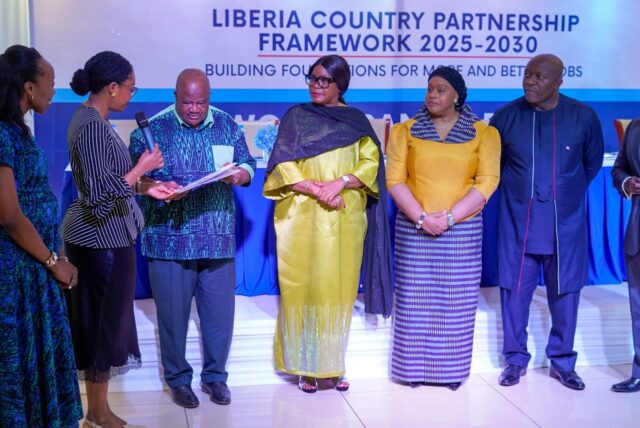
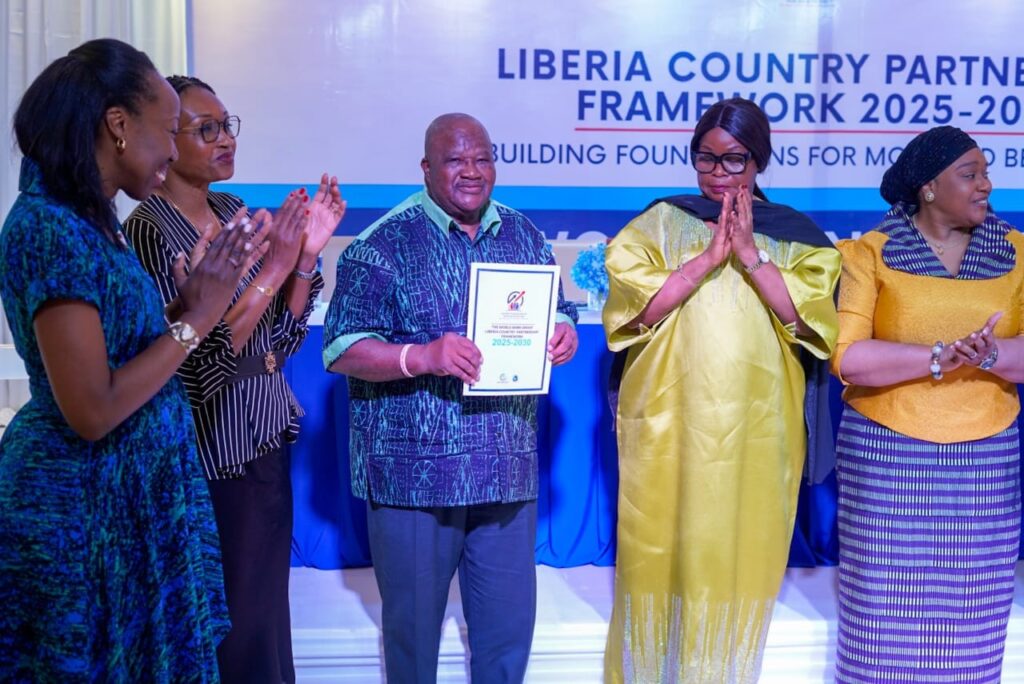
MONROVIA, Liberia – The World Bank Group (WBG) and the Government of Liberia have launched a new Country Partnership Framework (CPF) that will guide the Bank’s support to Liberia from 2025–2029, with one overarching goal: building the foundations for more and better jobs.
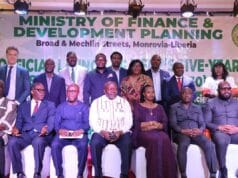
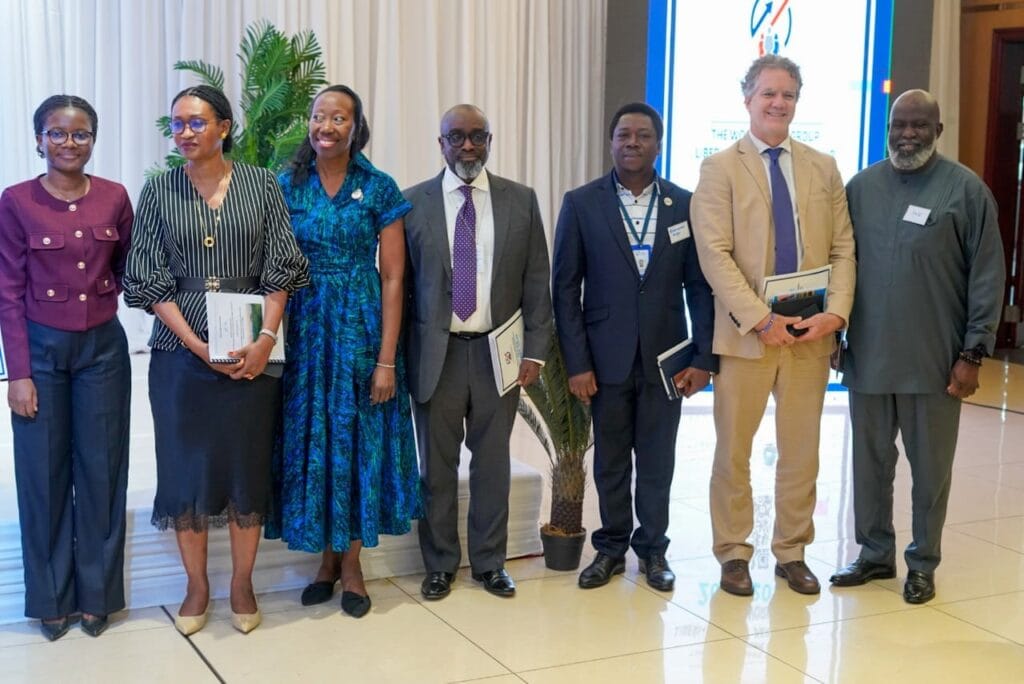
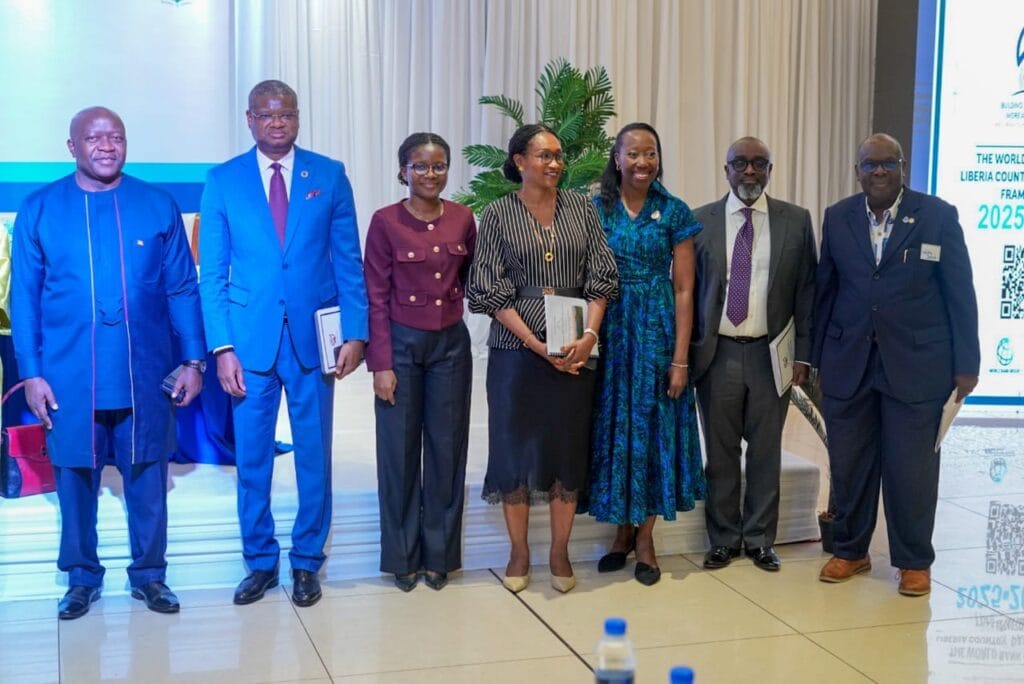
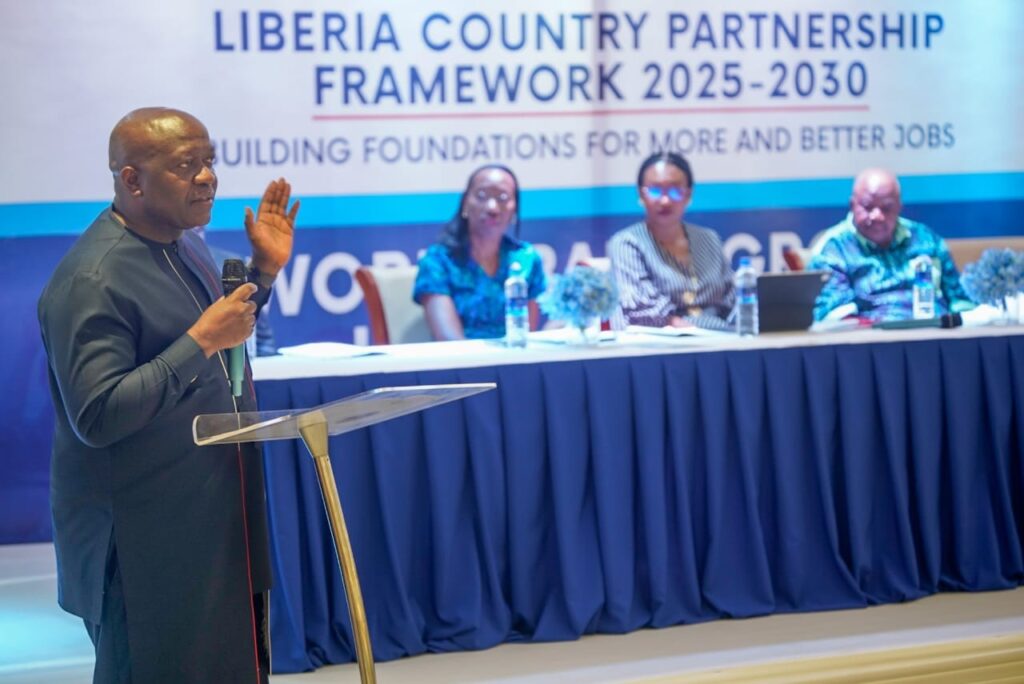
The CPF was unveiled Wednesday, December 3rd, at the Ellen Johnson Sirleaf Ministerial Complex in Oldest Congo Town. The event drew senior government officials, World Bank and IFC leaders, development partners, private‑sector representatives, civil‑society groups, youth organizations and academics.
“Final Leg” to Vision 2030
World Bank Liberia Country Manager Georgia Wallen framed the moment as a decisive stage in Liberia’s long‑term development journey.
“2025 has the makings of a milestone year – one that sets the course and the pace of development in Liberia for years to come,” she said. “In relay races, each leg of the race matters. But the final leg is when the pressure is highest. This is the kind of moment that Liberia now faces.”
She described Liberia’s new national development plan – the ARREST Agenda for Inclusive Development (AAID) – as “the last leg of the race to Liberia’s Vision 2030,” aimed at resetting the development model, transforming the economy, and lifting incomes to roughly US$1,000 per capita.
“In the last stretch of the race to 2030, Liberia needs maximum ambition, urgency, and focus,” Wallen stressed. “This is what the new World Bank Group Country Partnership Framework aims to help Liberia achieve.”
One Aim: Jobs
Wallen said the WBG’s support over the next five years will be organized around a single core motivation.
“WBG partnership with Liberia over the next five years will have one aim: building foundations for more and better jobs,” she said. “Everything we do, say, or write over the next five years will have this one core motivation – jobs. Why? Because jobs are the pathway to delivering the AAID and pursuing the WBG goals to end extreme poverty and promote shared prosperity on a livable planet.”
She noted that during a Cabinet meeting on Tuesday, Liberia’s leaders committed to identifying and tackling constraints to employment, especially for youth, and said the WBG is “well positioned and squarely focused on deepening support in this area.”
Four Pillars: Education, Energy, Governance, Private Investment
To build these “foundations,” Wallen explained, the CPF will scale up results in four outcome areas tailored to Liberia’s context:
- Reducing learning poverty – strengthening basic education and skills;
- Increasing energy access – expanding reliable electricity for households, businesses and public services;
- Promoting transparent and accountable governance – improving public financial management and service delivery;
- Increasing private investment – particularly in agro‑industry and sustainable forest economies.
“We will integrate resilience in all our efforts, including climate resilience, fiscal resilience, and social resilience – with focus on youth and women,” Wallen added. “All we do – from foundational learning, to investments in women’s economic empowerment, lighting up health centers, boosting access to digital services, promoting an SME Accelerator – will have a unified focus on laying foundations for jobs.”
She also emphasized that the CPF is built on consultation.
“No one runs or wins a relay race alone. Strategic partnerships will be decisive,” she said. “The CPF was developed through dialogue and consultation with the Government of Liberia as well as development partners, youth, private‑sector representatives, academia and others. We started the CPF in a consultative way, and we will continue to maintain a consultative, partnership approach.”
“As Liberia enters the last stretch of her race to Vision 2030,” Wallen concluded, “we believe that Liberia can win… and the best is yet to come.”
IFC: “A Signal Liberia Is Ready to Transform Potential Into Progress”
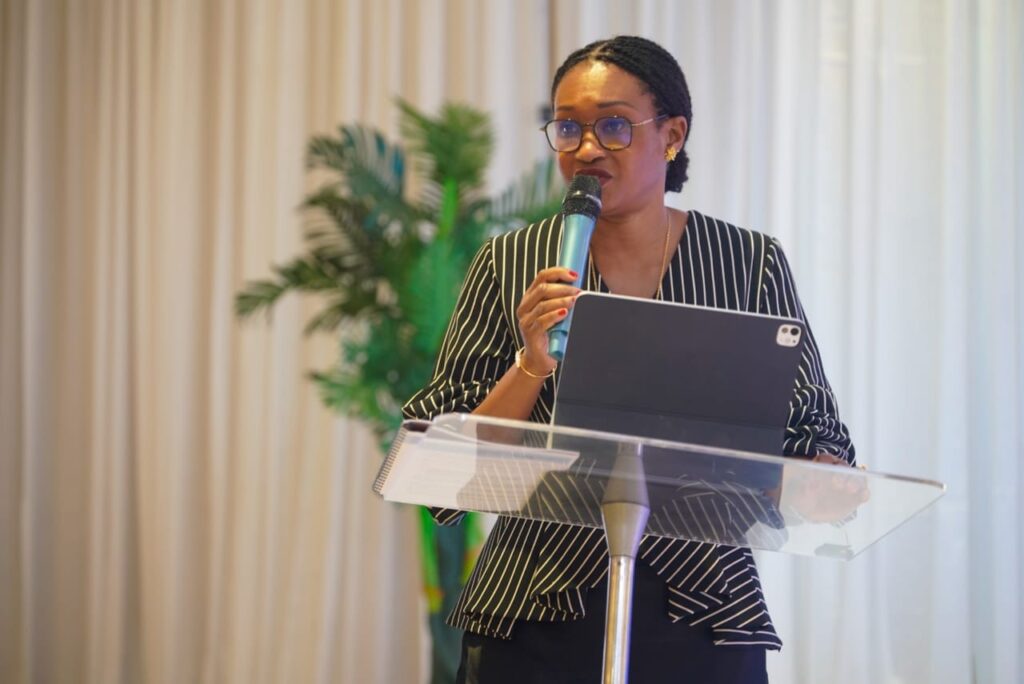
International Finance Corporation (IFC) Division Director for the Gulf of Guinea Cluster, Ms. Nathalie Kouassi Akon, said the launch is more than a formal event.
“It is a signal – a signal that Liberia is ready to transform its potential into progress, to turn national aspiration into tangible impact for its people,” she said.
Akon described Liberia as being at a “pivotal juncture,” with a young population, natural endowments, growing entrepreneurial spirit, and “a government boldly committed to reform.”
She said the ARREST Agenda lays the foundation for a Liberia “where opportunity is widespread and growth is sustainable,” and that the CPF aligns behind that ambition “with concrete pathways for impact.”
The CPF, she explained, is designed to help Liberia meet its deepest needs:
- Creating more and better jobs;
- Strengthening essential services through better governance;
- Expanding opportunities for women, youth and MSMEs;
- Building resilience; and
- Attracting investment where it is most needed.
“That is why job creation sits at the center of everything we do,” Akon stressed. “Jobs change lives; jobs build dignity; jobs stabilize societies; and jobs are how countries turn growth into opportunity.”
She noted Liberia’s demographic profile – with 57% of the population already of working age – and warned that this “greatest asset” will only pay off if the economy creates enough pathways for young people and women.
Akon highlighted global World Bank Group initiatives that will benefit Liberia, including:
- Mission 300 (M300) – to expand energy access to 300 million people by 2030. Liberia is one of the first 12 countries to conclude a compact under M300, she said;
- The agribusiness scale‑up and AgriConnect – joint WBG efforts to transform agriculture into a modern, commercially viable sector that creates jobs and strengthens food security.
“If Liberia is to unlock opportunity for millions, the private sector must grow, innovate, and invest,” she noted, stressing the need for reliable infrastructure, predictable regulations, affordable finance and markets that inspire investor confidence.
She also used the occasion—on the 9th day of the global 16 Days of Activism campaign—to underline the importance of women’s safety and empowerment.
“Safe environments – at home, in schools, in communities, and in the workplace – are essential for national development,” Akon said. “We stand with the government and the private sector in advancing women’s empowerment, safety, and leadership.”
Government: CPF Matches Liberia’s Priorities
Speaking for President Joseph Nyuma Boakai, Sr., Senior Presidential Advisor Dr. Augustine Konneh praised the World Bank’s “enduring commitment” to Liberia.
“You have been a cornerstone in our economic recovery effort,” he said. “Your support continues to empower our government to make progress where progress was once impossible.”
Konneh said the CPF “aligns with our national development strategy, the ARREST Agenda”, describing it as the kind of partnership Liberia wants: “one where national priorities are respected, where collaboration is strategic, and where development is driven by the aspirations of Liberians themselves.”
Finance and Development Planning Minister Augustine Kpehe Ngafuan welcomed the CPF as arriving “at the right time.”
“These next five years are decisive for reaching our 2030 goals,” he said. “The CPF arrives at the right time and can help us accelerate progress if we focus on results, efficiency, and accountability.
We value the World Bank’s support for resilient, inclusive, and accountable development. The challenges we face – post‑conflict recovery, economic shocks, and climate risks – require a partnership that combines financing with stronger institutions, better systems, and empowered communities.”
“One WBG” and a Shift Away From a Concession Model

The CPF will be implemented through a “One WBG” approach, bringing together the strengths of IDA, IBRD, IFC and MIGA.
Key elements include:
- Enabling private‑sector development through initiatives such as Mission 300 and the agribusiness scale‑up;
- Supporting Liberia’s evolution away from a state‑centric, concession‑based development model, in line with the AAID’s call for a “reset” of Liberia’s growth path;
- Scaling up investment in education, skills, and productivity, especially for women and youth;
- Unlocking opportunities for private investment and job creation across agriculture, manufacturing, digital services, infrastructure and tourism.
The CPF is fully aligned with the WBG’s global mission of ending extreme poverty and promoting shared prosperity on a livable planet. It incorporates feedback from months of consultations with government agencies, the private sector, civil society, academia, youth representatives and development partners.
As Liberia moves to implement its US$1.2 billion FY2026 budget and operationalize the ARREST Agenda, the new CPF sends a clear message from both the World Bank and Liberia’s leadership:
The success of the next five years will be measured by how many more Liberians—especially young people and women—can find decent, dignified work.