

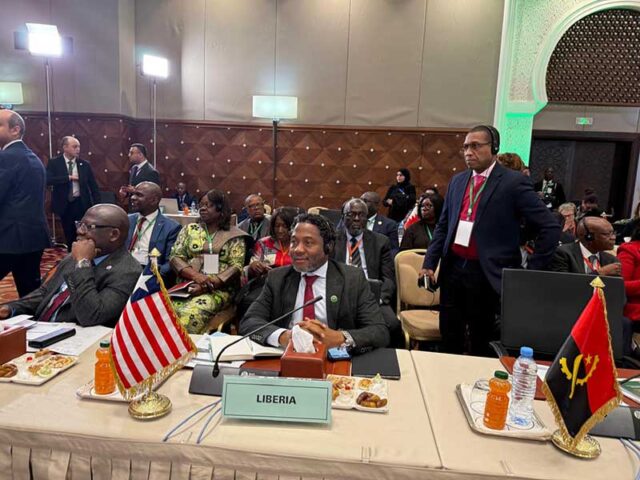
UN HQs, New York – Liberia used the podium at the 12th High‑Level Seminar on Peace and Security in Africa to press for a stronger, more Africa‑led security architecture. Speaking on behalf of Foreign Minister Sara Beysolow Nyanti, Deputy Minister for International Cooperation & Economic Integration, Dr. Ibrahim Al‑bakri Nyei delivered a high‑profile address that outlined Liberia’s bid for a UN Security Council seat and urged reforms to the African Union’s Peace and Security Council (AUPSC) to make room for greater regional influence.
Opening the remarks, Nyei framed Africa’s security challenges as a continental test of unity and determination. “We are in an era of increasing insecurity as violent conflicts with devastating humanitarian implications continue to undermine peace, development and progress in Africa and other parts of the World,” he said. “It is therefore high time that Africa mobilised efforts and led the campaign to restore and reinforce confidence in the international political system.” He credited the AU PSC and its partners for providing a platform to coordinate and push reforms at the UN level.
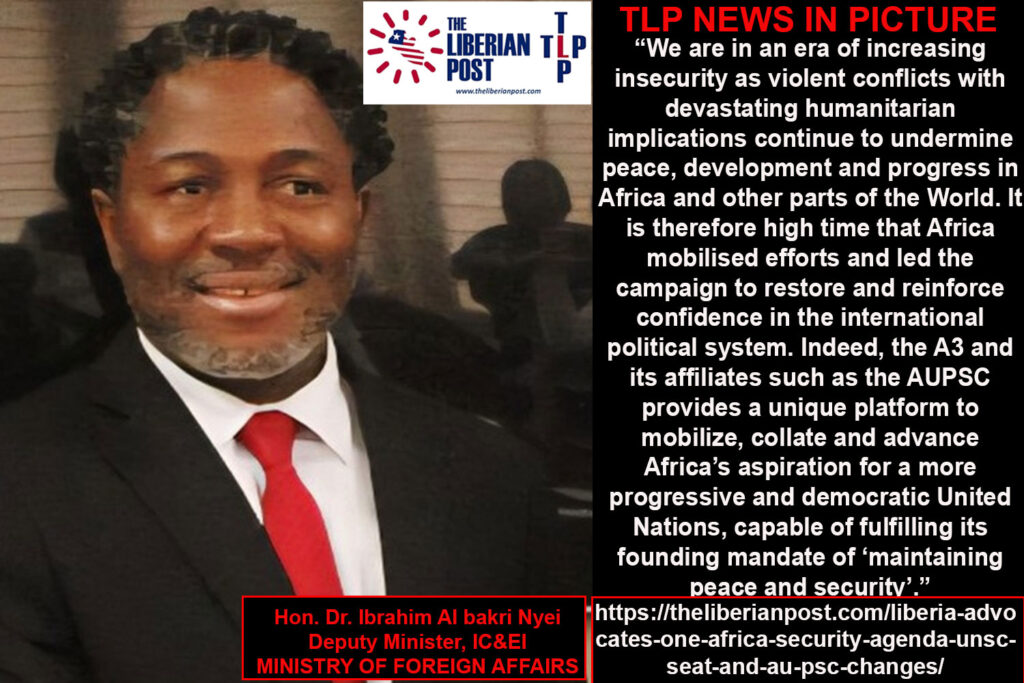
Nyei then placed Liberia squarely in the middle of Africa’s reform agenda, noting that Liberia is preparing to assume a prominent role on the global stage. “Indeed, the A3 and its affiliates such as the AUPSC provides a unique platform to mobilize, collate and advance Africa’s aspiration for a more progressive and democratic United Nations, capable of fulfilling its founding mandate of ‘maintaining peace and security’,” he asserted.
The Liberian delegation highlighted a concrete reform pathway: reform the composition of the AUPSC to provide for the automatic membership of AU members elected to the UN Security Council. Nyei described that proposal as essential to ensuring alignment of priorities across Africa’s most influential multilateral bodies. “We call for an amendment to Article 5 of the Protocol Relating to the Establishment of the Peace and Security Council of the African Union to incorporate this recommendation,” he said, stressing that the change would strengthen coherence between regional and global security initiatives.
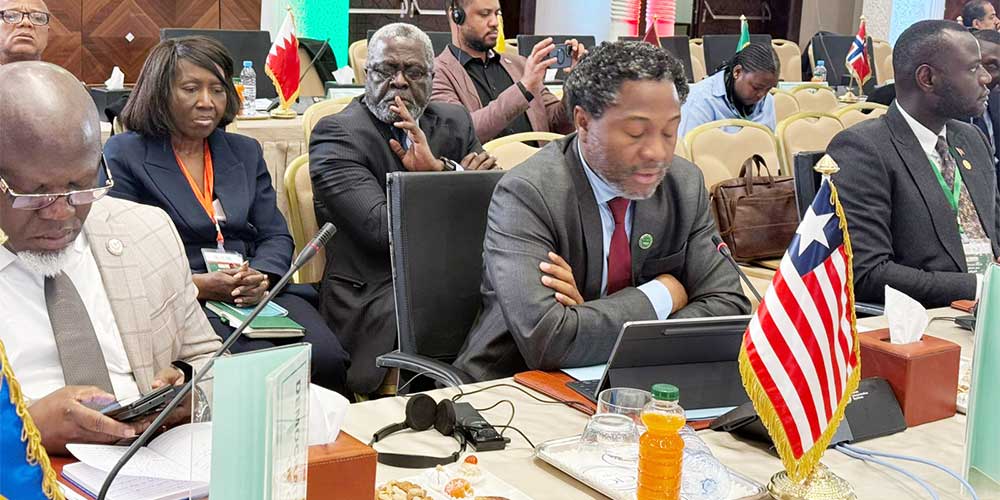
Turning to Liberia’s own commitments, Nyei announced that Liberia has submitted its candidacy for election to the AU PSC and reiterated that Liberia’s concurrent tenure on the UNSC and the AUPSC will enable synergies in the pursuit of shared peace and security goals. “We would therefore be honored by your support for our candidacy during the February 2026 elections for AUPSC members,” he declared.
In outlining Liberia’s strategic approach, Nyei emphasized three pillars: enhanced regional cooperation, stronger youth and women‑led peace initiatives, and deeper engagement with partners across Africa. He noted that Liberia has strengthened its capacities at its Permanent Missions in New York and Addis Ababa and established a mechanism for triangular consultations among Liberia’s embassy network, the home office in Monrovia, and AU/UN partners.
A3 partners in the room were urged to keep Africa’s reform momentum at the fore of UNSC deliberations. Nyei stressed that “the campaign for reforming the Council to make it more inclusive, representative and effective is Africa’s own to lead and ensure it is implemented.” He lauded Sierra Leone for its leadership on UNSC issues during its own presidency and urged ongoing collaboration with AU PSC reform‑minded peers.
The address also underscored Liberia’s view that regional security is inseparable from robust development—particularly in the Sahel and the broader MRU region—where instability and terrorism threaten progress. Nyei framed Africa’s security architecture as a living system that must adapt to new challenges with more inclusive decision‑making.
In closing, Nyei thanked fellow delegates for the chance to share Liberia’s perspective and reaffirmed Liberia’s commitment to a more democratic, rules‑based order. “Liberia looks forward to working with other A3 members and the AU PSC in strengthening Africa’s positions and initiatives that advance the agenda for conflict resolution and sustainable development,” he concluded.