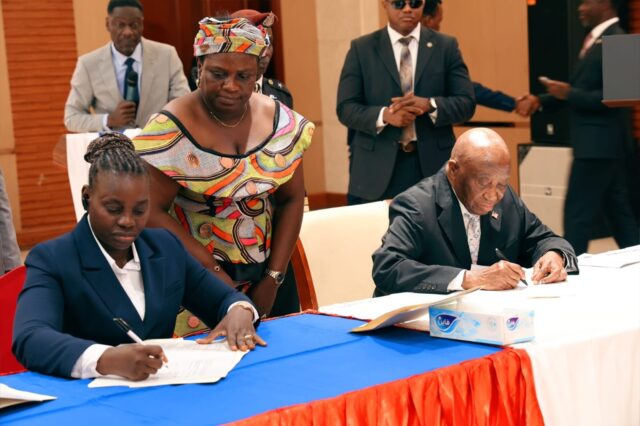
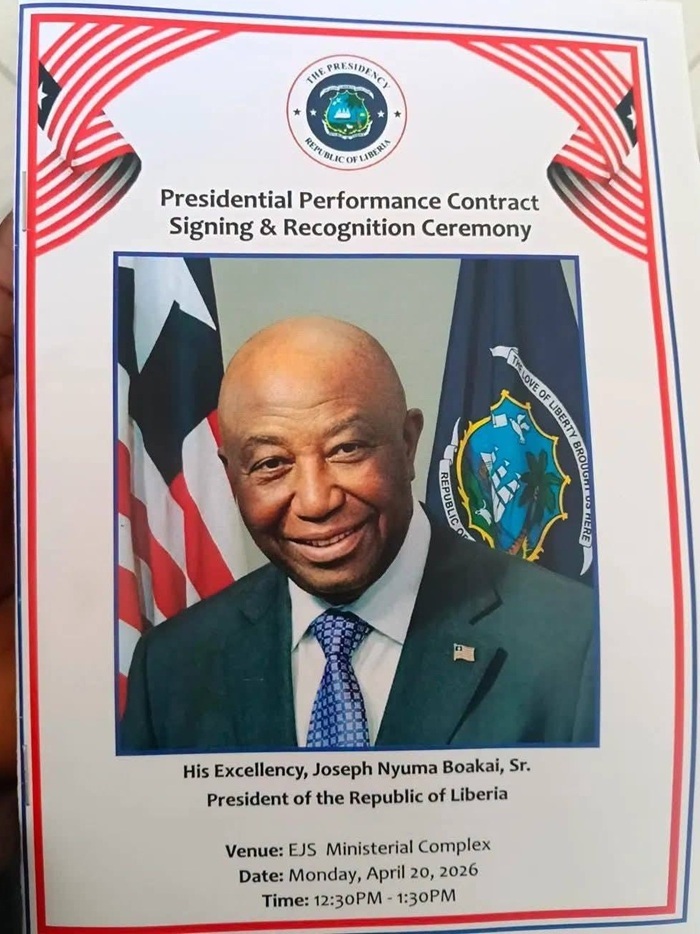
MONROVIA — President Joseph Nyuma Boakai has presided over a landmark governance event combining the signing of 2026 performance contracts, the release of national performance results, and the honoring of top-performing public institutions under Liberia’s Performance Management and Compliance System (PMCS).
The ceremony, held at the Ellen Johnson Sirleaf Ministerial Complex in Oldest Congotown, marked a major step in the government’s push to institutionalize results-based governance and strengthen accountability across public institutions.

Top Institutions Recognized
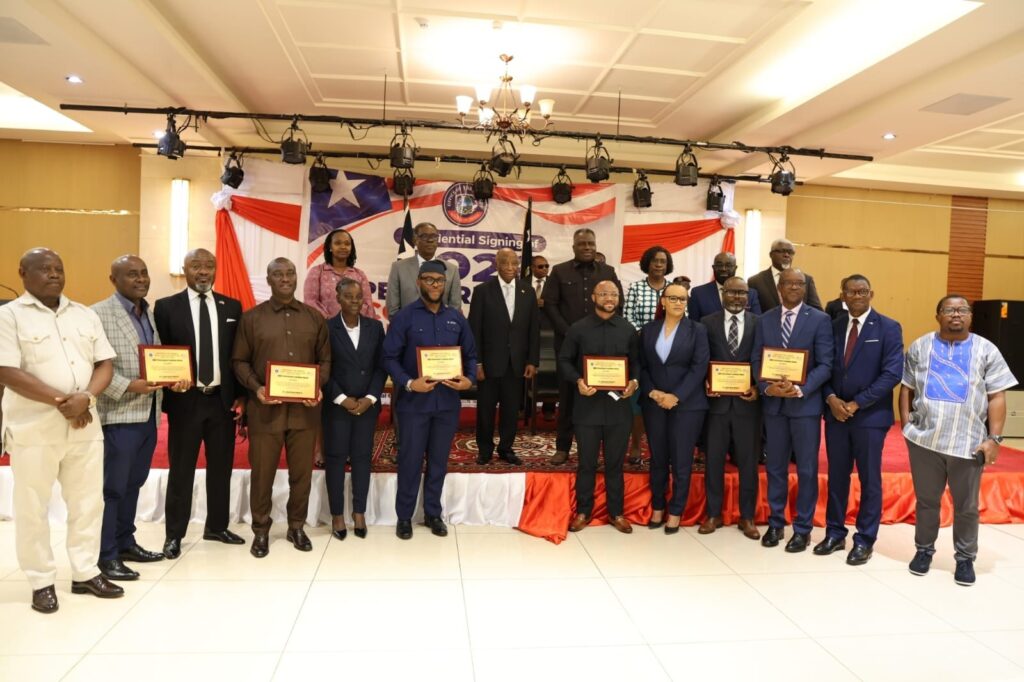
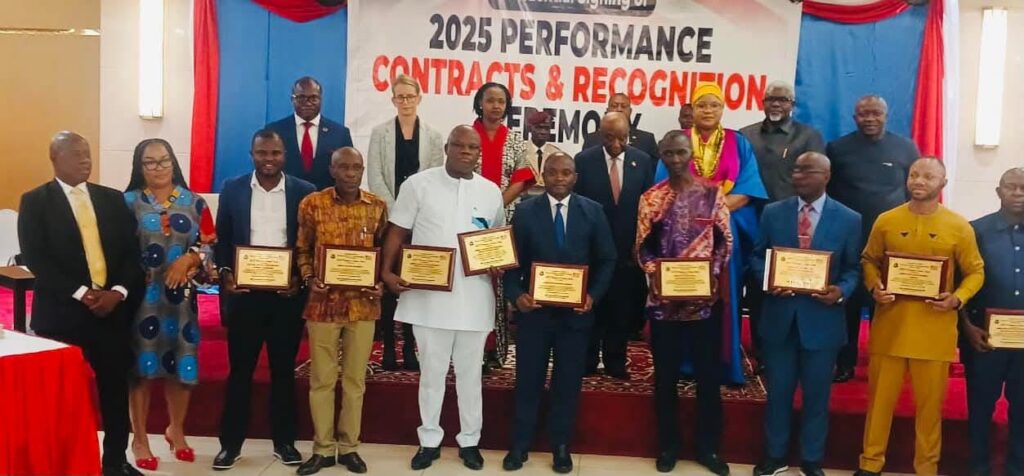
A major highlight of the event was the recognition of the country’s best-performing public institutions for 2025. According to official rankings presented during the program, the top three institutions were:
- Liberia Maritime Authority (LiMA) — 1st Place
- National Road Fund of Liberia (NRF) — 2nd Place
- Internal Audit Agency (IAA) — 3rd Place
These institutions were recognized for what officials described as “exceptional performance” in meeting service delivery targets, strengthening institutional systems, and aligning with national development priorities.
In total, 33 institutions were ranked, with a significant number achieving “outstanding” and “very good” ratings—an outcome authorities say reflects growing compliance and performance discipline across government.
“A Covenant with the Liberian People”
In a keynote address, President Boakai emphasized that the performance contracts signed by heads of institutions are not ceremonial, but binding commitments to citizens.
“What you sign today is not a bureaucratic formality—it is a covenant with the Liberian people,” the President declared.
He stressed that institutions will be closely monitored, with quarterly tracking of progress and increased government support to address capacity and funding gaps.
The President described the PMCS as a transformative tool aimed at shifting governance from promises to measurable outcomes, noting that accountability must be actively enforced rather than assumed.

From Policy to Measurable Results
The PMCS—launched in 2024 under the ARREST Agenda for Inclusive Development (AAID)—requires all public institutions to set clear targets, implement strategic plans, and demonstrate results through measurable indicators.
According to the Office of the Cabinet, the system evaluates institutions based on six key pillars, including strategic planning, service delivery, resource mobilization, system efficiency, capacity development, and governance compliance.
Officials reported that:
- Over 90 institutions participated in the 2025 performance cycle;
- Approximately 62% were rated “outstanding” or “very good”;
- The overall performance average reached about 75%.
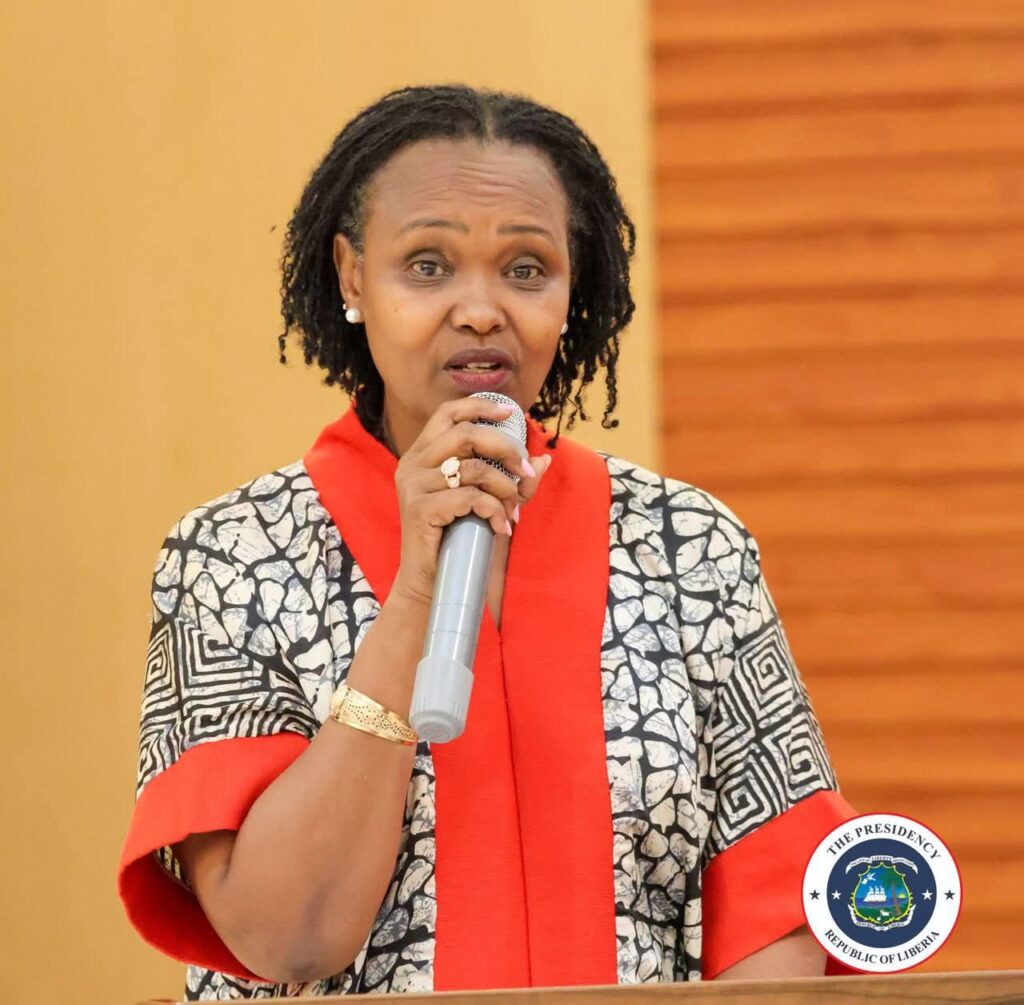
“These results show that real, measurable progress is being made,” President Boakai noted, while acknowledging that some institutions are still struggling to meet performance thresholds.
Digital Transformation of Accountability
A key innovation unveiled at the event was the Performance Management Information System (PMIS)—a digital platform designed to track institutional performance in real time.
The system will allow:
- Continuous monitoring of agency targets;
- Real-time reporting and evaluation;
- Direct citizen feedback through mobile platforms;
- Enhanced oversight from the Office of the President.
Officials say the digital transition will eliminate delays associated with manual reporting and significantly improve transparency and responsiveness.
International Support and Validation
The reform initiative received strong endorsement from Liberia’s international partners, including the United Nations.
The UN Resident Coordinator praised the government’s commitment to accountability, noting that performance contracts are essential to translating policy into real-world impact.
“Goals on paper do not change lives—people do,” the UN official said, emphasizing that improved public sector performance leads directly to better healthcare, education, and economic opportunities.
The UN reaffirmed its support for Liberia’s reform agenda, particularly in strengthening monitoring systems, institutional capacity, and service delivery outcomes.
Looking Ahead
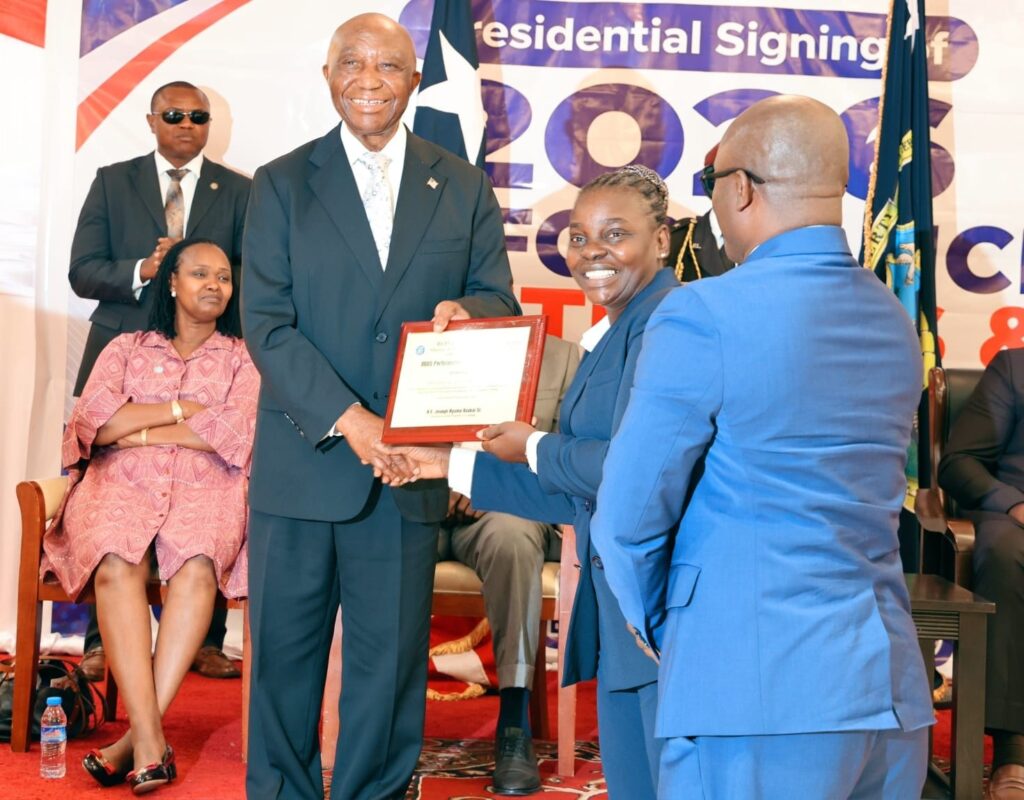
The event also marked the formal signing of 2026 performance contracts by heads of Ministries, Agencies, Commissions, and State-Owned Enterprises—binding them to clearly defined targets for the year ahead.
Government officials say the next phase will focus on:
- Full implementation of digital monitoring systems;
- Expansion of citizen feedback mechanisms;
- Strengthening enforcement and independent verification;
- Extending performance management to local government levels.
As Liberia advances its governance reform agenda, the PMCS is increasingly being positioned as a central pillar in building a transparent, accountable, and results-driven public sector.
“This is how we move from promises to performance,” the President said.
Follow The Liberian Post on Facebook and X (formerly twitter)