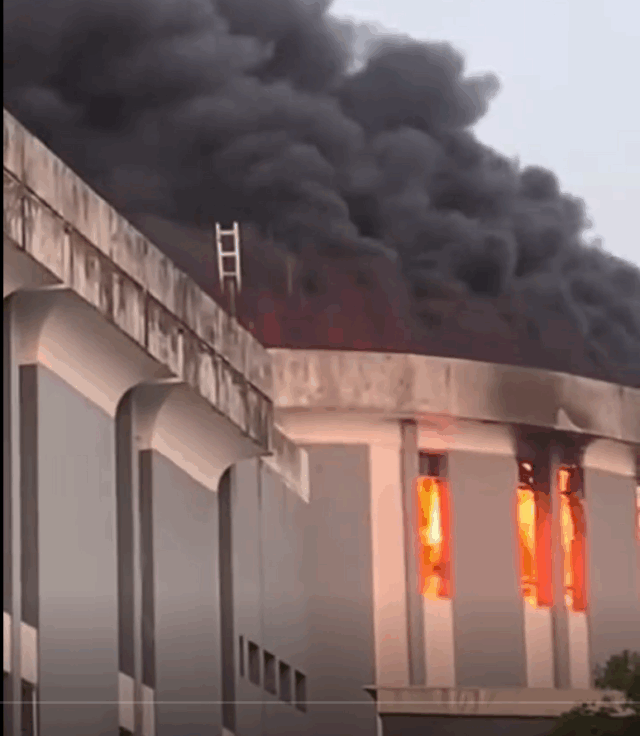
MONROVIA, Liberia — The prosecution’s bid to link former House Speaker Cllr. Jonathan Fonati Koffa and several co-defendants to the 2024 Capitol Building fire faltered Tuesday when a crucial audio recording—touted as evidence of a conspiracy—proved unintelligible once played in court.
Despite objections from the defense, Criminal Court “A” Judge Roosevelt Z. Willie admitted the audio into evidence, saying the court’s focus was “not how the statement was made but whether it speaks the truth.”
Key Evidence Challenged
The state’s first witness, Rafael Wilson, a Liberia National Police investigator, testified that the audio was extracted from a defendant’s mobile phone and contained alleged conversations coordinating the arson attack.
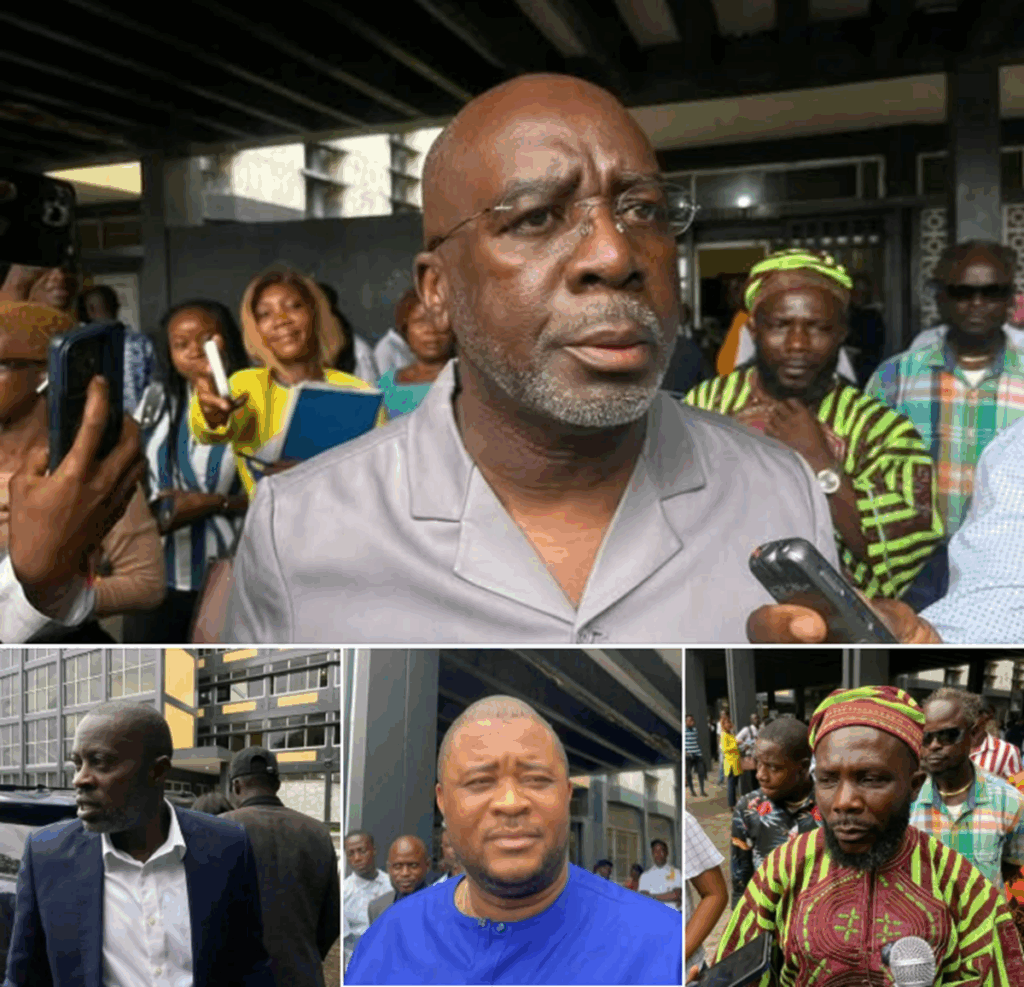
Defense lawyers immediately attacked the credibility of both the evidence and the witness. They argued that:
Wilson did not extract the audio himself; The file was taken from defendant Thomas Ethride’s phone by a security operative known only as Jay-Jay; Wilson is not a certified voice analyst; The audio lacks a verified chain of custody; The recording may be AI-generated and has no authenticated transcript.
The defense insisted the evidence failed even the basic requirements of admissibility. Still, Judge Willie ruled otherwise, asserting that “AI cannot be hearsay,” and allowed the jury to receive the recording.
Audio Played From Different Device, Still Unclear
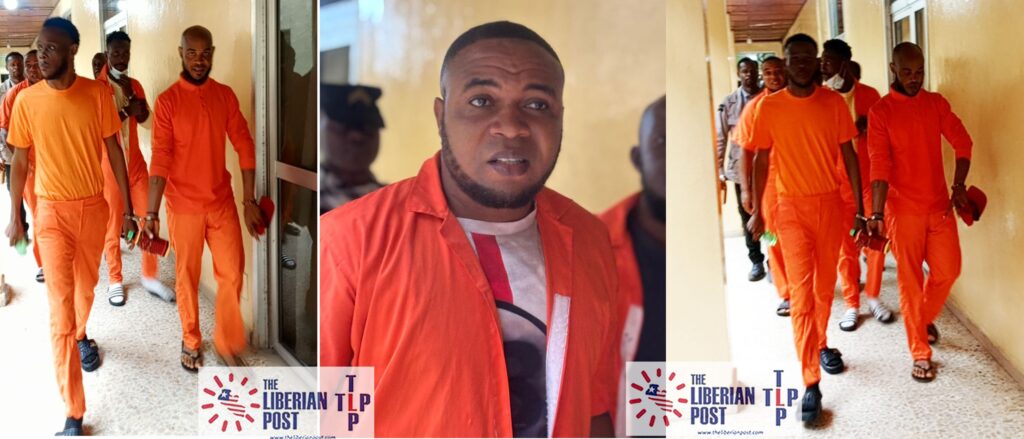
Though prosecutors claimed the audio originated from a phone, they played it from a computer flash drive. Once broadcast, the courtroom fell into murmurs—the recording was so muffled and distorted that neither jurors nor observers could discern a single coherent phrase.
Nonetheless, the judge instructed that the recording be marked and handed to the jury.
Physical Evidence Also Contested
The prosecution also presented an empty Clorox bottle and a box of matches as items tied to the alleged arson plot. The defense countered that the matchbox did not match the one introduced during preliminary hearings.
The court dismissed the objection after noting similarities between the matchbox labeled “ROX” in the earlier photo and the “FOX/ROX” markings on the item tendered in court, ordering that the evidence be tested.