MONROVIA, Liberia — The European Union has remitted €21 million (approximately US$24.6 million) in direct budget support to the Government of Liberia, marking the first disbursement under a three-year €56 million (about US$60 million) budget support program aimed at strengthening public finance management, transparency, and sustainable economic governance.
The funds, which have already been credited to the Government’s accounts at the Central Bank of Liberia, represent Liberia’s full 2025 allocation under the EU-funded cooperation framework—an outcome EU officials say reflects strong reform performance and sustained policy commitment by the Liberian government.
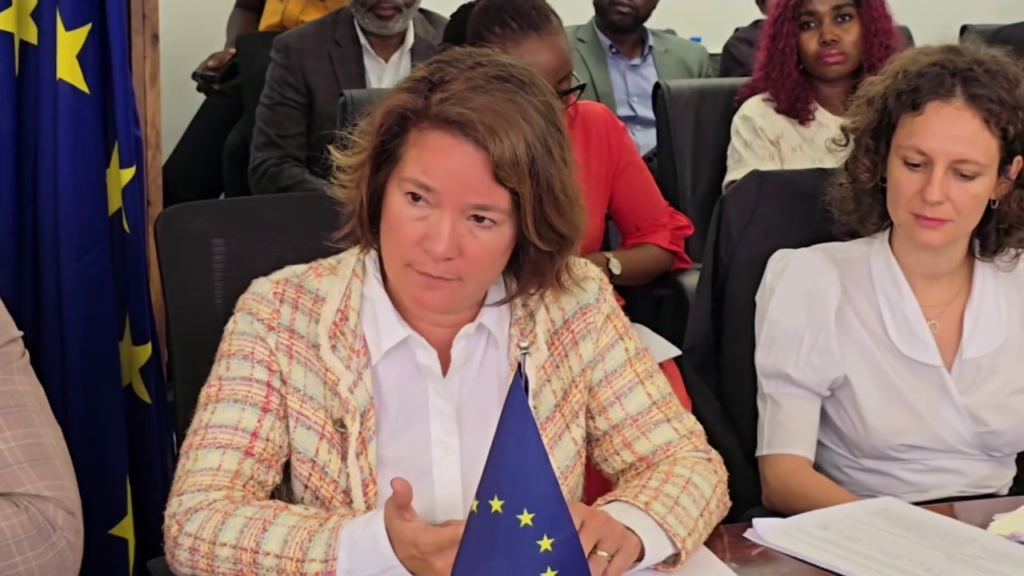
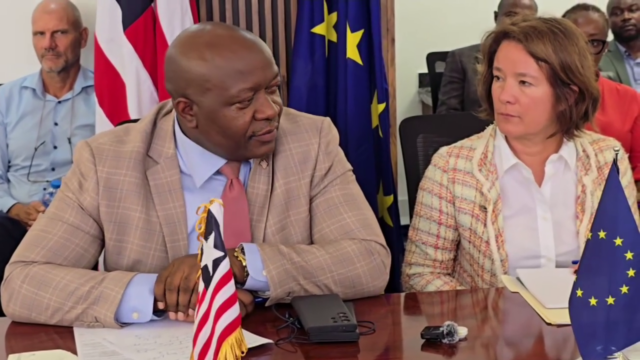
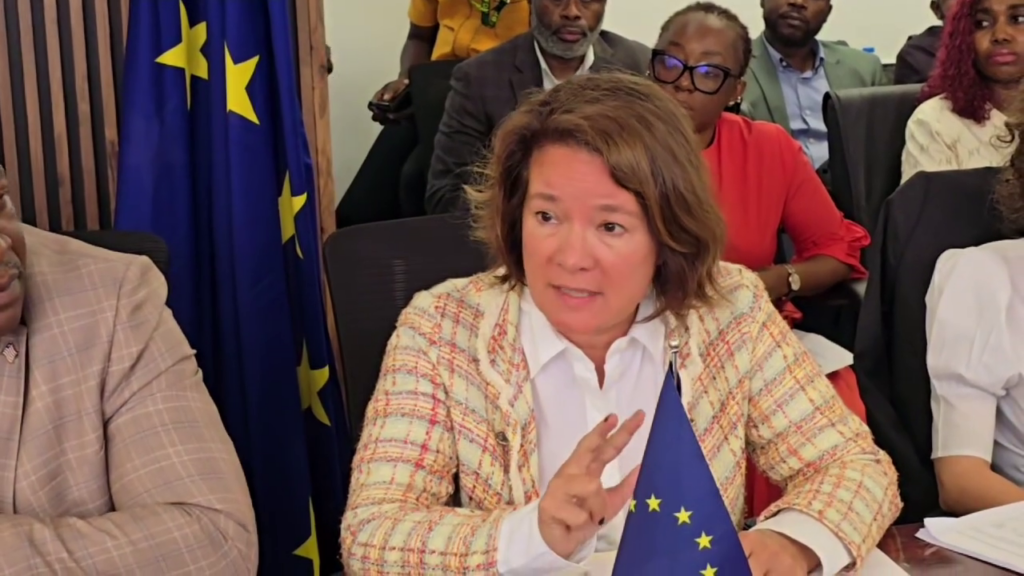
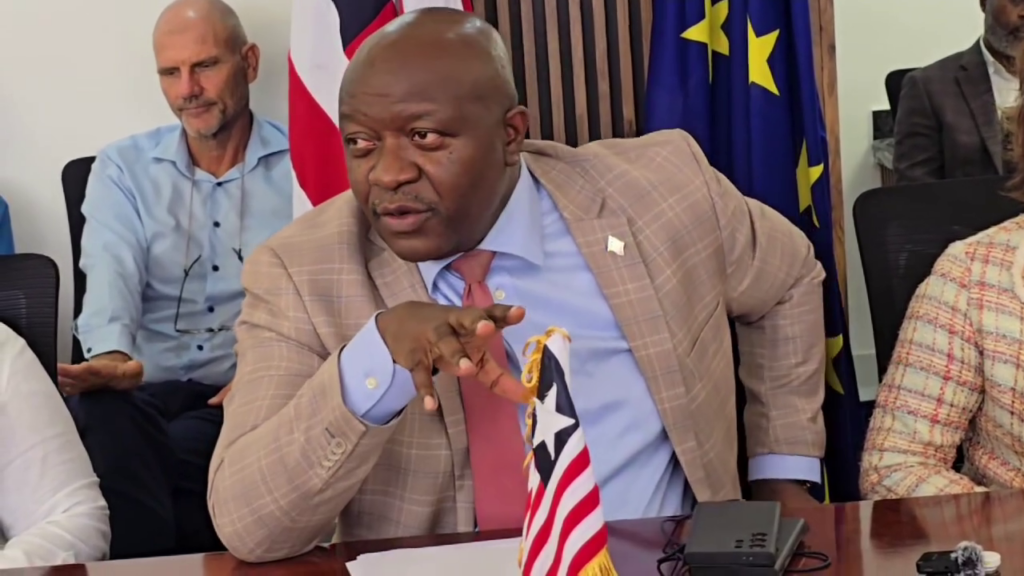
Speaking at a joint press briefing in Monrovia on Friday, December 19, EU Ambassador to Liberia Nona Deprez described the disbursement as a clear signal of confidence in Liberia’s reform trajectory, emphasizing that EU budget support is results-based, not automatic.
“This is performance-driven financing,” Ambassador Deprez said. “Liberia delivered on agreed reforms in public finance management, oversight, and natural resource governance, and this disbursement reflects that delivery.”
Budget Support Tied to Reforms, Not Promises
The EU budget support program runs from 2025 to 2027 and is anchored in jointly agreed indicators covering public finance management, domestic revenue mobilization, forestry transparency, and agricultural value chains, particularly rice production.
Ambassador Deprez explained that the EU does not simply transfer funds following agreement signings; instead, disbursements occur only after reforms are achieved and verified.
“Budget support is about dialogue and results,” she said. “It reinforces national systems by channeling resources directly through the treasury, aligned with Liberia’s own planning, budgeting, and execution frameworks.”
Among the reforms credited for the 2025 disbursement were improvements in budget preparation—marked by timely submissions from ministries, agencies, and commissions—and enhanced transparency in the forestry sector, including the publication of critical forest data on the Forestry Development Authority’s website.
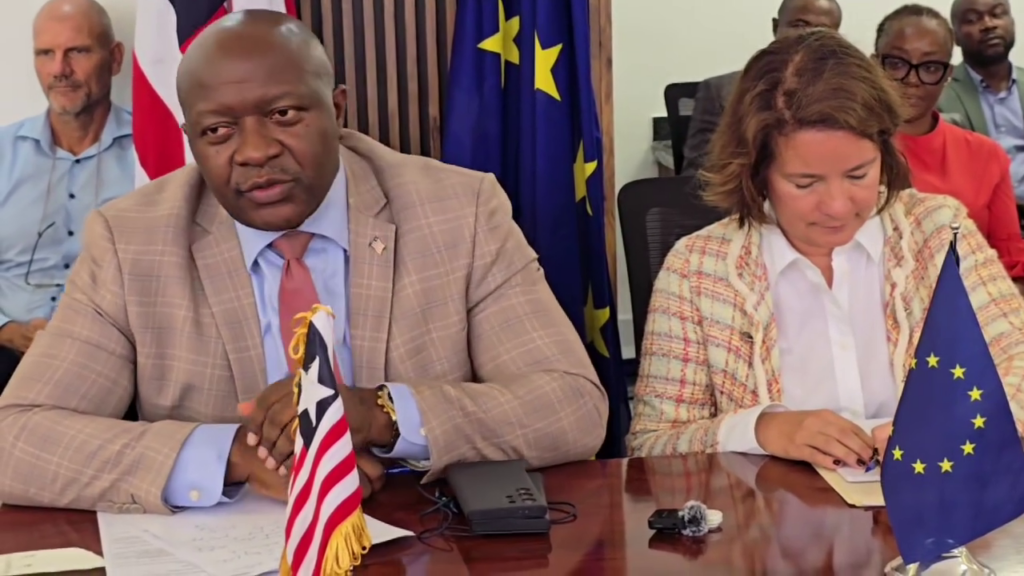
Ngafuan: “Promise Has Become Performance”
For Finance and Development Planning Minister Augustine Kpehe Ngafuan, the EU disbursement is both a fiscal stabilizer and a validation of Liberia’s reform credibility at a time when global development assistance is under strain.
“At a moment when the global aid architecture is tightening, the EU stood with Liberia,” Ngafuan said. “This is not about signing ceremonies. This is about promise being translated into performance.”
Minister Ngafuan disclosed that EU budget support had been projected in the national budget, meaning failure to meet reform triggers would have resulted in significant financing gaps and spending cuts.
“Had this support not materialized, we would have been forced to cut almost US$34 million from the budget,” he said. “December would have looked very different for many ministries.”
He credited intensive, cross-government coordination—particularly within the Ministry of Finance’s Department of Economic Management—for ensuring Liberia met the EU’s reform benchmarks, noting that staff worked extended hours to finalize compliance.
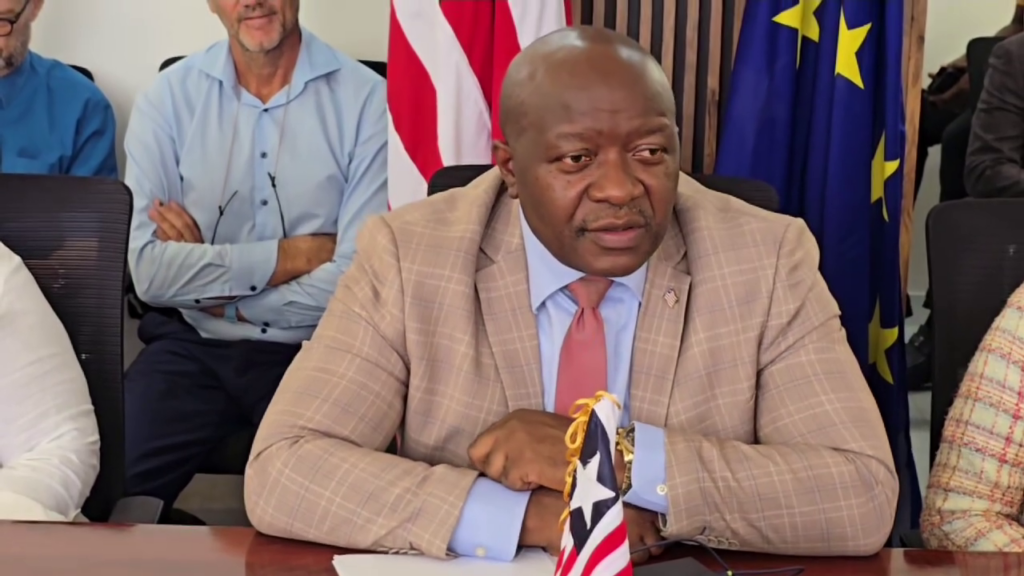
Strengthening Fiscal Stability and Service Delivery
The Minister emphasized that while the disbursement does not represent “new money,” it plays a critical role in cash-flow management, enabling smoother budget execution and faster allotment releases to ministries and agencies.
“This support improves liquidity planning and reduces the painful timing gaps between revenue inflows and expenditure demands,” Ngafuan explained. “It helps stabilize government operations and service delivery.”
He added that EU budget support also underpins flagship development initiatives, including the “Lighting Up the Southeast” electricity expansion project, which he said has already delivered visible results in counties such as Grand Bassa, Sinoe, and Maryland.
A Partnership Built on Accountability
Both the EU and Liberian authorities stressed that the partnership is grounded in mutual accountability, with reform indicators jointly designed—not imposed.
“These indicators are not foreign prescriptions,” Ngafuan said. “They are targets we agreed on because they reflect what Liberia itself wants to achieve.”
Ambassador Deprez reinforced this point, noting that reform priorities—including public finance discipline, agricultural productivity, and sustainable natural resource management—are central to Liberia’s own development agenda.
Looking ahead, the EU indicated that additional disbursements of up to €18 million in 2026 and €17 million in 2027 remain possible, contingent on Liberia meeting progressively higher reform targets.
“This is only the beginning,” Ambassador Deprez said. “We look forward to continued close collaboration to sustain momentum and deliver tangible benefits for the Liberian people.”
Confidence Amid Global Uncertainty
The disbursement comes at a time when many donor countries are reassessing overseas development assistance due to domestic pressures. Against that backdrop, Liberian officials described the EU’s action as a vote of confidence.
“When the weather turned dark globally, we learned who our friends were,” Ngafuan remarked. “The European Union stepped up.”
With reforms ongoing and future disbursements tied to continued performance, both sides say the partnership represents more than financial support—it is a shared commitment to governance reform, economic resilience, and long-term development for Liberia.