MONROVIA, Liberia — Prominent Liberian political analyst Abdullah Kiatamba has offered a measured but sobering assessment of Liberia’s current political and economic trajectory, arguing that while conditions under President Joseph Nyuma Boakai have improved compared to the final years of former President George Manneh Weah, the pace and depth of change have fallen short of public expectations.
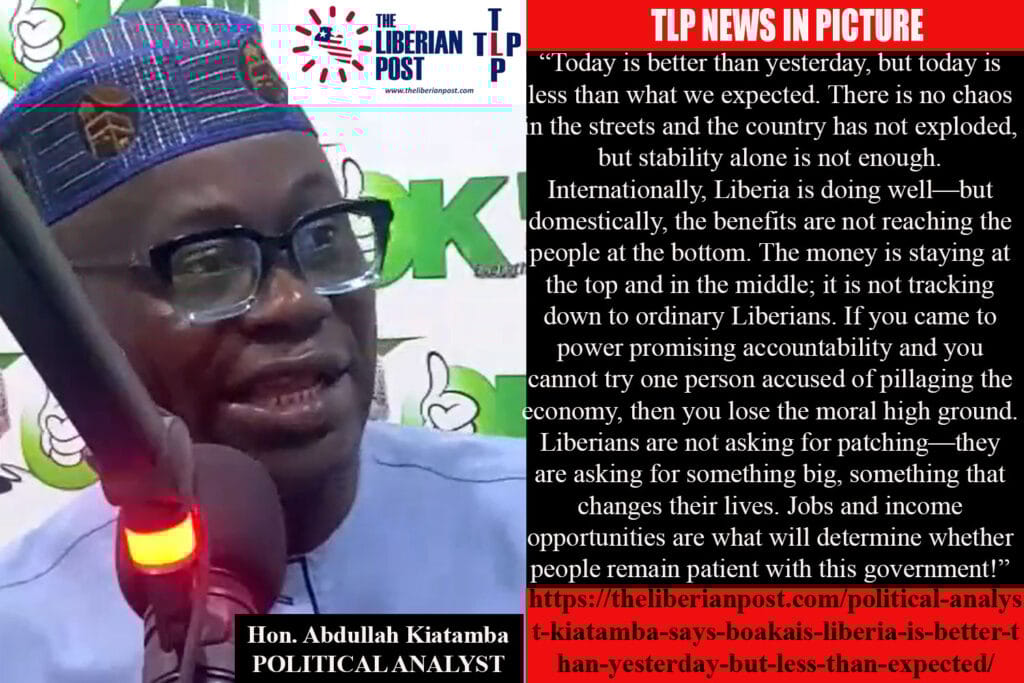
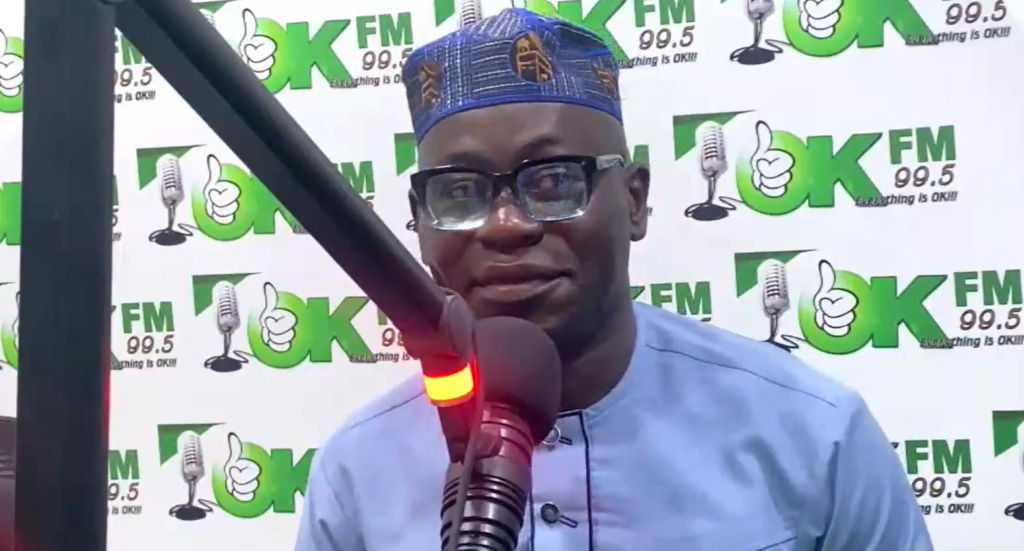
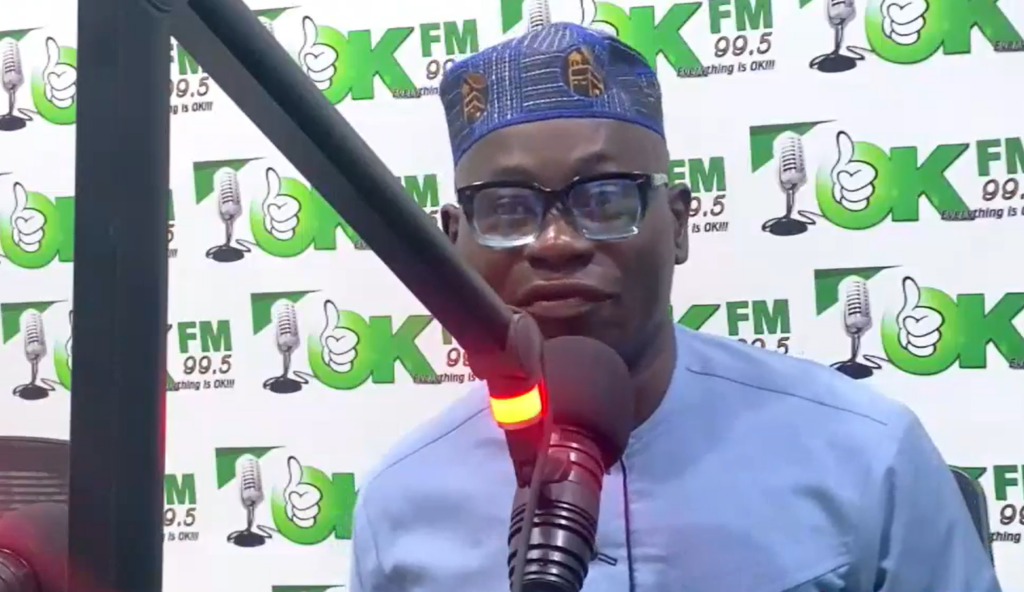
Speaking on OK FM’s Morning Rush program a few days ago, Kiatamba summarized his position with a phrase that has since resonated widely: “Today is better than yesterday, but today is less than what we expected.”
Comparing Two Administrations
Kiatamba contrasted Boakai’s first year in office with the early period of the Weah administration, noting that former President Weah’s political downfall effectively began within his first two years due to a series of crises, including economic shocks, public protests, and scandals that eroded public trust.
According to Kiatamba, the Weah administration lost the confidence of the electorate well before the 2020 midterm elections, when voters delivered what he described as a “sentencing verdict” through the ballot box. By contrast, he said, President Boakai has not reached a comparable crisis point.
“There is no chaos in the streets. The country has not exploded,” Kiatamba observed, adding that Liberia has experienced a degree of political stability absent during key moments of the previous administration.
International Gains, Domestic Frustrations
The analyst credited the Boakai administration with restoring Liberia’s international standing, citing improved relations with development partners, re-engagement with institutions such as the Millennium Challenge Corporation, and Liberia’s election to a non-permanent seat on the United Nations Security Council.
“Internationally, Liberia is doing well,” Kiatamba said, describing the country’s renewed access to diplomatic and financial channels as a positive development.
However, he argued that these gains have not yet translated into tangible improvements in the daily lives of ordinary Liberians. He pointed to persistent unemployment, limited income opportunities, and inadequate access to healthcare as evidence that economic benefits are not “trickling down.”
“The money is staying at the top and in the middle. It is not tracking down to the bottom,” he said.
Accountability and the “Moral High Ground”
A central theme of Kiatamba’s analysis was accountability. He criticized both the Weah and Boakai administrations for what he described as a failure to prosecute high-level corruption cases, arguing that unresolved allegations undermine public confidence and weaken the government’s moral authority.
“If you came and said people pillaged the economy and you cannot try one of them, then you are out of line,” Kiatamba stated, suggesting that inaction against corruption—past and present—has eroded credibility.
He further argued that perceived corruption within the current administration makes it politically and ethically difficult to pursue accountability for alleged abuses committed under the previous government.
Jobs, Opportunity, and the Absence of “Big Impact”
Kiatamba emphasized that public patience is largely tied to job creation and economic opportunity. He said opinion polling conducted across five counties indicates widespread frustration over stagnant livelihoods and uncertainty about the future.
According to him, many Liberians do not see a meaningful difference between their economic conditions under Boakai and those under Weah, an assessment he described as a serious warning sign for the current leadership.
While acknowledging sectoral improvements—such as progress at the Liberia Electricity Corporation and relative stability in international relations—he argued that the administration has yet to deliver a transformative initiative capable of reshaping public perception.
“We are not looking for patching. We are looking for something big—something that changes people’s lives,” he said.
Political Timing and the Absence of Midterm Elections
Kiatamba also highlighted a structural difference between the two administrations: the absence of midterm elections under the current constitutional arrangement. He argued that while this gives the Boakai administration political breathing room, it also removes an early mechanism for course correction.
“In Boakai’s case, the verdict of the people will only come at the election itself,” he warned, describing this as both a political advantage and a potential danger.
A Warning Wrapped in Opportunity
Despite his criticisms, Kiatamba said President Boakai has not yet reached a “point of no return” with the electorate. He described the current moment as a “grace period,” cautioning that it must be used wisely.
“Don’t abuse the grace period,” he warned. “If you don’t manage it well, the people will manage you.”
His analysis ultimately framed Liberia’s political moment as one of conditional hope—marked by international recovery and relative stability, but shadowed by unmet expectations at home.