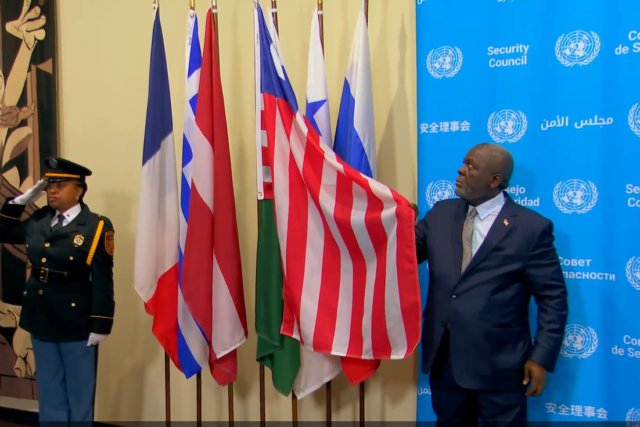
NEW YORK — Liberia on Thursday, January 2, 2026, formally took its seat on the United Nations Security Council as its national flag was installed at United Nations Headquarters, marking the country’s return to the Council after more than six decades and the start of a two-year term as a non-permanent member.
Speaking at the flag installation ceremony, Liberia’s Permanent Representative to the United Nations, Lewis G. Brown, described the moment as both symbolic and consequential, noting that Liberia’s presence on the Council reflects not recovery from conflict, but readiness to serve the global community. He conveyed New Year greetings from Joseph Nyuma Boakai and thanked outgoing Council members for their stewardship, while congratulating incoming members and the current Council presidency.
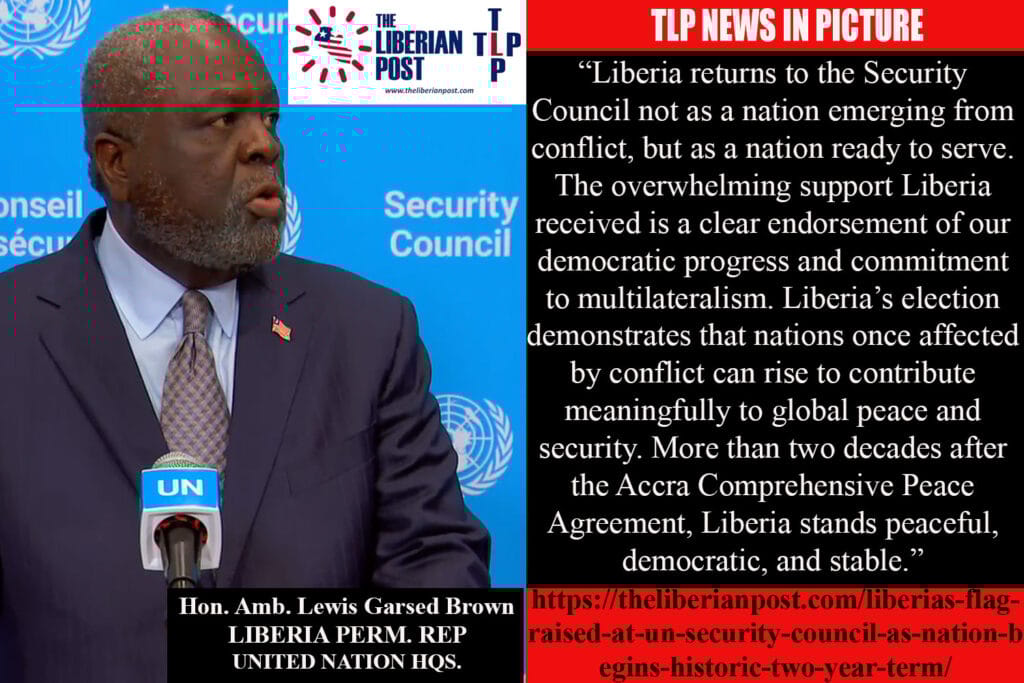
Ambassador Brown recalled Liberia’s long and difficult journey from conflict to stability, highlighting that eight years ago the United Nations peacekeeping mission formally ended in Liberia, transferring full responsibility for peace and security back to the Liberian people and government. More than two decades after the 2003 Accra Comprehensive Peace Agreement, he said, Liberia now stands peaceful, democratic, and stable—conditions that made its return to the Council possible.
Liberia’s election to the Security Council in 2025 was secured with the backing of 181 UN Member States, a decisive vote widely interpreted as an endorsement of the country’s democratic progress and its commitment to multilateralism. It marks Liberia’s first full elected mandate on the Council in 65 years.
Ambassador Brown credited the support of the African Union, ECOWAS, and international partners, emphasizing that Liberia’s election demonstrates that nations emerging from conflict can meaningfully contribute to global peace and security.
During its two-year term, Liberia will participate in the Council’s core responsibilities, including maintaining international peace and security, debating and voting on resolutions, authorizing peacekeeping operations, imposing or lifting sanctions, and addressing emerging global security threats. As a non-permanent member, Liberia will also serve on subsidiary bodies and committees, engage in crisis diplomacy, and contribute to consensus-building among Council members.
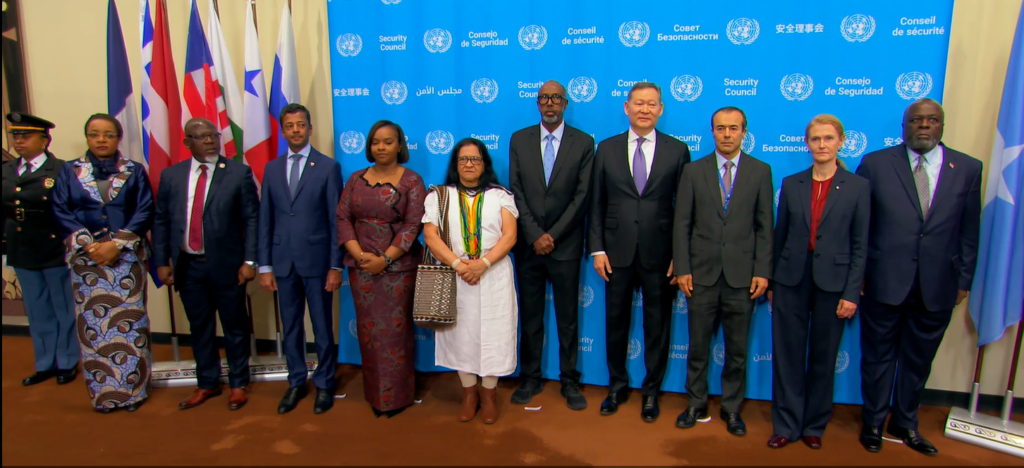
Ambassador Brown stressed that Liberia’s approach will be guided by its own experience, particularly the lessons learned from conflict, peacekeeping, and post-war reconciliation. He reaffirmed Liberia’s commitment to diplomacy, dialogue, and inclusion, noting that the country comes to the Council “anchored in the UN Charter” and determined to promote cooperation over confrontation.
While Liberia occupies an African seat on the Council, Ambassador Brown underscored that its outlook will be global, grounded in the belief that peace anywhere strengthens peace everywhere, and insecurity anywhere threatens stability everywhere. He pledged that Liberia will work to build bridges, encourage consensus, and contribute constructively to a safer and more just international order.
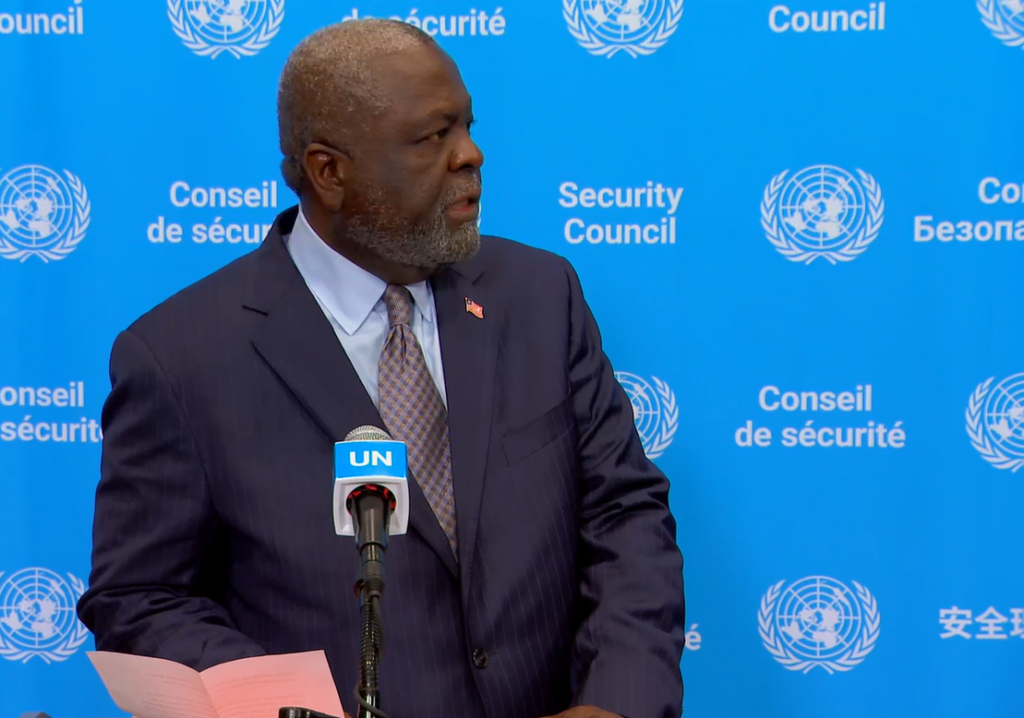
As the Lone Star flag now flies among those of other Security Council members, Liberia’s return signals a defining chapter in its national story—one that transforms hard-won peace at home into responsibility and service on the world’s most powerful security body.